For many Australians, a Europe SIM card is part of the good-weather escape plan: fly north when Australia is cooling down, then land into longer days, outdoor dinners, train trips, and warmer weather across Europe. A normal spring, summer, or early-autumn route might move from Heathrow to Paris, Amsterdam to Berlin, or Rome to Athens with train tickets, hotel apps, maps, translation, and group messages all depending on mobile data.
The best SIM card for Europe with unlimited data is not simply the one with the biggest headline. If you are travelling from Australia to catch better weather in Europe, you need to check countries covered, fair use rules, high-speed data limits, hotspot support, validity, and whether the plan behaves the same across each country on your route.
Quick Answer: What Is the Best SIM Card for Europe in the Good-Weather Season?
The best choice is a Europe travel SIM that covers your actual destinations, lasts the full trip, and gives enough high-speed data for how you travel. If you are leaving Australia for a European spring, summer, or early-autumn itinerary, start with Europe SIM card plans that clearly list coverage, validity, and data conditions.
Unlimited-style plans can be useful when good weather means long days outside: maps, rail tickets, beach or festival planning, video calls home, hotspotting on trains, and uploading photos after a full day out. But “unlimited” should always be read with the product details. Some plans may include fair use policies, speed management, or hotspot limits.
Why Good-Weather Europe Trips Use Data Differently
Europe’s warmer months can make the itinerary more mobile. You might use Google Maps in Paris, WhatsApp in Rome, Trainline or rail apps in Germany, hotel check-in links in Spain, translation in Greece, and airline apps when a low-cost flight gate changes at the last minute. Good weather also means more outdoor days, day trips, and late changes when the forecast looks better in another city.
The issue is not only data volume. It is border movement and weather movement. A city break in London is one thing; a three-week route through France, Switzerland, Italy, Austria, and Germany is another. Your SIM needs to handle country changes without turning every border crossing or last-minute sunny detour into a settings check.
What Unlimited Data Really Means in Europe
Europe has strong roaming protections for EU residents, but Australian travellers should not assume their home roaming works the same way, especially on a longer spring or summer itinerary. The European Union’s roaming guidance explains that even unlimited domestic data plans can have fair use limits when roaming. That is a useful reminder: unlimited mobile data often still has conditions.
Before you choose a European SIM card, check:
- Which countries are included.
- Whether the plan is truly unlimited or high-speed data plus managed speeds.
- Whether hotspot is allowed.
- How long the plan lasts.
- Whether calls or SMS are included, or whether it is data-only.
For broader context on roaming rules and fair use, Your Europe explains mobile roaming in the EU. It is not a substitute for checking your TravelKon product details, but it helps explain why fair use wording matters.
SIM Card vs eSIM for a Europe Trip
A physical SIM card suits travellers who want a card installed in the phone, are using a non-eSIM device, or prefer a more traditional setup. It can also be useful if you want a plan type that is only available as a physical SIM.
An eSIM can be simpler for compatible phones because it avoids swapping cards, but not every traveller wants to manage digital profiles. If you are helping parents, kids, or a group get connected, a physical card can sometimes be easier to explain.
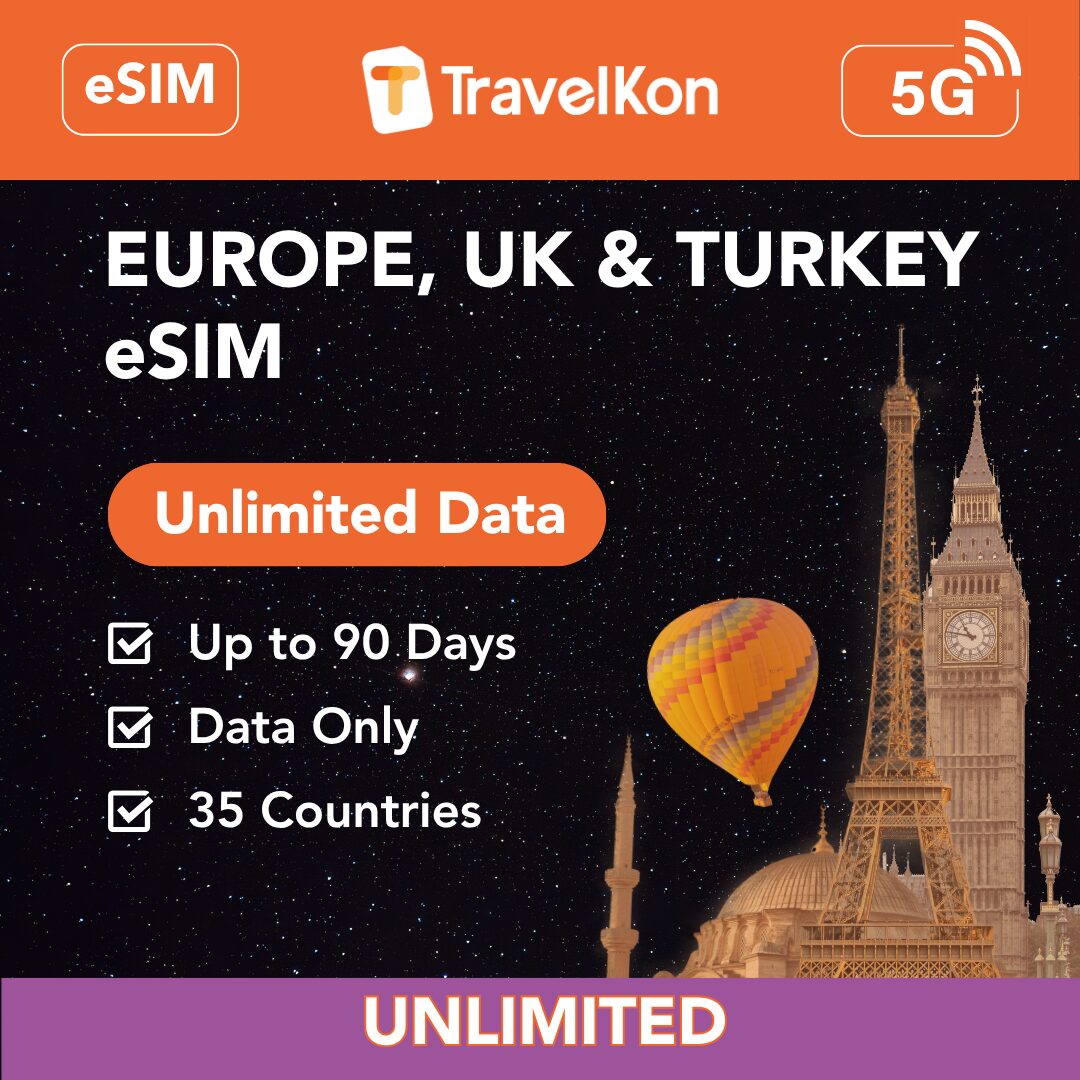
For long routes, compare a SIM card for Europe trip against the actual country list, not a vague “Europe” label.
Best Europe SIM Card by Good-Weather Traveller Type
| Traveller | Best fit | Why |
|---|---|---|
Australian winter escape | Wide-coverage Europe SIM | Useful for long routes that move with warmer weather, events, and rail plans. |
European summer remote worker | High-data or unlimited-style SIM | Video calls, hotspot, maps, and uploads can consume data quickly. |
Family school-holiday trip | Reliable SIM plus WiFi habits | Use mobile data for travel days, tickets, maps, and group messages. |
Non-eSIM phone user | Physical SIM | No digital profile needed, which can be simpler for some travellers. |
Shoulder-season city hopper | Moderate to high data SIM | Maps, messages, tickets, weather checks, and bookings are the main needs. |
Products to Compare Before You Buy
For the closest unlimited-style option, compare the UK & Europe SIM Card 71 Destinations | 3UK. Current options include 20GB, 100GB, 150GB and Unlimited Data, with the product showing specific EU/World data allowances such as 6GB, 12GB, 18GB and 30GB depending on the option. That makes the detail important: choose by where you are travelling, not the word “unlimited” alone.
For fixed-data trips, the Europe & UK SIM Card 44 Countries | Orange currently offers 20GB, 50GB and 100GB options over 30 days. Shorter or lighter trips may suit the Europe SIM Card 35 Countries | Orange, which currently offers 15GB and 22.5GB options over 28 days.
If you need a physical card with generous data, compare the best SIM card for Europe with unlimited data by route, validity, hotspot rules, and fair use conditions.

FAQs
Is unlimited data worth it for Europe?
It can be worth it for heavy users, families, remote workers, and long trips. Light users may only need moderate data for maps, messaging, and bookings.
Will one SIM card work across all of Europe?
Only if the plan includes all the countries you are visiting. Always check the destination list before buying.
Can I hotspot with a Europe SIM card?
Hotspot support depends on the plan. Check the product details before relying on it for laptops or other travellers.
When should Australians travel to Europe for good weather?
Many Australians aim for late spring, summer, or early autumn in Europe, depending on whether they want city weather, beach weather, festivals, or fewer crowds. Weather varies by country and altitude, so choose your SIM validity around the actual itinerary rather than the season label alone.