Philippines

Top Accommodation in Cebu City Philippines for Backpackers

TravelKon eSIM Philippines VS Prepaid SIM Card Comparison

Choosing between TravelKon eSIM Philippines VS Prepaid Philippines SIM Card can shape your travel experience in the Philippines. Whether visiting for leisure, remote work, or island hopping, having fast and reliable mobile connectivity is crucial for staying connected, booking accommodations, or sharing travel moments online. A 2024 study by GSMA Intelligence revealed that over 45% of international travellers prefer eSIMs over physical SIM cards due to easier activation, faster setup, and enhanced security when travelling abroad. What Makes TravelKon eSIM Philippines Better Than a Prepaid SIM Card? The TravelKon eSIM Philippines offers the perfect solution for travellers seeking convenience and seamless data connectivity across the archipelago. Unlike traditional SIM cards, eSIMs activate instantly without requiring a physical card. TravelKon’s eSIM Advantages: Key Benefits: The TravelKon Philippines eSIM eliminates the need for manual setup or SIM replacement, ideal for digital nomads, backpackers, and tourists alike. Why Should Travellers Consider eSIM Philippines? An eSIM Philippines offers flexibility and digital freedom, especially for those constantly on the move. Travellers can install multiple eSIM profiles on one device and switch between local and regional data plans easily. Benefits of Using an eSIM: With a TravelKon eSIM, tourists enjoy instant connectivity from the moment they land, skipping the hassle of searching for stores or registering IDs. What Are the Drawbacks of Using a Prepaid SIM Card in the Philippines? A Prepaid SIM Card may still appeal to those seeking local packages, but it comes with limitations that can affect convenience and reliability. Travellers often need to show identification, visit retail counters, and manually configure data settings. Prepaid SIM Card Limitations: While affordable, prepaid SIMs require more effort to maintain, especially for tourists exploring multiple islands or crossing to neighbouring countries like Malaysia or Singapore. Which Option is More Cost-Effective: TravelKon eSIM Philippines VS Prepaid SIM Card? When comparing costs, TravelKon eSIM Philippines VS Prepaid SIM Card shows that eSIMs provide better long-term value through flexibility and coverage. TravelKon’s eSIM packages offer transparent pricing without hidden fees or top-up requirements. Cost Comparison Factors: eSIMs may seem slightly higher in upfront price, but they save time and prevent hidden expenses over the course of a trip. Is eSIM the Future of Travel Connectivity in the Philippines? Yes, eSIM adoption continues to rise globally, and the Philippines is part of this digital shift. With major carriers supporting eSIM technology, more travellers now prefer QR-based connectivity over physical cards. Future Travel Connectivity Trends: TravelKon stays ahead by offering eSIMs that simplify mobile data for every journey, ensuring travellers stay connected from the beaches of Siargao to the streets of Cebu. Accommodation Siargao Island Philippines Finding the right accommodation in Siargao Island Philippines completes any travel experience. From beachfront villas to surfer-friendly hostels, Siargao offers a wide range of stays catering to all budgets and preferences. Top 10 Recommended Stays in Siargao: Each accommodation reflects Siargao’s island spirit—calm, adventurous, and community-driven—perfectly matching the modern traveller’s desire for comfort and connection. Stay Connected, Stay Adventurous In the debate between TravelKon eSIM Philippines VS Prepaid SIM Card, the eSIM clearly leads in convenience, reliability, and modern practicality. Combined with Siargao’s relaxing accommodations and rich island culture, travellers can enjoy every moment—always connected, always ready for adventure.

TravelKon eSIM Philippines VS Prepaid SIM Card Comparison Read More »

How to Say Common Words in Philippines

How to Say Common Words in Philippines, Best eSIM & Travel Guide

Finding the best eSIM for Philippines can make travel smoother, especially when combined with knowing how to say common words in Philippines and understanding the best time to go to the Philippines. For travellers eager to explore the country’s tropical beauty, good connectivity and cultural awareness make all the difference. A recent study by the Department of Tourism Philippines noted that over 5.4 million international tourists visited in 2024, and those who stayed connected digitally reported higher satisfaction levels during their trip. Best eSIM for Philippines For travellers seeking easy and affordable connectivity, TravelKon offers the most reliable Philippines eSIM options that cater to every travel plan. Whether it’s a short city trip or a long island escape, TravelKon’s eSIMs deliver fast 4G/5G coverage across key destinations like Manila, Cebu, and Palawan. Key Benefits: Switching to TravelKon ensures travellers stay connected from touchdown to take-off without worrying about roaming costs. Best Time to Go the Philippines The Philippines is a year-round tropical paradise, but the best time to go is between November and April, during the dry season. These months bring sunny skies, calm seas, and ideal conditions for exploring islands, beaches, and cultural sites. Highlights by Season: Visiting during festivals such as Sinulog (January) or Ati-Atihan (January) adds a cultural spark to any itinerary. How to Say Hello in Philippines Knowing how to say hello in Philippines helps start every conversation warmly. In Filipino, the national language, people say “Kamusta?”, which is similar to “How are you?”. How to say common words in Philippines. Other Greetings: Politeness is highly valued, so a smile always enhances your greeting. How to Say Thank You in Philippines Gratitude goes a long way in Filipino culture. To say thank you, use “Salamat”, or “Maraming salamat” for “Thank you very much”. How to say common words in Philippines. Helpful Variations: Adding “po” shows respect, especially toward elders. How to Say Yes and No in Philippines Simple yet essential, yes is “Oo” and no is “Hindi”. These words are easy to remember but express a lot in conversation. Examples: Tone and facial expressions often carry as much meaning as the words themselves. How to Say Sorry in Philippines Apologising shows humility. In Filipino, “Pasensya na” or “Paumanhin” both mean “Sorry”. Useful Phrases: Filipinos appreciate honesty and sincerity more than formal phrasing. How to Say I Love You in Philippines Romantic or friendly, saying “Mahal kita” translates to “I love you” in Filipino. It’s one of the most famous Filipino phrases among foreigners. Variations: The word mahal means both “love” and “expensive”—a fun fact that tourists love to share. How to Say Goodbye in Philippines Saying goodbye can be as heartfelt as a greeting. The most common phrase is “Paalam”, but many Filipinos also use “Bye” or “Ingat”, meaning “Take care”. Common Goodbyes: These phrases help travellers leave a positive impression wherever they go. How to Say How Much in Philippines Shopping at local markets or riding jeepneys often involves asking prices. The phrase “Magkano ito?” means “How much is this?”. Shopping Essentials: Learning basic bargaining phrases can turn transactions into friendly chats. How to Say Where Is… in Philippines Directions are vital when exploring cities or islands. To ask, say “Nasaan ang…” followed by the place or object. Examples: Locals are often happy to help, even if their English is limited. How to Say Delicious in Philippines Filipino food is an adventure itself. When you love a dish, say “Masarap!”, meaning “Delicious!” Foodie Phrases: Filipinos take pride in their cuisine, so compliments always spark smiles. How to Say Cheers in Philippines Filipinos love celebrations. When raising a glass, say “Tagay!”, which means “Cheers!” It’s often used during parties or casual gatherings. Party Talk: It’s a word that unites people across language barriers and laughter. Travelling Smart in the Philippines Equipped with local phrases and seamless connectivity from TravelKon’s eSIM, travellers can explore confidently and connect deeply with locals. Whether it’s saying “Salamat” after a jeepney ride or “Masarap!” at a beach café, these small gestures create meaningful travel moments.

How to Say Common Words in Philippines, Best eSIM & Travel Guide Read More »

Cheap Philippines eSIM & philippine public holidays Guide

Cheap Philippines eSIM & philippine public holidays Guide

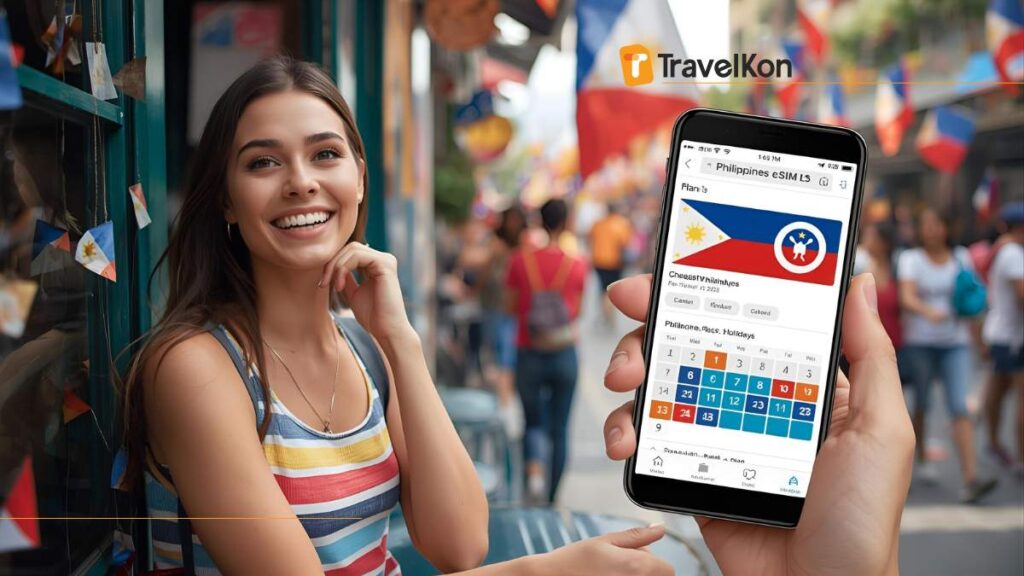
Philippine public holidays play a major role in shaping how both locals and visitors plan their trips, especially when combining flights and accommodation schedules. Travellers arriving during national breaks often encounter crowded airports, higher demand for domestic flights, and busy tourist sites. This makes it important to pair trip planning with a reliable mobile connection by choosing Cheap Philippines eSIM Data Plans for Tourists designed for international visitors. According to regional travel studies, holiday periods see spikes of up to 40% in passenger numbers across major airports, with mobile connectivity ranking as a top priority for foreign visitors. Cheap Philippines eSIM Data Plans for Tourists Tourists arriving during Philippine public holidays benefit from preparing digital connectivity before departure by purchasing cheap Philippines eSIM data plans online. This avoids long queues at airport counters, especially when thousands of holiday travellers are also arriving. Affordable eSIM solutions are not just about saving money, but also about convenience. For travellers landing in Manila or Cebu during peak public holiday traffic, instant data means quicker access to ride-hailing services, maps, and messaging apps. Linking flights with pre-bought eSIM plans prevents unnecessary stress. How do Philippine public holidays affect flight schedules and tourist flows? Philippine public holidays often create surges in domestic travel as residents return to hometowns or head to beaches and resorts. For tourists, this means busier airports and fuller flights, often requiring early bookings. For international travellers, understanding the calendar of Philippine public holidays helps in planning smoother connections. Matching this with a pre-bought eSIM ensures no time is lost queuing for mobile services upon arrival. Connectivity allows travellers to adjust bookings, check real-time flight changes, and manage ground transport during peak travel periods. Which tourist experiences align well with philippine public holidays? Travelling during Philippine public holidays can be both challenging and rewarding. Crowds are larger, but celebrations bring cultural richness and local festivities that offer unique travel experiences. Experiencing these events can enhance a holiday, but tourists should prepare for delays and crowded attractions. Reliable eSIM connectivity helps by ensuring access to live maps, event schedules, and local guides. Travellers can stay informed about where to go and how to navigate crowds more effectively. What practical steps should tourists take to manage travel during Philippine public holidays? When travelling during peak holidays, preparation becomes the key to a smoother journey. Tourists can avoid common issues by securing connectivity and planning logistics in advance. Connectivity supports each of these steps. For example, travellers landing late at night during Christmas season can immediately order transport via ride-hailing apps without depending on airport counters. A Philippines eSIM offers both convenience and security in handling last-minute changes. Are regional eSIM options useful for tourists visiting neighbouring destinations? Many tourists flying to the Philippines extend their journey across Southeast Asia. Choosing a regional eSIM saves both cost and effort by avoiding separate SIM purchases for each country. For holidaymakers flying via Manila and then on to Bangkok, Singapore, or Kuala Lumpur, regional plans ensure uninterrupted connectivity. This reduces the hassle of multiple activations and keeps trip planning consistent across all destinations. Practical travel checklist for philippine public holidays This checklist ensures a balanced approach, combining cultural immersion during public holidays with the practicality of modern travel tools. Final reminder about philippine public holidays and connectivityPhilippine public holidays bring both challenges and opportunities for tourists. While airports and attractions are busier, they also provide a window into the cultural life of the country. Pairing cheap Philippines eSIM data plans with thoughtful planning allows travellers to embrace these holidays without being hindered by logistical hurdles. Reliable connectivity ensures every step of the journey remains efficient, from arrival at the airport to exploring the heart of local festivities.

Cheap Philippines eSIM & philippine public holidays Guide Read More »

Philippine Airlines Flights & Buy Philippines eSIM Online

Philippine Airlines Flights & Buy Philippines eSIM Online

Philippine Airlines flights remain the primary choice for travellers entering and exploring the Philippines, with routes connecting major international and regional airports. For those planning a journey, smooth arrival is about more than just the flight—it is also about being connected the moment the aircraft lands. That is why pairing Philippine Airlines flights with a pre-purchased Philippines eSIM is a practical move, ensuring maps, transport apps and messages work instantly without delay. Recent travel surveys show that over 60% of international passengers prefer activating mobile connectivity before arrival to avoid roaming costs and reduce first-day stress. This makes digital eSIM solutions a vital part of trip planning. Buy Philippines eSIM Online Before Your Trip? Choosing to buy a Philippines eSIM before departure is the simplest way to ensure instant connectivity once a Philippine Airlines flight touches down. Unlike physical SIM cards, there is no need to queue at airport counters or kiosks upon arrival. This streamlined process is especially valuable for arrivals at Ninoy Aquino International Airport (NAIA) in Manila or Mactan-Cebu International Airport, where long queues for SIM cards can delay onward travel. Linking Philippine Airlines flights with a pre-bought eSIM Philippines ensures a smooth transition from air travel to ground movement. Pre-purchasing also secures reliable data allowances, with options ranging from light 3GB packs to heavy-use 100GB plans, making it adaptable for business trips or extended family holidays. How do Philippine airlines flights connect with international and domestic travel needs? Philippine Airlines flights operate from hubs in Manila, Cebu and Davao, connecting passengers to international gateways and dozens of domestic airports across the islands. This network is crucial because travel within the Philippines often requires multiple flight segments. These routes illustrate why reliable connectivity is essential. Travellers need live access to booking confirmations, ride-hailing apps and local information immediately after landing. With an eSIM already set up, switching from in-flight Wi-Fi to mobile data becomes seamless, supporting smooth connections between international arrivals and domestic transfers. Which airports are most relevant for Philippine airlines flights? Philippine Airlines flights land at multiple airports across the archipelago, but a few major hubs dominate both international and domestic travel. Knowing which airport serves as the arrival point helps in planning connectivity and logistics. Each airport differs in terms of network coverage, SIM vendor availability and transport infrastructure. A pre-bought Philippines eSIM reduces dependence on in-airport services and allows instant access to navigation, ride-hailing apps or contact with accommodation providers. What steps are needed to purchase and activate a Philippines eSIM before the trip? Buying a Philippines eSIM online is straightforward and can be completed in minutes. Once purchased, the setup process involves scanning a QR code and preparing the phone before flying. This preparation ensures the eSIM activates as soon as the device connects to a local mobile network. For those flying with Philippine Airlines flights arriving late at night, this is a significant advantage since mobile counters may be closed or crowded. Can travellers choose a regional option if visiting multiple countries? Philippine Airlines flights often connect travellers not only to the Philippines but also to neighbouring destinations in Southeast Asia. For such itineraries, a regional eSIM plan covering multiple countries is a smart choice. Regional plans save both money and effort, eliminating the need to buy multiple SIM cards or switch networks in each country. This makes them particularly valuable for business travellers or digital nomads who rely on consistent connectivity. Why does pairing Philippine airlines flights with eSIM matter for practical travel? The relationship between Philippine Airlines flights and eSIM planning is straightforward: the airline ensures physical movement while eSIMs ensure digital readiness. Together, they create a seamless arrival experience. In practice, this means travellers stepping off Philippine Airlines flights can focus on transport connections, hotel check-ins or even business meetings without delays caused by connectivity issues. Practical Travel Checklist Before Boarding a Philippine Airlines Flight By following these steps, travellers ensure the first hour after landing is stress-free, with full access to essential digital services. Final reminder on philippine airlines flights and connectivityTravelling with Philippine Airlines flights offers reliable access to the Philippines’ diverse destinations, but pairing the journey with a pre-purchased eSIM ensures the experience remains efficient. With instant activation, flexible data packs and regional options, an eSIM allows travellers to stay ahead of airport queues and avoid roaming risks. For both first-time visitors and frequent flyers, this combination supports a smoother journey from take-off to the final destination.  

Philippine Airlines Flights & Buy Philippines eSIM Online Read More »

When is the Best Time to Travel to Philippines?

The Philippines is a stunning archipelago known for its beautiful beaches, rich culture, and warm hospitality. Choosing the best time to travel to the Philippines can greatly enhance your experience, allowing you to enjoy the sights and activities at their finest. Timing your visit wisely will ensure memorable adventures. To help you plan your trip, we’ll explore the optimal times to visit the Philippines, considering climate, local festivals, and tourist seasons. Understanding the weather patterns and peak travel periods will guide you in determining when to book your getaway for an unforgettable experience in this tropical paradise. Optimal Seasons: Best Time to Travel to the Philippines The best time to travel to the Philippines largely depends on the weather, as the country experiences a tropical climate. The dry season, which runs from November to April, is generally considered the ideal time to visit. During these months, you can expect pleasant weather, clear skies, and minimal rainfall, making it perfect for beach activities and island hopping. Among these months, the best month to visit the Philippines is typically February. February offers cooler temperatures and lower humidity, making outdoor adventures more enjoyable. Additionally, it falls outside the peak tourist season, allowing for a more relaxed experience at popular destinations. By planning your trip during this period, you can fully appreciate the stunning beauty and vibrant culture of the Philippines. What month is best to travel to the Philippines? Determining the best month to travel to the Philippines involves understanding the country’s distinct seasons and climate. Generally, the best time to visit is during the dry season, which spans from November to April. This period boasts sunny days and minimal rain, making it ideal for outdoor activities such as beach hopping, diving, and exploring various islands. Among these months, February stands out as a particularly excellent choice due to its cooler temperatures and lower humidity levels, offering a comfortable experience for travellers. The rainy season in the Philippines typically runs from June to October. During this time, you can expect frequent rain showers, tropical storms, and potentially typhoons, particularly in August and September. While the landscape becomes lush and vibrant during this season, travel may be hindered by inclement weather, making it less ideal for outdoor activities and excursions. It is advisable to monitor weather forecasts and plan carefully if visiting during these months. The peak tourist season in the Philippines coincides with the dry season, especially from December to February. This period attracts the most visitors, particularly during holidays and school breaks, resulting in crowded tourist spots and higher accommodation prices. Despite the bustling atmosphere, travelling during peak season also means you’ll have access to numerous festivals and events, showcasing the vibrant local culture. Whether you prefer to experience the lively peak season or the more tranquil shoulder months, planning your trip during the dry season will help you make the most of your Philippine adventure. 10 Iconic Philippine Destinations: Recommended Months for Visiting 1. Boracay Boracay is famous for its powdery white sand beaches and vibrant nightlife. The best time to visit is from November to April, when the weather is dry and sunny. Visitors can enjoy activities like water sports and sunset sailing. 2. Palawan (El Nido and Coron) Palawan is renowned for its stunning lagoons, limestone cliffs, and crystal-clear waters. The ideal months to visit are December to May, when you can explore the breathtaking marine life through diving and snorkeling. 3. Cebu Cebu offers a rich blend of history, culture, and natural beauty. The best time to visit is during the dry months from January to May. Explore historical landmarks, amazing waterfalls, and stunning beaches. 4. Batanes Batanes is known for its dramatic landscapes and unique culture. The best time to visit is from March to May when the weather is milder and perfect for exploring the scenic views, rolling hills, and traditional Ivatan houses.Image Suggestion: Panoramic view of the rolling hills and traditional stone houses in Batanes. 5. Siargao Siargao is a surfer’s paradise, famous for its Cloud 9 wave. The best time to visit is from September to November, when surfing conditions are optimal, and you can also enjoy island-hopping. 6. Banaue Banaue is famous for its breathtaking rice terraces, often dubbed “the Eighth Wonder of the World.” The best months to visit are from October to March, when the weather is cooler and the terraces are lush and green. 7. Davao Davao is known for its diverse wildlife, Mount Apo, and vibrant culture. The best time to visit is from April to October, offering clear skies and opportunities to explore the nature parks and local attractions. 8. Vigan Vigan is a UNESCO World Heritage Site famous for its Spanish colonial architecture. The best time to visit is from November to April. Walk along Calle Crisologo and experience the rich history and culture. 9. Sagada Sagada is known for its stunning mountain scenery, hanging coffins, and adventure activities. The best time to visit is from November to March when the climate is cool and conducive for hiking and exploring the caves. 10. Apo Island Apo Island is famous for its incredible diving and snorkeling spots, particularly with the sea turtles. The best time to visit is from November to May when the sea conditions are calm and ideal for water activities. These destinations offer a mix of adventure, culture, and stunning scenery, making the Philippines a diverse travel destination year-round. Finding the best time to travel to the Philippines is essential for making the most of your adventure. By considering factors such as weather conditions, festivals, and tourist seasons, you can plan a visit that aligns with your interests, ensuring unforgettable memories in this beautiful tropical destination.

When is the Best Time to Travel to Philippines? Read More »

Best eSim for Philippines Travel and How to Get

Best eSim for Philippines Travel and How to Get

Many travellers are intrigued by the Philippines due to its stunning natural beauty, boasting over 7,000 islands with pristine beaches and vibrant coral reefs ideal for diving and relaxation. The rich cultural heritage, combined with the friendly and welcoming nature of the Filipino people, draws adventurers eager to explore a unique blend of cultures and traditions.  The best time to visit the Philippines is during the dry season from November to April when the weather is cooler and less humid, making it perfect for outdoor activities. This period allows tourists to enjoy the stunning beaches and lush landscapes without the disruption of heavy rainfall. Travelling during these months also means experiencing various local festivals, adding to the vibrant cultural experience.  A trip to the Philippines wouldn’t be complete without visiting the stunning beaches of Boracay, renowned for its powdery white sand and vibrant nightlife. Additionally, the unique geological formations of the Banaue Rice Terraces offer breathtaking views and a glimpse into the rich agricultural heritage of the country. Lastly, don’t miss exploring the breathtaking Underground River in Palawan, one of the New7Wonders of Nature, which showcases the country’s incredible biodiversity.  While exploring the beautiful islands of the Philippines, it’s essential to remain connected to the internet, ensuring you can easily navigate, share your experiences, and stay updated throughout your journey. Philippines eSIM The Philippines eSIM offers a convenient and affordable solution for travellers, with prices ranging from $15.00 to $69.00 depending on the data plan selected. With options that provide up to 30GB of data, this eSIM is compatible with both 4G and 5G networks, ensuring reliable connectivity throughout your stay. Available for a duration of 30 days, users can choose from several plans, including 3GB for $15.00, 5GB for $19.00, 10GB for $29.00, 20GB for $49.00, and the full 30GB plan for $69.00. The eSIM can be activated within 90 days of purchase, making it a flexible option for anyone planning a trip to the beautiful Philippines. Asia Explorer eSIM 14 Countries | 1GB Daily Data | 3 – 30 Days The eSIM covers 14 countries, offering travellers 1GB of daily data at 4G/LTE speeds for durations ranging from 3 to 30 days, with prices between $12.00 and $55.00. Rated 4.65 out of 5 from 34 customer reviews, users praise the eSIM for its great value, excellent coverage, and ease of use. Customers have highlighted the reliable connectivity experienced throughout countries like Japan, Hong Kong, Singapore, and Bali, with many reporting no issues with activation and seamless performance. The eSIM is designed for convenient activation, and users appreciate the prompt and helpful customer support provided by TravelKon, making it a recommended choice for anyone looking to stay connected during their travels across Asia, including in the Philippines. World Explorer 5G eSIM The World Explorer 5G eSIM is an excellent choice for global travellers, offering coverage in 106 countries with flexible data options priced between $15.00 and $109.00. Rated an impressive 5.00 out of 5 from 2 customer reviews, this eSIM provides up to 20GB of data at 4G/5G speeds for durations of up to 30 days, allowing users to stay connected while abroad. Available plans include 1GB for 7 days at $15.00, 3GB for 30 days at $29.00, 5GB for 30 days at $39.00, 10GB for 30 days at $65.00, and 20GB for 30 days at $109.00. In the Philippines, users can connect through Globe Philippines with 4G access and Smart Philippines, which supports both 4G and 5G speeds. This eSIM provides a reliable and user-friendly solution for staying connected during your travels, making it a valuable option for those visiting the Philippines and beyond. Global eSIM | 3HK The Global eSIM | 3HK is a fantastic option for international travellers, offering a total of 13GB of data, which includes 8GB for general use and 5GB designated for social media. Priced at $85.00, this eSIM is valid for 365 days and provides coverage in 74 countries, including the Philippines. Users appreciate the instant delivery via email, enabling quick activation by simply scanning a QR code with their device, making setup efficient and user-friendly. This eSIM is ideal for those looking to maintain connectivity while travelling abroad, with the flexibility to utilize data for various online activities. If you’re heading to the Philippines or exploring other countries, the Global eSIM | 3HK is a reliable choice for staying connected on your journey. AIS Asia Explorer eSIM 33 Countries The AIS Asia Explorer eSIM is an excellent choice for travellers exploring 33 countries across Asia, including the Philippines. Priced at $35.00, this eSIM provides 6GB of data at 4G/5G speeds for a duration of 8 days. With an expiration date of August 31, 2025, users can enjoy flexibility in their travel plans. Customers have praised the service, with one reviewer highlighting how amazing it is to have access to reliable connectivity while on the go. Ideal for anyone visiting the Philippines and beyond, the AIS Asia Explorer eSIM ensures seamless internet access for all your online needs during your adventures. To obtain an eSIM for your travel to the Philippines, consider using TravelKon for a seamless and convenient experience. Start by visiting the TravelKon website, where you can browse their range of eSIM options specifically created for the Philippines. After selecting a plan that suits your data needs and travel duration, complete your purchase by providing your payment details. Once your order is confirmed, you will receive an email with detailed activation instructions and a QR code or activation code. Simply go to your device settings, add the eSIM by scanning the provided QR code, and ensure that it is activated before you embark on your adventure, enabling you to stay connected throughout your travels in the Philippines.

Best eSim for Philippines Travel and How to Get Read More »

Man staying connected during his trip in Southeast Asia

Stay Connected in Southeast Asia: eSIM vs Roaming vs Local SIM (2024)

Planning a trip to Southeast Asia? Here’s your complete guide to finding the best connectivity options for 2024! Travelling to this tropical region offers a unique blend of street food culture, island and beach paradises, and rich histories that are unparalleled. You can explore night bazaars and street food stalls in Chiang Mai, Thailand, stroll through lantern-lit streets and craft workshops in Hoi An, Vietnam, snorkel and relax on the beaches of Amed, Indonesia, or visit the historic Raffles Hotel in Singapore, renowned for its colonial architecture and its appearance in “Crazy Rich Asians.” There’s so much to discover, you’ll find it hard to choose where to go first! However, your experience can hinge on one crucial factor: staying connected. Imagine the frustration of pulling out your phone to open a translation app to talk to a local seller, only to be met with an endless loading spinner due to no connection. So, if you’re gearing up for a trip to the Philippines, Cambodia, Malaysia, or even Laos, read on to find the best connectivity options, from those you can purchase before your trip to ones you can buy at your destination. Keep scrolling to dive in! Southeast Asia Travel eSIM vs Roaming vs Local SIM 1. Travel eSIM – Buy Before or During Your Trip We mentioned that there are connectivity options you can get before OR during your trip. But did you know that, with travel eSIMs, you can get them anytime and anywhere?Activating a travel eSIM is also simple! It can be done instantly by scanning the QR code sent to you via email without even needing to swap SIM cards physically, so it doesn’t matter whether you buy it in advance or upon arrival! Here are a few more things you need to know about travel eSIM: Advantages Disadvantages TravelKon TravelKon is an Australia-based provider of travel eSIMs (and SIM cards), offering prepaid data plans for more than 180 countries, including Southeast Asia. Not only is TravelKon affordable and convenient, but it also stands out for its reliable connectivity and responsive customer support. Assistance is readily available through Messenger, WhatsApp, and email whenever you have questions or need help. There are several eSIM plans you can choose to complete your Southeast Asia trip: Plans Price DTAC Thailand eSIM | Unlimited Data | 100 Minutes Calls | 10 Days $25 Telkomsel Bali eSIM | 24 – 70GB | 5G Data-Only | 30 Days $29 – $49 Telkomsel Indonesia eSIM | 25GB | Voice | 30 Days $39 Indonesia eSIM | 15 – 30GB | Data-Only | 30 Days $25 – $35 Singapore eSIM Unlimited Max | Unlimited Data* | Data-Only | 1 – 30 Days $9 – $75 Singapore, Malaysia and Thailand eSIM | 15GB / 30GB | Data-Only | 30 Days $29 – $45 Unitel Laos eSIM | 15GB | Voice | 10 days $19 Unitel Laos eSIM | 30GB | Voice | 15 day $25 Vietnamobile Vietnam eSIM | 2GB / Day | Voice | 20 Days $20 Vietnamobile Vietnam eSIM | 5GB / Day | Data-Only | 20 Days $19 Southeast Asia eSIM Unlimited Lite 4 Countries | 1GB Daily + Unlimited at 5 Mbps | Data-Only | 3 Days $15 Southeast Asia eSIM Unlimited Lite 4 Countries | 1GB Daily + Unlimited at 5 Mbps | Data-Only | 7 Days $29 *All prices are correct as per 28 May 2024 Price in AUD For more details on each of these options, explore TravelKon’s Southeast Asia eSIM plans. Or if your phone is not eSIM-compatible, worry not because TravelKon also offers travel SIM cards. 2. Roaming – with Your Home Country SIM If you’re ready for the notoriously expensive rates for a slightly more convenience, consider using roaming with your home country SIM! Roaming is a feature that allows your phone to connect to a local network in the area you’re visiting, so you can still make calls, send texts, and access the internet abroad using your current number. Unless manually switched off, some home country SIM providers – like Telstra, automatically enable international roaming on all mobile plans once you use your phone outside the country. Just ensure your provider covers the countries you’re visiting and includes roaming in your plan. Be sure to also check for the rates so you won’t be surprised by the bill at the end of your trip. Including factors like cost and convenience, here are some more things you need to consider before using roaming: Advantages Disadvantages To give you an idea of prices and plans available for Southeast Asia countries, Optus have Optus Daily Roaming, giving 5GB data, unlimited talk, and text for AU$5/day. Telstra also offers options like the International Day Pass, providing 1GB data, unlimited calls, and SMS for AU$10/day. *All prices are correct as per 28 May 2024 3. Local SIM – Buy at Your Destination Country If you’re planning to visit a single country in Southeast Asia for an extended period of time (at least 1 month), buying a local SIM card or eSIM at your destination country is another way to stay connected. These are the pros and cons of buying a local SIM: Advantages: Disadvantages: Here’s a quick look at the most popular providers in each SEA country. Indonesia – Telkomsel Planning a trip to Indonesia? Telkomsel, a top Indonesia provider whose connectivity covers 97% of the country, offers a Pre-Order Tourist Prepaid Card that gives you 25GB of data and 25 minutes of voice calls for AU$14.13*. To grab yours, visit Telkomsel offline store that you can find easily everywhere in the country. Alternatively, you can pre-order online via Telkomsel’s website and pick one up from designated pick-up points located in Bali and Mandalika. Payments can be done with your credit card or with cash in Rupiah at the pick-up location. Just make sure to bring your passport and IMEI for validation and pick it up by the latest 14 days after pre-ordering. Sounds like a hassle? Well,

Stay Connected in Southeast Asia: eSIM vs Roaming vs Local SIM (2024) Read More »

0
    0
    Your Cart
    Your cart is emptyReturn to Shop