
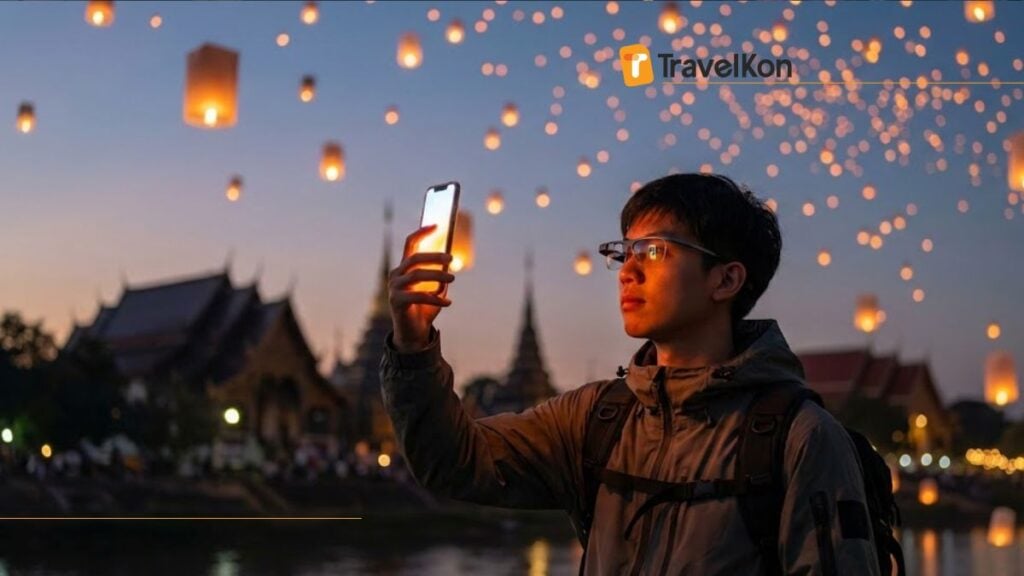
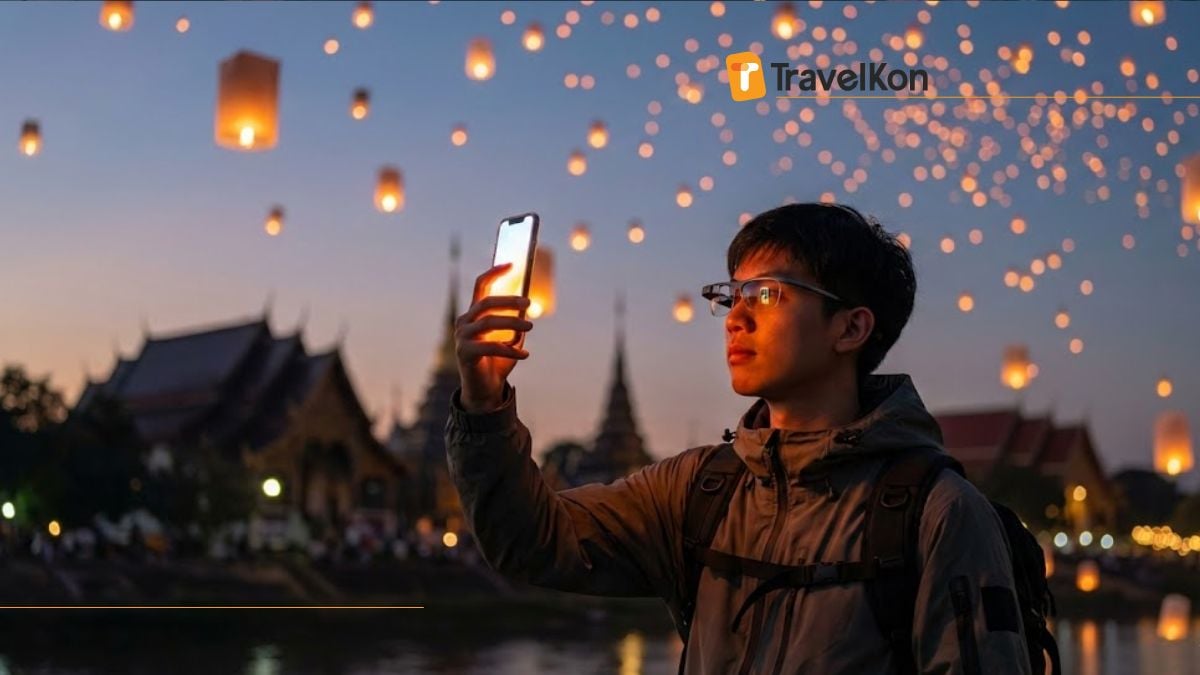
- The lamp festival Thailand refers to two overlapping celebrations — Yi Peng in northern Thailand and Loi Krathong nationwide, both occurring on the full moon of the 12th lunar month (usually November).
- Chiang Mai hosts the most photographed lantern festival in Thailand, with thousands of sky lanterns released simultaneously, though the experience differs significantly between public releases and ticketed events.
- Having reliable mobile data helps you navigate crowded festival areas, check release times, and share real-time location with travel companions — sorting a thailand esim before arrival removes one logistical hurdle.
Thailand’s lamp festivals aren’t a single event. Yi Peng is northern Thailand’s sky lantern tradition, concentrated in Chiang Mai and surrounding areas. Loi Krathong is the nationwide water lantern festival where people float decorated baskets (krathong) on rivers and waterways. They happen simultaneously on the same full moon night, which creates some confusion for first-time visitors trying to understand which festival is which.
The visual spectacle is real — thousands of illuminated sky lanterns rising into the night sky, rivers filled with flickering candle-lit floats, and temple grounds packed with celebrants. But the experience you’ll have depends entirely on where you go and whether you attend public celebrations or organized events. The free public releases in Chiang Mai feel chaotic and crowded. The ticketed mass releases are orchestrated and photogenic but lack spontaneity. Understanding the difference before you book accommodation matters more than most travel guides acknowledge.

Why These Festivals Stand Out
Compared to other light festivals in Southeast Asia, Thailand’s lamp celebrations offer scale and accessibility. The lantern festival in Thailand has become internationally recognized in a way that regional festivals haven’t, partly due to social media amplification and partly because Chiang Mai has built infrastructure specifically to accommodate tourists during Yi Peng.
The timing coincides with Thailand’s cool season, which means comfortable temperatures and minimal rain. The festivals happen after monsoon season ends and before peak tourist crowds arrive for Christmas and New Year, creating a window where weather is good but prices haven’t fully spiked. For backpackers, couples, and slow travelers planning Thailand trips in November, the festivals provide a cultural anchor point worth building an itinerary around.
Best Cities Hosting Lamp Festivals in Thailand
1. Chiang Mai (The Epicenter)
Chiang Mai is where most international visitors experience Yi Peng. The city hosts both massive ticketed lantern releases and spontaneous public celebrations along the Ping River. Organized events at Mae Jo University and CAD Khomloy offer synchronized releases where thousands of lanterns ascend together, creating the iconic visuals you’ve seen online.
Public celebrations happen throughout the old city, with highest concentration along the river near Nawarat Bridge and Tha Phae Gate. These are free, unstructured, and crowded. Traffic becomes impossible, accommodations book out months ahead, and prices spike significantly.
If you want the photograph, book a ticketed event. If you want authentic participation, join public celebrations.
2. Sukhothai (Historical Setting)
Sukhothai celebrates Loi Krathong in the historical park, transforming ancient ruins into a backdrop for traditional performances and water lantern floating. The scale is smaller than Chiang Mai, crowds are more manageable, and emphasis leans toward cultural preservation rather than tourist spectacle.
The limitations are fewer sky lanterns and less infrastructure for international visitors. English signage is minimal, organized tours are harder to find, and accommodation thins out quickly. If you prefer historical context and quieter celebrations, Sukhothai delivers.
3. Bangkok (Urban Celebration)
Bangkok’s Loi Krathong happens along the Chao Phraya River, with major gathering points at Asiatique, Benjakitti Park, and temple grounds. The celebration is diffused across multiple locations rather than concentrated, which reduces crowding but disperses energy.
Sky lanterns are officially banned in Bangkok due to flight safety, so this is purely water lanterns. The advantage is accessibility — you’re already in Bangkok. The disadvantage is it lacks Chiang Mai’s concentrated spectacle or Sukhothai’s historical gravitas.
4. Tak (The Traditional Alternative)
Tak province, northwest of Bangkok, hosts one of Thailand’s oldest Loi Krathong celebrations along the Ping River. The festival emphasizes traditional krathong designs, cultural performances, and local participation rather than tourist accommodation. The atmosphere feels less commodified than Chiang Mai.
Practical limitations are significant. Tak is harder to reach, has limited accommodation, and operates almost entirely in Thai. This is for travelers wanting to observe traditional celebrations rather than tourist-friendly versions.
5. Chiang Rai (Northern Alternative)
Chiang Rai offers smaller-scale Yi Peng and Loi Krathong with fewer international tourists than Chiang Mai. Lantern releases happen around the city’s lakes and along the Kok River, and the vibe is more relaxed. Accommodation is easier to secure, prices don’t spike as dramatically, and the city remains navigable during festivals.
The trade-off is scale — hundreds of lanterns rather than thousands. If you want Yi Peng without Chiang Mai chaos and don’t need mass release spectacle, Chiang Rai provides middle ground.
What to Do Beyond Lantern Releases
The festivals are single-night events, but most visitors spend several days in their chosen location. In Chiang Mai, daytime hours are good for temple visits, cooking classes, or day trips before evening celebrations begin. Sukhothai’s historical park deserves a full day separate from the festival.
Days leading up to the festival bring preparation activities — markets sell krathong-making materials, temples hold preliminary ceremonies, and cities install decorations. Watching locals prepare their own lanterns provides context that enriches the festival experience.
Post-festival mornings in Chiang Mai reveal crews spending hours collecting spent lanterns from fields and rooftops. The environmental impact becomes visible in ways nighttime photos don’t capture.
Festival Food Culture
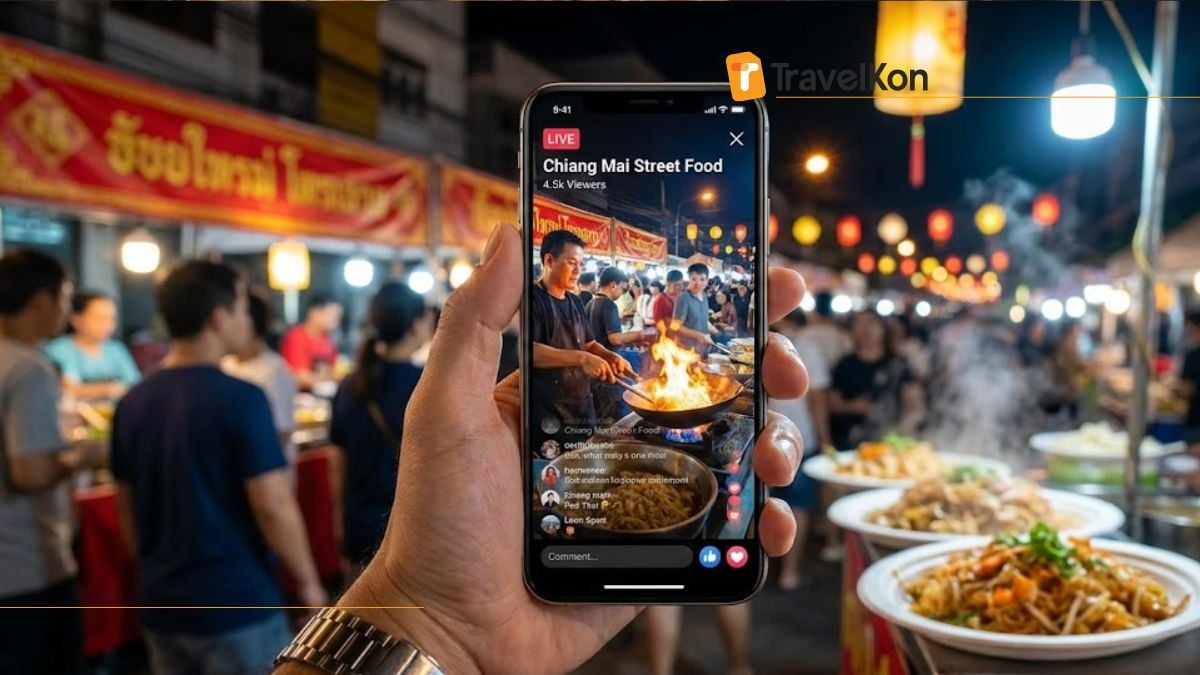
Street food vendors concentrate around festival areas, selling grilled skewers, pad thai, mango sticky rice, and festival-specific snacks. Prices inflate slightly during peak hours but remain reasonable — expect 50-100 baht for most items. Crowds mean longer waits, so eating before main evening events makes practical sense.
Restaurants near festival sites often require reservations days ahead, and riverside venues with lantern release views charge premium prices for mediocre food. The value proposition shifts from the meal to the view.
Where to Stay During Festivals
In Chiang Mai, staying inside the old city puts you walking distance from public celebrations but also in the center of festival chaos. The Nimman area offers slightly more distance and better accommodation while remaining accessible. Riverside hotels book out six months ahead, and prices triple or quadruple normal rates.
Sukhothai has limited accommodation, with most visitors staying in the new city and traveling to the historical park for celebrations. Booking months ahead is non-negotiable.
Bangkok offers the most accommodation flexibility since the city is large enough that festivals don’t overwhelm hotel infrastructure.
When Exactly to Visit
Yi Peng and Loi Krathong follow the lunar calendar, so dates shift yearly. November is typical, but confirming exact dates for your travel year matters when booking flights and accommodation. Main celebrations happen on the full moon night, with preliminary events the evening before and residual activities the following day.
Arriving 2-3 days before the festival allows time to settle in and understand the layout. Staying 1-2 days after lets you decompress and avoids competing with thousands trying to leave simultaneously.
Weather in November is generally cooperative — temperatures range from 20-30°C, rain is unlikely, and humidity is lower than earlier months.
Practical Festival Navigation
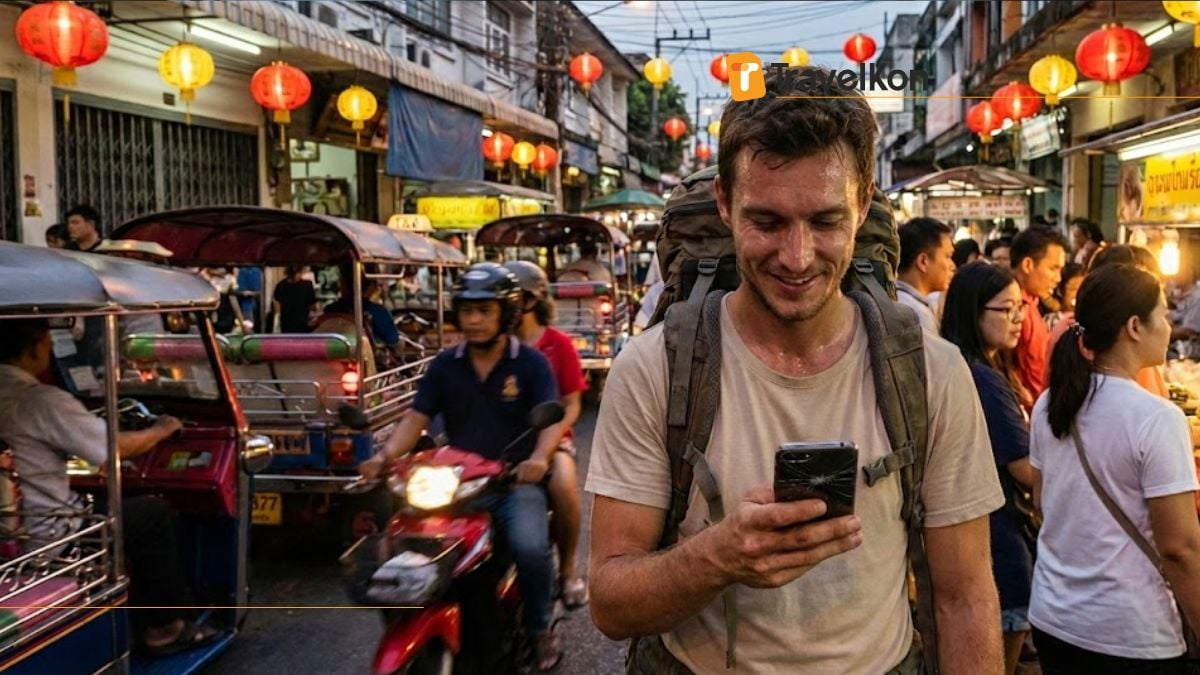
Transportation during festivals becomes complicated. In Chiang Mai, traffic near the old city stops functioning entirely on festival night. Walking is the most reliable option, though crowds make it slow. Grab and taxis surge price significantly.
Having working mobile data is more useful during festivals than most of the year. Coordinating with travel companions in crowds, checking real-time traffic, and navigating unfamiliar streets after dark all require connectivity. Whether an esim the best option for traveling in thailand depends on your needs, but having data sorted before landing removes one variable during complex few days.
Lanterns cost 50-100 baht from street vendors. Krathong materials range from 20 baht for simple leaf designs to several hundred for elaborate constructions. Ticketed mass releases cost 2,000-4,000 baht depending on organizer.
Safety concerns are real. Sky lanterns cause occasional fires when landing on dry fields or roofs. Rivers become crowded during krathong floating, so supervising children closely and being cautious near water matters.
Who Should Experience This (and Who Shouldn’t)
The lamp festivals work well for travelers who plan ahead, can handle crowds, and want to participate in large-scale cultural celebrations. The visual spectacle is genuine, the cultural significance is real, and the experience provides memorable moments that justify the logistical complexity.
It’s not ideal for travelers who dislike crowds, need spontaneity, or have tight budgets that can’t absorb festival price increases. The environmental impact troubles some visitors, and increasing commercialization of Yi Peng frustrates others.
Final Thoughts on Thailand’s Lantern Celebrations
Lamp festival Thailand delivers the spectacle it promises — thousands of lanterns illuminating the night sky and rivers filled with flickering lights create genuinely beautiful moments. The experience requires more planning and tolerance for crowds than regular Thailand travel, but for first-time visitors willing to navigate the logistics, the festivals provide cultural insight and visual memories that standard temple visits and beach days don’t match. Just understand what you’re signing up for: this is Thailand during a peak event, not Thailand as it exists the rest of the year.

