

- Places to visit in Vietnam for couples often centre on the same locations that offer the best accommodation: Lan Ha Bay overnight cruises, Hoi An boutique hotels, and the clifftop properties around Quy Nhon are all built around the couple-travel experience.
- Where to visit in Vietnam for the first time with family and where to find genuinely comfortable accommodation overlap more than most guides admit — Hoi An, Da Nang, and Phu Quoc all have well-developed family-friendly resort options at varied price points.
- Unique places to visit in Vietnam tend to also have the most characterful places to stay — Pu Luong’s stilt-house eco-retreats, Ninh Binh’s valley-view homestays, and Ha Giang’s ridge-top guesthouses are all part of what makes those destinations distinctive.
Where you sleep in Vietnam shapes the trip as much as where you go. The country has a range of accommodation that runs from riverfront boutique hotels in colonial shophouses to overwater structures above karst bays, hilltop retreats above rice terraces, and family-run homestays inside working villages. The most beautiful places to stay in Vietnam are not always the most expensive — several of the most atmospheric options are mid-range or budget-friendly — but they tend to be the ones that are physically connected to the landscape or cultural context around them rather than generic hotel blocks that could sit anywhere.
Before checking in anywhere, sort your connectivity first. A Best eSIM Vietnam for Tourists activates before you land and keeps you connected across the country — useful when navigating check-ins, adjusting plans between regions, or simply finding your way to a guesthouse on a narrow lane that doesn’t appear on printed maps.

Hoi An — Riverside Shophouses and Pool Villas
Hoi An has the highest concentration of atmospheric accommodation in Vietnam. The Ancient Town’s restored shophouses — narrow, multi-storey structures with internal courtyards, original timber framing, and lantern-lit facades — have been converted into boutique guesthouses that sit within the UNESCO-listed streetscape rather than adjacent to it. Staying inside the Old Town means waking up to a setting that most visitors only access during the day. Outside the town proper, the surrounding rice fields and the Thu Bon River have spawned a cluster of pool villa properties that offer seclusion without requiring a long transfer. For couples, Hoi An’s combination of walkable beauty and genuinely romantic accommodation makes it consistently one of the top stays in the country.
Lan Ha Bay — Overnight Cruises on the Water
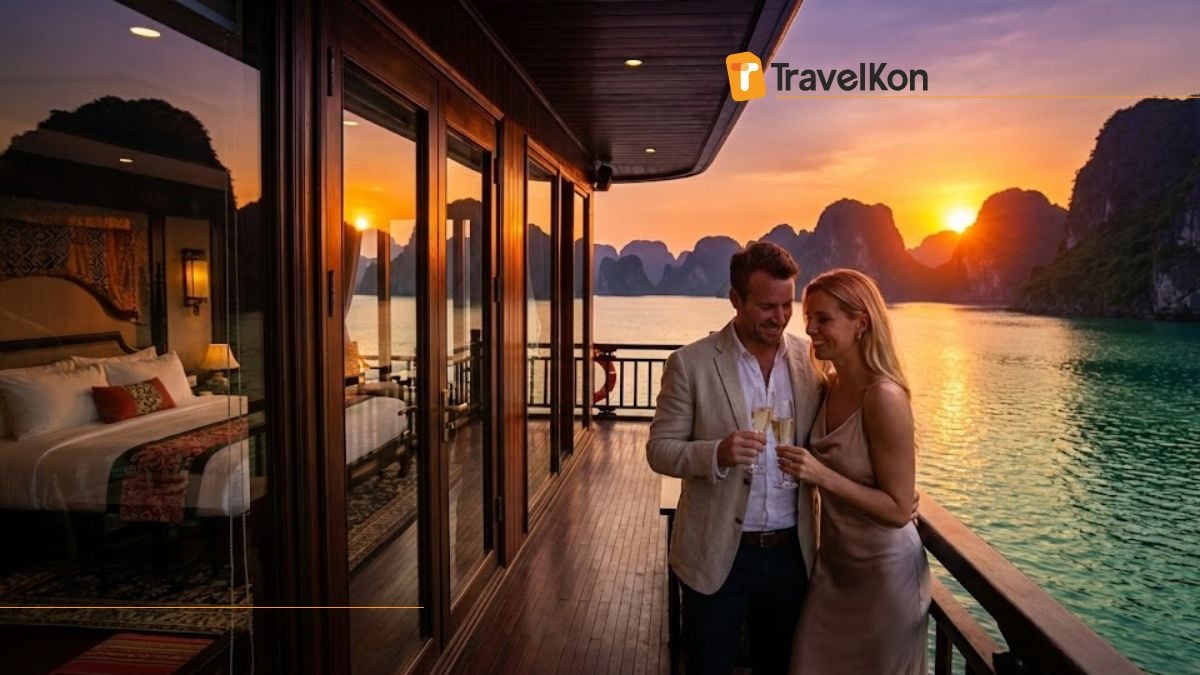
Lan Ha Bay, the quieter southern section of the Ha Long Bay complex, is best experienced from a small boat rather than from shore. Overnight cruises here range from refurbished wooden junks with shared cabins to purpose-built luxury vessels with private balconies, en-suite bathrooms, and sunset dining on deck. The experience of waking up surrounded by limestone karsts with no other boats visible — something that’s harder to guarantee in the more crowded northern part of Ha Long Bay — is what draws couples and slow travellers to Lan Ha specifically. The bay is at its most beautiful in late October through December, when skies clear and the water reflects the rock formations cleanly.
Dalat — Colonial Villas and Mountain Retreats
Dalat sits at 1,500 metres above sea level and retains more French colonial architecture than any other city in Vietnam. The accommodation here reflects that heritage: restored colonial villas with pine-surrounded gardens, boutique hotels occupying century-old buildings, and a cluster of newer eco-lodges built into the forested hillsides outside town. The Dalat Palace — a 1922 property on the edge of Xuan Huong Lake — is the most historically significant hotel in the city and one of the most atmospherically intact colonial properties in Southeast Asia. For couples seeking a cooler, European-feeling stay within Vietnam, Dalat offers something genuinely distinct from the tropical coast.
Phu Quoc — Resort Infrastructure at Scale
Phu Quoc has Vietnam’s most developed luxury resort corridor. The western coast, from Duong Dong down toward the south of the island, hosts international hotel brands alongside independent Vietnamese resort properties — all oriented toward the sunset, the white sand, and the clear water that makes this coast work. JW Marriott, InterContinental, and Fusion Resort are among the higher-end options; Mango Bay and the smaller independent properties offer a less corporate version of the same island access. The island is best suited to travellers who want a structured resort experience: private beach, pool, spa, and very little need to leave the property. For families, the combination of calm water, kids’ club infrastructure, and all-inclusive options makes it a reliable choice.
Ninh Binh — Valley Views and Riverside Guesthouses
The Ninh Binh valley — limestone karsts rising from flat paddy fields, rivers threading through cave systems — produces some of the most visually striking accommodation settings in Vietnam without the price tag of the major resort destinations. Guesthouses and small hotels in Tam Coc and Trang An are built to face the fields rather than a road, and the better ones have rooftop terraces or garden seating with unobstructed views of the karst landscape. The Emeralda Resort, set on the edge of the wetlands, is the most polished option in the area. For slow travellers and those who want landscape immersion at a modest price, Ninh Binh delivers more visual return per dollar than almost anywhere else in the country.
Pu Luong — Stilt Houses Above the Terraces
Pu Luong Nature Reserve, four hours from Hanoi by road, contains a handful of eco-retreats built in traditional Thai stilt-house style on the ridge above the valley. Pu Luong Retreat is the best known — its structures are elevated above the rice terraces on a hillside that catches both the morning mist and the late afternoon light across the fields. Staying here in September or October, during harvest season, means waking up to a valley that turns from green to gold over the course of a few weeks. It’s one of the more specific sensory experiences available in Vietnam, and the accommodation is integral to it rather than incidental.
Ha Giang — Ridge-Top Guesthouses in the Far North
Ha Giang province sits at Vietnam’s northernmost edge and has developed a small but distinctive accommodation scene built around the motorbike loop that draws travellers through its karst plateau. The guesthouses here — many of them family-run, some built as eco-lodges on ridge positions with views across multiple valleys — offer a physical setting that the rest of Vietnam can’t replicate. Lũng Cú, near the Chinese border, and Đồng Văn town have the most atmospheric options. Accommodation is basic to mid-range, but the landscape that frames it is extraordinary, particularly in October when the buckwheat flowers bloom across the plateau.
Da Nang — Urban Beach Hotels
Da Nang doesn’t have the colonial charm of Hoi An or the isolation of the island destinations, but its beach strip — My Khe Beach, running north from the city centre — has a well-developed resort corridor with some of the best sea-facing properties in central Vietnam. The Hyatt Regency, Furama, and a range of independent boutique hotels sit directly on the sand and offer a beach experience within easy reach of the city’s restaurants, markets, and transport links. For families and travellers who want beach access combined with urban infrastructure, Da Nang functions as a practical and visually appealing base.
Choosing Where to Stay
The most beautiful places to stay in Vietnam share one characteristic: they’re physically located within the experience rather than adjacent to it. A guesthouse inside Hoi An’s Old Town, a cruise cabin on Lan Ha Bay, a stilt house above Pu Luong’s terraces — in each case, the accommodation is part of what you’re there to see. Choosing based on that logic, rather than on star rating or price alone, produces the most coherent trips.A Vietnam eSIM Tourist from TravelKon covers the full country and activates before you board — so whether you’re navigating to a guesthouse in Ha Giang’s back roads or confirming a Lan Ha Bay cruise departure, you arrive with the tools you need already working.

