
- Baseball is the most popular sport in Japan by spectatorship, with professional games running from March through October across 12 NPB teams and some of the most passionate stadium atmospheres in the world.
- Traditional sports in Japan; sumo, kendo, judo, and karate; are still actively practiced and publicly accessible, with sumo tournaments held six times a year across Tokyo, Osaka, Nagoya, and Fukuoka.
- What is the national sport of Japan is a commonly debated question: sumo holds the unofficial cultural title, but baseball dominates by attendance and media coverage; both are worth experiencing firsthand.
Japan’s relationship with sport is layered in ways that travel guides rarely capture. Attending a baseball game in Japan isn’t just watching sport; it’s encountering organized crowd participation, meticulous stadium etiquette, and food culture that rivals the game itself. Visiting a sumo stable’s morning practice or watching a judo competition at the Kodokan requires a different kind of preparation, including local navigation that depends on reliable mobile data. Streaming live scores, checking stadium access maps, and translating match-day information all become easier with an Unlimited Japan eSIM for Heavy Data Usage; the best esim japan options cover the whole country so you’re connected whether you’re at Koshien Stadium in Osaka or a local martial arts hall in Tokyo.
10 Most Popular Sports in Japan
The most popular sport in Japan includes baseball, sumo, football, judo, kendo, golf, basketball, tennis, rugby, and keirin cycling;each with live events open to visitors year-round.
1. Baseball (Yakyu)
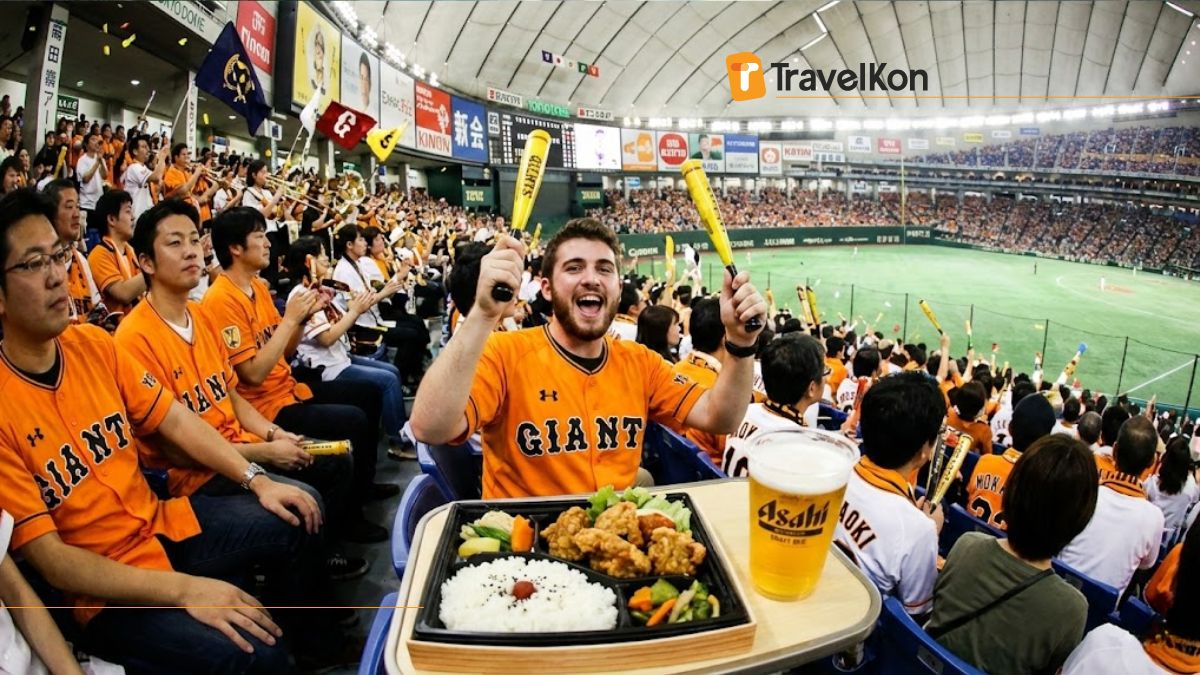

The Experience Japanese professional baseball; Nippon Professional Baseball (NPB); operates at a level of crowd engagement that surprises most international visitors. Dedicated cheering sections, synchronized chants, brass bands, and call-and-response routines fill entire stands. The crowd participation is organized and rehearsed, with individual players having their own fan chants. The stadium food is a genuine reason to attend; bento boxes, local beer, takoyaki, and ramen served hot at your seat differentiate the experience from watching at home.
First-Timer Guide Tickets range from ¥1,500 (outfield standing) to ¥8,000 (reserved seating near the dugout). Buy tickets online through club websites or at convenience stores. Most stadiums have English signage. Arrive early to watch batting practice and hear the pre-game chants warm up. Sitting in the cheering section delivers the most atmosphere but requires following crowd cues closely.
Cultural Aspect Baseball arrived in Japan in the 1870s and developed its own cultural identity; emphasis on team over individual, respect for pitching strategy, and the ritualized crowd behavior that now defines the NPB experience. Japanese baseball produces consistently competitive players who graduate to Major League Baseball, which deepens the sport’s cultural prestige.
City Events Tokyo (Yomiuri Giants at Tokyo Dome, Yakult Swallows at Jingu Stadium), Osaka (Hanshin Tigers at Koshien), Hiroshima (Carp at Mazda Stadium), Fukuoka (SoftBank Hawks at PayPay Dome).
Recommended Time to Visit:
- March through October for regular season games
- October playoff series for highest atmosphere intensity
- Opening Day (late March) for stadium ceremony traditions
2. Sumo
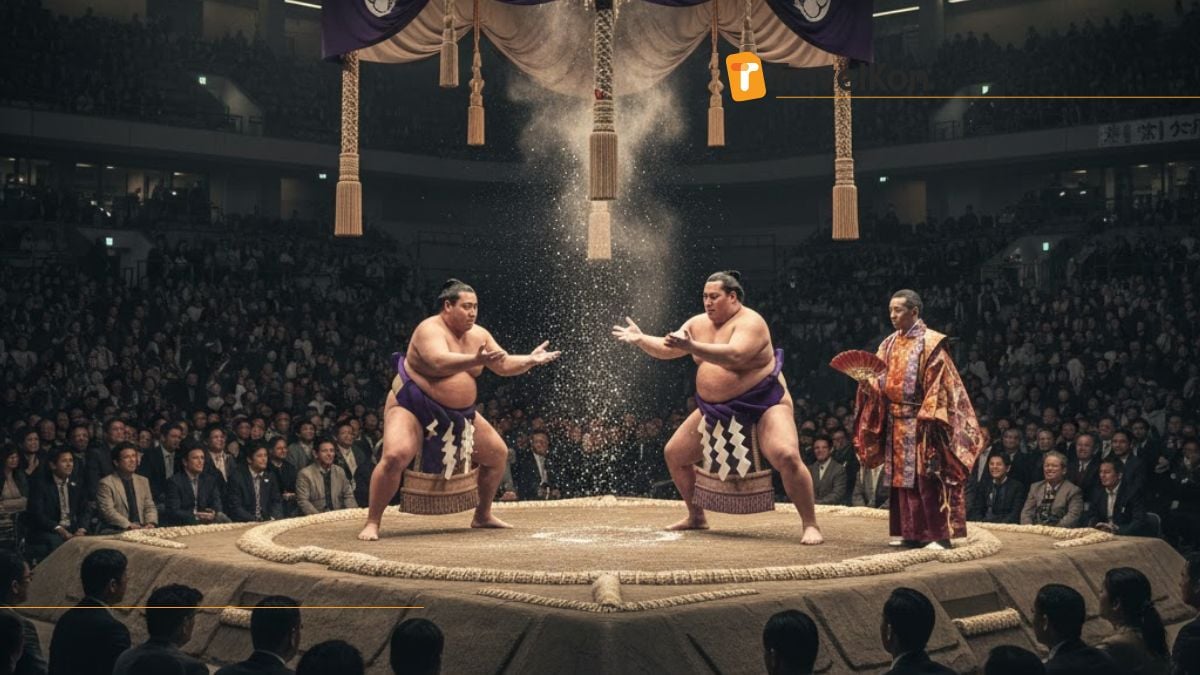
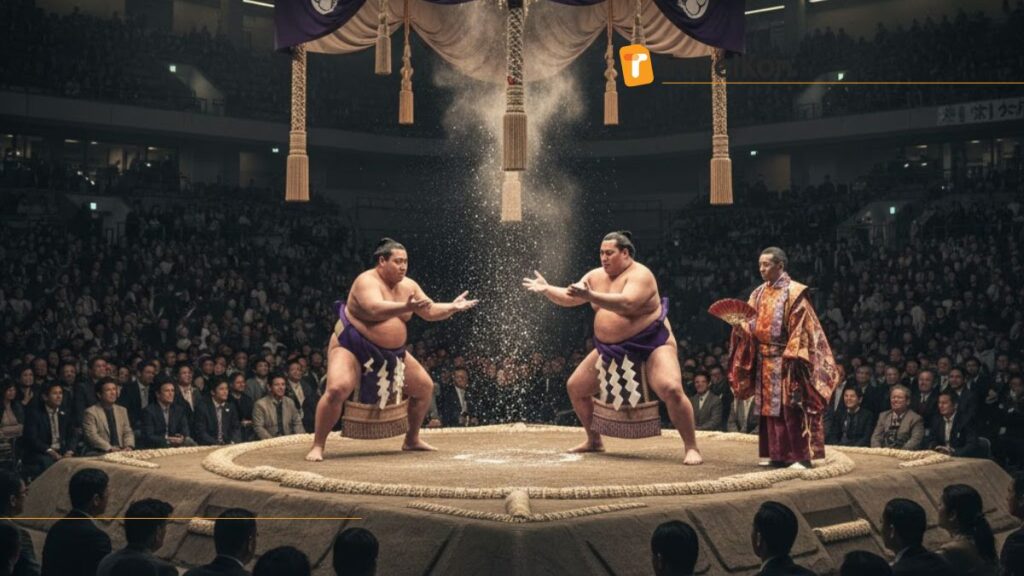
The Experience A sumo basho (tournament) is one of Japan’s most culturally distinct sporting events. The 15-day tournaments run from morning through late afternoon, with lower-ranked bouts in the morning giving way to the top-division makuuchi wrestlers in the final two hours. The ceremony surrounding each bout; the ritual purification, the referee’s traditional costume, the ring announcer’s chanting; is as much the point as the bout itself, which typically lasts seconds.
First-Timer Guide Tickets range from ¥2,200 (general seating) to ¥14,800 (ringside, requiring advance booking months ahead). Arrive mid-morning to watch lower-division bouts with thin crowds and close access. The main event bouts run from approximately 4 PM. The Kokugikan in Tokyo is the most accessible venue; box seats require groups of four. Food stalls inside serve chankonabe (sumo stew) and traditional snacks.
Cultural Aspect Sumo is Japan’s oldest codified sport, with roots in Shinto ritual. The ring (dohyo) is considered sacred, the pre-bout ceremonies are Shinto in origin, and the wrestlers’ ranking system reflects strict hierarchical tradition. What is the national sport of Japan is answered here by cultural weight; sumo carries the deepest historical identity even if baseball leads in attendance.
City Events Tokyo (Kokugikan, January, May, September), Osaka (March), Nagoya (July), Fukuoka (November).
Recommended Time to Visit:
- January basho in Tokyo for New Year tournament atmosphere
- May basho for the most festive outdoor surroundings near Ryogoku
- November Fukuoka basho for western Japan sumo culture experience
3. Football (Soccer)
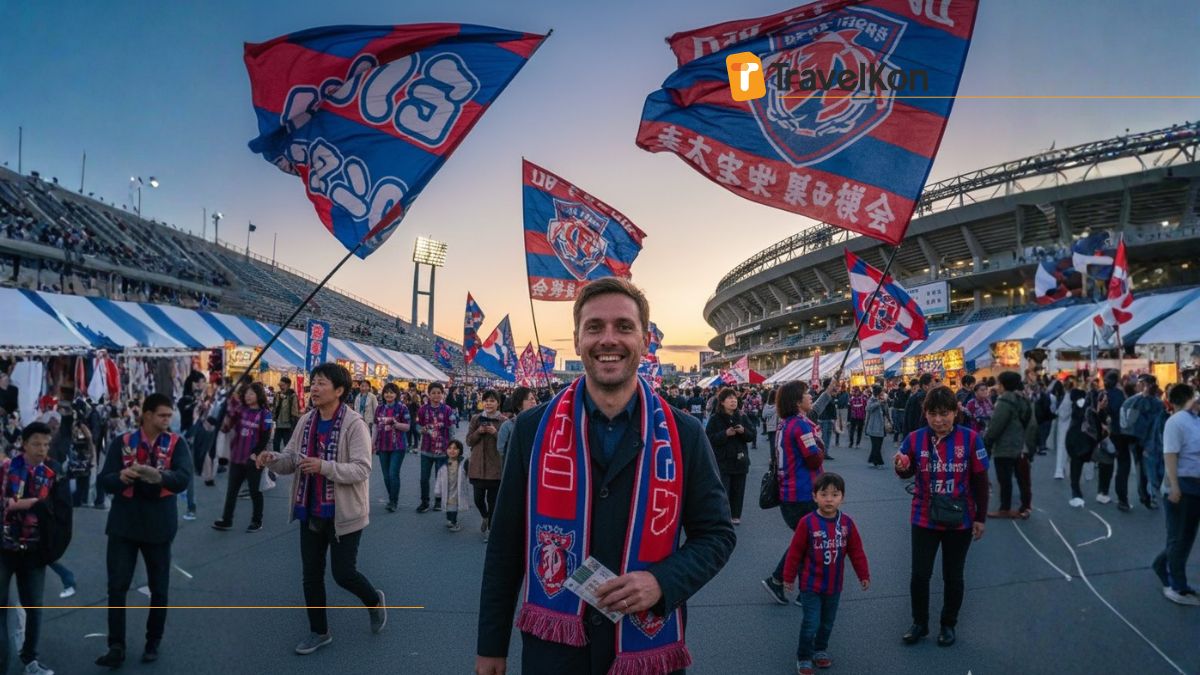
The Experience Japan’s J.League runs from February through November across two professional divisions. Stadiums are modern, crowds are organized and respectful, and the supporter culture borrows from European football while maintaining Japanese restraint. Matches are clean, well-managed events with family sections, dedicated supporter stands, and efficient stadium transit.
First-Timer Guide Tickets cost ¥1,500-6,000 depending on seat category and club. Buy at the stadium on match day for most fixtures outside of major rivalry games. J1 League fixtures list on the official J.League website with English navigation. Travel by train to most stadiums; car access is limited and public transit is the standard approach.
Cultural Aspect Japanese football culture developed rapidly after the J.League launched in 1993, producing national team players who regularly compete in European leagues. Best sports to watch in Japan for international visitors often includes J.League matches precisely because the organized, family-accessible atmosphere differs from football culture in Europe or South America.
City Events Tokyo (FC Tokyo, Tokyo Verdy), Yokohama (Yokohama F.Marinos), Osaka (Gamba Osaka, Cerezo Osaka), Nagoya (Nagoya Grampus), Sapporo (Consadole Sapporo).
Recommended Time to Visit:
- March to June for spring season openers and milder weather
- September to November for playoff competition and cooler conditions
- December if Osaka or Yokohama are hosting J.League Championship fixtures
4. Judo
The Experience Judo was developed in Japan in 1882 and remains one of the country’s most practiced and internationally recognized martial arts. Watching competitive judo; particularly at the Kodokan in Tokyo, judo’s founding institution; provides direct access to the sport’s technical depth. The scoring system (ippon, waza-ari) is learnable in minutes, and the speed of elite-level bouts is startling after watching recreational practice.
First-Timer Guide The Kodokan in Tokyo allows visitors to observe practice sessions and competitions. Check the Kodokan’s schedule online for open tournament days. Entry is low-cost or free for observation. Dress modestly; this is a training institution, not a tourist attraction. Competitions are generally silent and respectful environments.
Cultural Aspect Judo’s philosophy; mutual benefit and minimum effort for maximum effect; extends beyond competition into how the sport is taught and practiced. Traditional sports in Japan consistently carry ethical frameworks that the sport’s founder, Jigoro Kano, deliberately built into judo’s structure.
City Events Tokyo (Kodokan, IJF World Tour Grand Slam Tokyo in December), Osaka, and national university tournament circuits throughout the year.
Recommended Time to Visit:
- December for the IJF Grand Slam Tokyo international tournament
- Year-round for Kodokan practice observation
- April for university competition season openers
5. Kendo
The Experience Kendo is practiced in high school gyms, community centers, and dedicated dojos across Japan, which means encounters with it happen organically during travel. The sound of shinai (bamboo swords) striking armor is audible from outside training halls. Watching a kendo match is arresting; the speed, the controlled aggression, and the sharp kiai (shouts) create an atmosphere unlike any other sport.
First-Timer Guide Finding kendo is straightforward; most cities have public dojos that allow observation. Kendo tournaments are held at sports halls and advertised locally. The All Japan Kendo Championship is held annually in November at the Nippon Budokan in Tokyo, which is the most accessible major competition for visitors.
Cultural Aspect Kendo descends from samurai swordsmanship, and its practice retains the formality and respect protocols of its origin. The bow before and after each match, the maintenance of equipment, and the relationship between student and sensei all reflect traditions that have changed little over centuries.
City Events Tokyo (Nippon Budokan, November Championship), regional tournaments year-round across prefectures.
Recommended Time to Visit:
- November for the All Japan Kendo Championship at Budokan
- Spring for regional high school tournaments (public and often free entry)
- Year-round for dojo observation in any major city
6. Golf
The Experience Japan has one of the world’s highest densities of golf courses, and the sport commands significant spectatorship and media presence. The Japan Golf Tour runs from early spring through autumn, with tournaments held across well-maintained private and semi-private courses. Attending a Japanese golf tournament provides a quieter, more deliberate sporting experience compared to baseball or football crowds.
First-Timer Guide Tournament tickets are generally available online and at the gate. Japanese golf gallery behavior is extremely respectful; silence during shots is absolute, and spectators move efficiently between holes. Course food and hospitality tend to be well-organized. English information is limited but distances and leaderboards are universally legible.
Cultural Aspect Golf in Japan occupies a social role beyond recreation; corporate culture uses it heavily, and the sport’s popularity has created a large amateur ecosystem of driving ranges (available in city centers) and public courses alongside elite tournament venues.
City Events Major events rotate between courses in Chiba, Hyogo, Shizuoka, and Hokkaido. The Japan Open Golf Championship and Dunlop Phoenix Tournament are the most prominent.
Recommended Time to Visit:
- October and November for autumn tournament season and ideal playing weather
- April to June for spring circuit events
- Avoid summer heat (July-August) when outdoor tournaments become less comfortable for spectating
7. Basketball
The Experience Japan’s B.League, launched in 2016, has grown rapidly in professionalism and attendance. Arenas are modern, the pace is fast, and the crowd atmosphere is enthusiastic without the orchestrated intensity of baseball. The national team’s improved performances at international competitions have elevated interest considerably.
First-Timer Guide Tickets are affordable (¥1,500-5,000) and available online or at venues. B.League runs from October through May, with playoffs in April-May providing the most competitive fixtures. Most team websites offer English ticket purchasing. Arenas are typically easy to reach by train and well-signposted.
Cultural Aspect Basketball’s growth in Japan reflects broader shifts in sports viewership among younger generations, who follow international leagues (NBA) alongside domestic competition. The sport has fewer traditional cultural roots than sumo or kendo but is among the best sports to watch in Japan for visitors seeking a modern, globally familiar sporting context.
City Events Tokyo (Alvark Tokyo, Tokyo Excellence), Osaka (Hannaryz), Nagoya (Dolphins), Chiba (Jets), Ryukyu (Okinawa).
Recommended Time to Visit:
- October to December for early season when rivalries are fresh
- April for playoff intensity
- January-February for mid-season form and competitive fixture lists
8. Tennis
The Experience Japan hosts ATP and WTA tour events that attract strong international fields alongside domestic talent. The Japan Open (men’s) and Pan Pacific Open (women’s) are the primary events, held in Tokyo in September and October. Attending either provides access to top-ranked international players in a well-run venue with knowledgeable crowds.
First-Timer Guide Tickets for early rounds are generally accessible; quarter-finals and beyond require advance booking. Ariake Tennis Park in Tokyo is the primary venue, easily accessible from central Tokyo by train. Grounds passes (covering all courts except centre) are significantly cheaper than assigned seating and suit visitors wanting variety.
Cultural Aspect Tennis has a strong recreational base in Japan, with public courts available in most city parks. The success of players like Naomi Osaka and Kei Nishikori has elevated the sport’s profile domestically and internationally.
City Events Tokyo (Ariake Tennis Park, September-October), Osaka (Pan Pacific rotation).
Recommended Time to Visit:
- Late September for Japan Open (men’s ATP 500 event)
- Early October for overlapping tournament finals period
- Avoid mid-summer outdoor events due to heat and humidity
9. Rugby
The Experience Japan’s Rugby World Cup 2019 hosting role and the national team’s performances raised rugby’s profile dramatically. The Japan Rugby League One; the top domestic competition; runs from January through May. Matches are physical, well-attended, and held at modern stadiums that benefit from post-World Cup infrastructure investment.
First-Timer Guide Tickets cost ¥1,500-6,000 and are available online and at venues. The competition involves teams from major cities, and fixtures are listed on the Japan Rugby Football Union website with English support. Arrive early to explore stadium precincts, which host food stalls and team merchandise.
Cultural Aspect Rugby has a strong university and regional identity in Japan, with club rivalries that predate the professional era. The sport’s values; discipline, collective effort, respect for opponents; align with broader Japanese sporting culture, which may explain its sustained growth beyond the World Cup boom.
City Events Tokyo (Chichibunomiya Rugby Stadium), Yokohama (Nissan Stadium), Osaka, Kobe, and multiple regional venues.
Recommended Time to Visit:
- January to May for Japan Rugby League One season
- February and March for playoff-positioning matches with highest competitiveness
- Spring university championship season (March-April) for grassroots rugby culture
10. Cycling (Track and Road)
The Experience Keirin; a form of track cycling with pari-mutuel betting; is one of Japan’s most deeply embedded spectator sports and one of its lesser-known cultural exports (it was introduced to the Olympic program via Japan). Velodromes (keiba-jo) operate across Japan’s prefectures, and the atmosphere at a keirin meet is unlike any other cycling event globally; part sport, part betting hall, part neighborhood institution.
First-Timer Guide Keirin meets are open to the public and general admission costs ¥100. Purchase a race program to follow cyclist numbers. Betting is optional; most visitors attend for the atmosphere and racing without placing bets. The Shuzenji Velodrome in Shizuoka and Izu Velodrome (Olympic venue) are accessible for visitors. Road cycling events like the Tour of Japan draw smaller crowds but offer scenic routes through mountain terrain.
Cultural Aspect Keirin was established in 1948 as a government-regulated betting sport to generate postwar reconstruction funds. It remains government-supervised, and professional keirin cyclists train at a national institute in Izu. The sport’s Olympic adoption in 2000 added international recognition to what had long been a uniquely Japanese institution.
City Events Keirin meets rotate through velodromes nationwide. Tokyo (Keiokaku Velodrome), Osaka (Kishiwada Velodrome), Izu (Shizuoka). Tour of Japan stages in May.
Recommended Time to Visit:
- Year-round for keirin meets (check regional velodrome schedules)
- May for Tour of Japan road cycling stages
- August for Izu Velodrome events near the Olympic facility
Japan as a Sports Travel Destination
Japan’s sporting calendar offers something across every month of the year; sumo in January, baseball from March, football and basketball through autumn, and traditional martial arts competitions year-round. The most popular sport in Japan depends on which metric you use, but for visitors, the answer is less important than understanding which sport fits your travel timing, city itinerary, and interest level.Navigating between venues, checking fixture schedules in real time, and translating stadium signage all depend on reliable data. Sporting events tend to concentrate attendance at specific transport hubs, and having a best esim japan plan active before you arrive means you spend less time hunting for WiFi at busy stations and more time finding your seat before the first ball, bout, or bout begins.

