
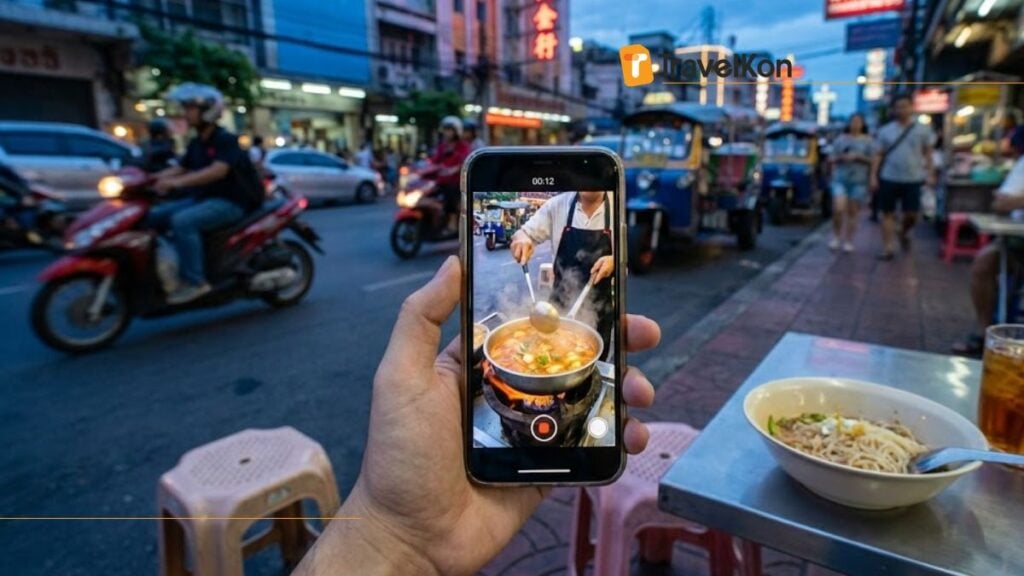
- Street food Thailand Bangkok runs on its own rhythm — vendors set up by location and time of day, with peak hours between 6-9 PM when locals finish work and night markets open.
- The best street food concentrates in specific neighborhoods rather than being evenly distributed, and knowing where to go matters more than wandering randomly.
- Having working mobile data helps when navigating between food zones, checking vendor reviews, and calling rides back to your accommodation — an affordable thailand esim for students and travellers sorted before arrival removes that friction.
Bangkok’s street food isn’t a tourist attraction that happens to serve food. It’s the city’s primary eating infrastructure — where locals eat breakfast before work, grab lunch between meetings, and gather for dinner after the commute home. The vendors are professionals operating businesses, not performers staging experiences for visitors. The food is consistent, affordable, and deeply integrated into how Bangkok functions as a city.
For first-time visitors, the density can be disorienting. Street food appears everywhere — on sidewalks, in alleys, at market intersections, and along major roads. Understanding which areas concentrate the best vendors, when they operate, and how to order without speaking Thai makes the difference between frustrating confusion and efficient eating.

Why Bangkok’s Street Food Stands Out
Compared to other Southeast Asian cities, Bangkok’s street food infrastructure is deeper and more specialized. The vendor density is higher than Hanoi, the quality standards are more consistent than Manila, and the variety exceeds what you’ll find in Singapore’s hawker centers. While Penang and Saigon have exceptional street food scenes, Bangkok’s scale and specialization — vendors who’ve made the same dish for decades — create a different level of refinement.
The appeal comes down to three factors: affordability (most dishes cost 40-80 baht), accessibility (food is available nearly 24 hours somewhere in the city), and quality that comes from extreme specialization. A vendor making only pad thai for twenty years produces better pad thai than most restaurants. That focused expertise, repeated across thousands of vendors, is what makes Bangkok’s street food genuinely exceptional.
Best Bangkok Neighborhoods for Street Food (Where to Eat)
1. Yaowarat Road (Chinatown’s Food Epicenter)
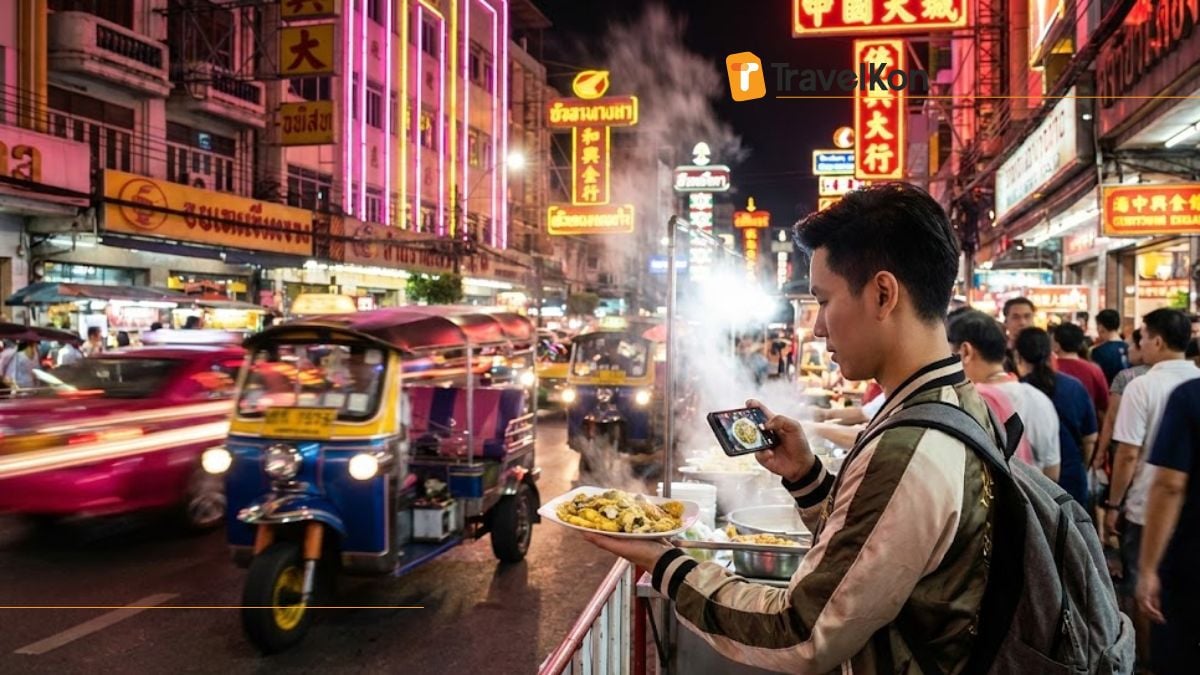
Yaowarat is Bangkok’s most concentrated street food zone. The road transforms into a pedestrian food market every evening, with vendors lining both sides serving everything from grilled seafood to noodle soups to oyster omelets. The crowd is overwhelmingly local, energy peaks around 8 PM, and quality is consistently high.
The famous street food here leans toward Chinese-Thai fusion — roasted duck, dim sum, and wonton noodles. Prices are slightly higher than neighborhood vendors (60-120 baht) but still affordable. If you’re comfortable with crowds and minimal English, Yaowarat delivers. If you need personal space, it will overwhelm you.
2. Victory Monument (Local Workers’ Hub)
Victory Monument isn’t on tourist itineraries, which is why it works for street food. The area serves office workers and students, so food is cheap (30-60 baht), portions generous, and vendors operate on efficiency. The boat noodle alley here is particularly strong.
The limitation is accessibility. Victory Monument is crowded, chaotic, and offers zero concessions to tourists. If you’re comfortable observing locals and replicating their behavior, it’s one of Bangkok’s best value-to-quality ratios.
3. Ratchawat Market (Night Market Energy)
Ratchawat operates as a proper night market with dedicated street food sections. The layout is more organized than Yaowarat, vendors have more space, and the crowd is mixed between locals and expats. The food ranges from standard Thai street dishes to regional specialties from northeastern Thailand.
Prices sit in the middle range (50-100 baht), and the atmosphere is more relaxed than Chinatown’s intensity. This is a good entry point for first-time street food eaters who want variety without full immersion.
4. Sukhumvit Soi 38 (Convenient Tourist-Friendly Option)
Soi 38 used to be Bangkok’s default recommendation for accessible street food near tourist areas. It’s been reduced in size over the years, but what remains still offers solid pad thai, mango sticky rice, and grilled seafood in a location easy to reach via BTS. Vendors here are used to foreigners and prices are clearly displayed.
The downside is authenticity — Soi 38 feels like street food for people who want the experience without the full street environment. Prices are higher (80-150 baht) and the crowd is majority tourist. If convenience matters more than deep authenticity, it works.
5. Or Tor Kor Market (Elevated Market Experience)
Or Tor Kor is technically a market rather than pure street food, but deserves inclusion for the quality of prepared food in the food court section. The vendors are vetted, hygiene standards are higher, and ingredient quality is noticeably better.
Prices reflect the upgrade (80-200 baht per dish), and the atmosphere is more sanitized than authentic street energy. If you have food safety concerns or prefer air-conditioned eating, Or Tor Kor provides middle ground.
What Street Food Eating Actually Involves
Eating street food in Bangkok follows patterns that become obvious after a few days. You order by pointing or using basic Thai phrases, pay immediately or after eating depending on the vendor, and eat standing at high tables, sitting on plastic stools, or walking. Napkins are minimal, hand washing stations are rare.
The rhythm is: walk until you see a vendor with a queue of locals, observe what they’re ordering, point at what looks good, and pay. Most vendors operate the same dish repeatedly, so decision fatigue is low. Specialization makes ordering simple once you understand the system.
Pricing and Payment Realities
Street food pricing in Bangkok is straightforward. Noodle dishes cost 40-60 baht, rice plates run 50-80 baht, grilled meats on sticks are 10-20 baht each, and drinks cost 20-40 baht. A full meal with drink typically costs 60-100 baht total. Michelin star street food vendors — Bangkok has several — charge slightly more (80-150 baht) but remain affordable.
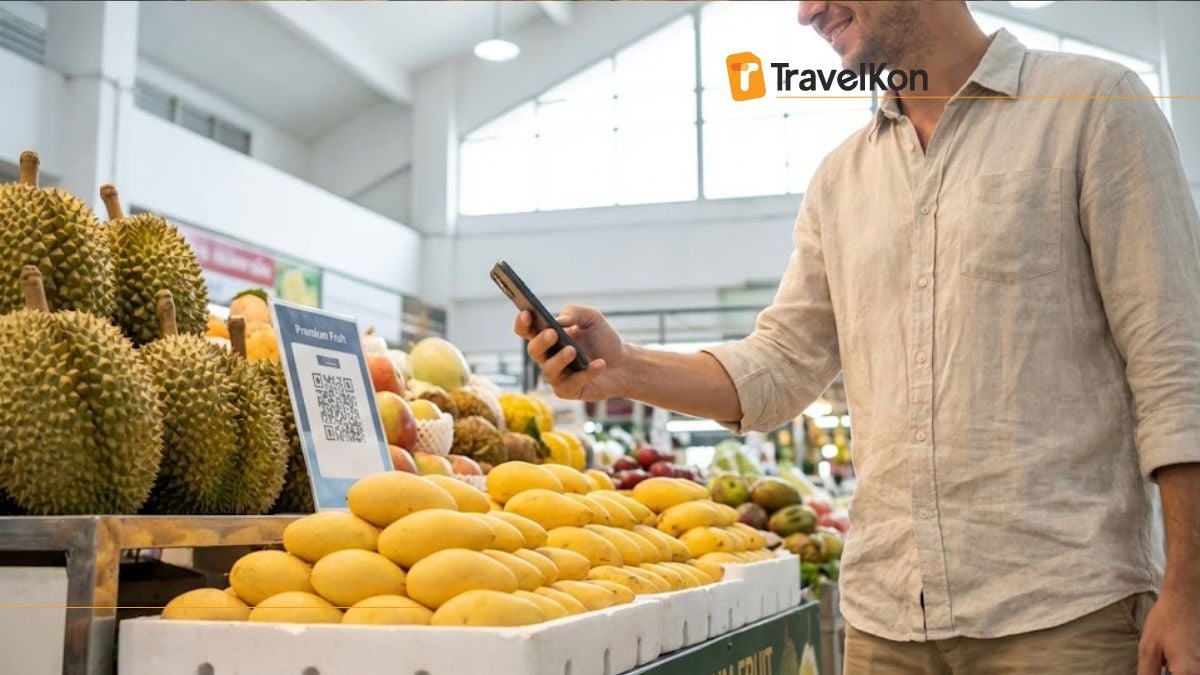
Cash is standard. Carrying small bills (20, 50, 100 baht notes) prevents change-making delays. Tipping is not expected at street stalls, though rounding up is appreciated.
Where to Base Yourself for Street Food Access
Staying near Sukhumvit provides easy access to Soi 38 and nearby vendors, plus BTS connections to other food zones. The trade-off is that Sukhumvit is tourist-heavy and more expensive. If street food is your priority, staying near Chinatown or Ratchathewi (near Victory Monument) puts you closer to authentic concentrations.
Khao San Road has street food, but it’s tourist-oriented and lower quality. For maximum street food access with reasonable accommodation costs, areas around Hua Lamphong or Phaya Thai work well.
When Street Food is Best (and Worst)
Bangkok street food operates year-round, but comfort varies seasonally. November through February brings cooler evenings that make outdoor eating more pleasant. March through May is hot enough that midday outdoor vendors become uncomfortable.
Time of day matters more than season. Morning vendors (6-9 AM) serve breakfast. Lunch vendors (11 AM-2 PM) offer rice plates and noodles. Evening vendors (5-10 PM) bring the most variety and energy. Late-night options (10 PM-2 AM) exist near nightlife zones but are limited.
Practical Street Food Navigation
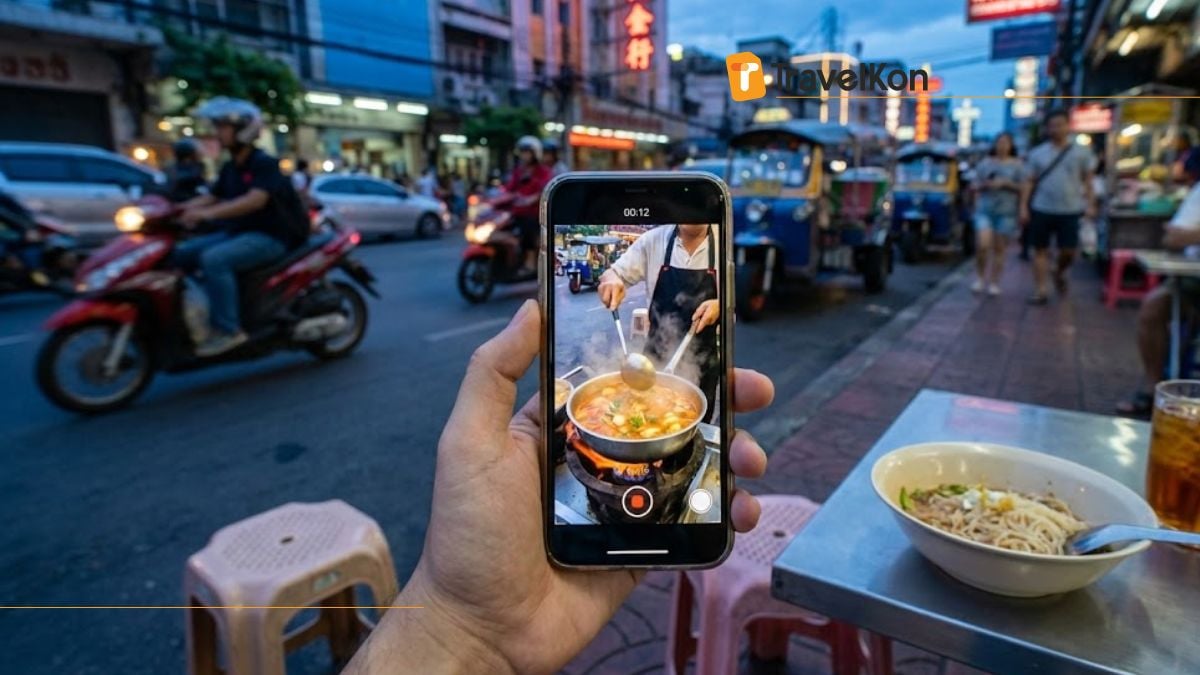
Getting around Bangkok’s street food zones requires planning. BTS and MRT cover major areas, but many best vendors require taxi or walking from stations. Having working mobile data to use Google Maps, check vendor locations, and call Grab makes navigation significantly easier. A thailand esim activated before you arrive means you can navigate from the moment you land.
Language barriers are real but manageable. Pointing works universally. Many vendors have photo menus or display examples. Food safety concerns are often overstated — vendors serving queues of locals daily are operating successful businesses with returning customers.
Bring small bills, expect basic seating, and understand that hygiene standards differ from Western restaurants. If you have serious food sensitivities, street food becomes more complicated.
Who Bangkok Street Food Suits (and Isn’t For)
Bangkok’s street food works for backpackers who want affordable authentic eating, couples comfortable with basic conditions, and slow travelers who want to eat where locals eat. The value is exceptional, variety prevents monotony, and the experience is genuinely Thai.
It doesn’t suit travelers with strict dietary restrictions (vegetarian options exist but are limited), anyone requiring pristine hygiene conditions, or people uncomfortable with crowds and basic facilities. If you need air conditioning and table service, stick to restaurants.
Final Thoughts on Street Food Thailand Bangkok
Street food Thailand Bangkok offers depth, affordability, and authenticity that restaurant eating can’t match. The best street food concentrates in specific neighborhoods with their own rhythms and specialties, and knowing where to go eliminates the randomness that frustrates some first-time visitors. The key is understanding that this is functional eating infrastructure for locals that happens to welcome visitors, not a performance staged for tourism. Approach it on those terms, and it delivers.

