
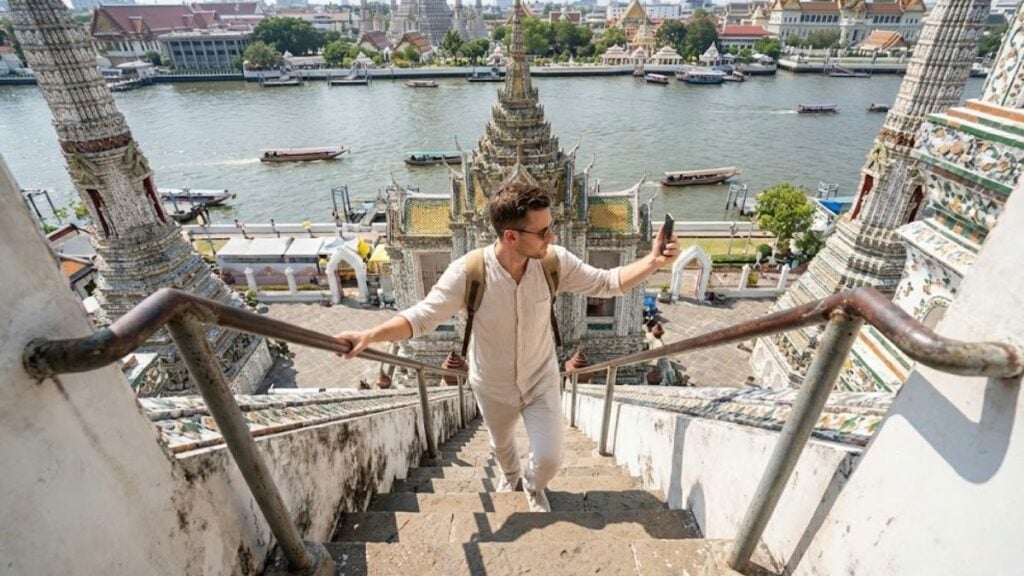
Wat Arun is not a sprawling temple complex where you’ll spend half a day wandering between buildings. It’s a single, striking structure, steep, ornate, and designed to be climbed. The entire visit to Wat Arun takes between 30 minutes and an hour, depending on how long you spend on the stairs and how thoroughly you examine the details up close.
It sits on the western bank of the Chao Phraya River, directly across from Wat Pho and the Grand Palace. Most people visit Wat Arun as part of a broader temple route through Bangkok, and that makes sense, it’s close to other major sites, accessible by boat, and distinct enough in design to justify the crossing. For first-time visitors to Bangkok, it’s one of the city’s clearer visual anchors.
- Wat Arun, called the Temple of Dawn, is one of Bangkok’s most recognizable temples, its 70-metre central spire is visible from across the Chao Phraya River.
- The temple is busiest mid-morning through early afternoon; visiting early or watching Wat Arun sunset from the opposite riverbank offers a quieter experience.
- Getting there involves a short ferry crossing from the Tha Tien pier, and having a prepaid esim thailand with instant activation makes navigating Bangkok’s boat routes far simpler.

Why Wat Arun Called the Temple of Dawn Stands Out
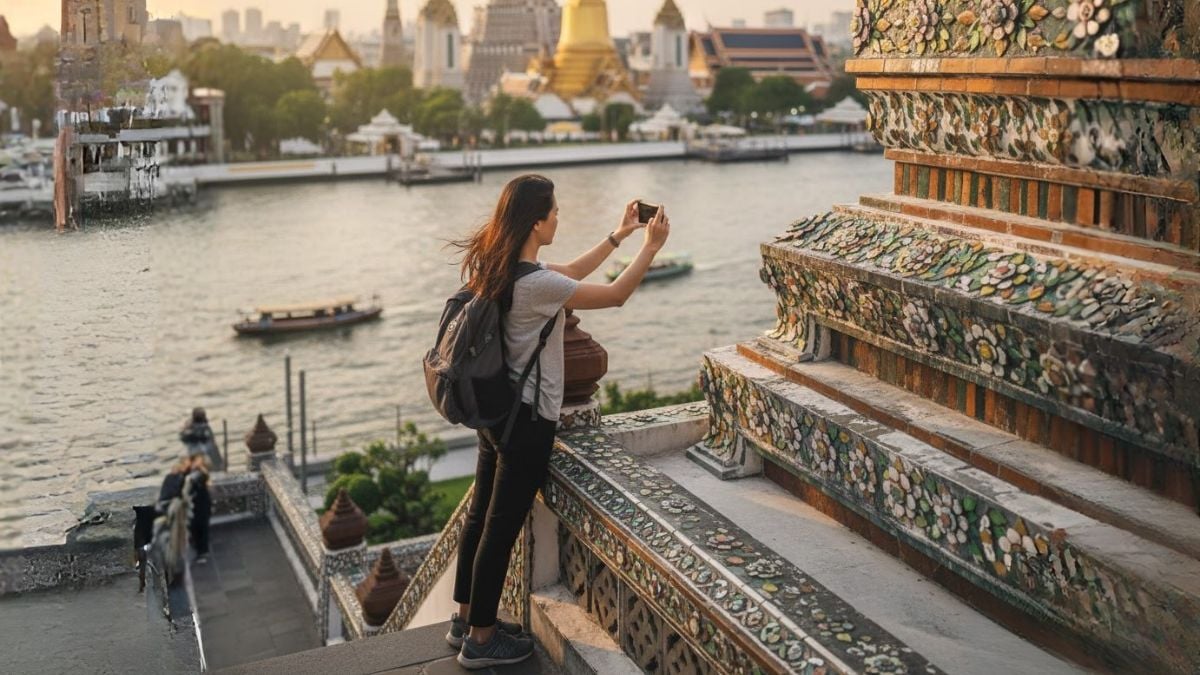
Bangkok has dozens of temples, and many are older or larger than Wat Arun. What sets this one apart is its architecture. The central prang is covered in fragments of porcelain and seashells arranged in intricate floral patterns that catch light differently throughout the day. It’s Khmer-influenced rather than purely Thai, which gives it a different silhouette compared to the golden spires elsewhere in the city.
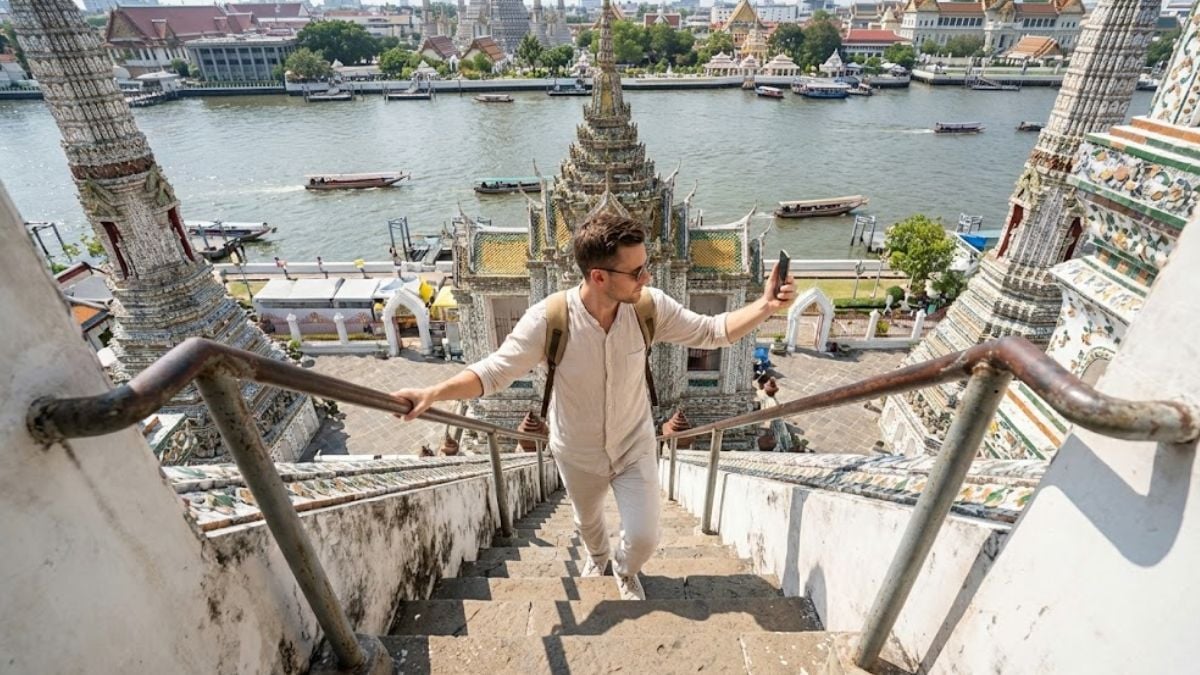
The climb is part of the experience. The stairs are steep with railings installed for a reason, and the higher platforms offer clear views over the river and into older Bangkok. If you have mobility concerns or are uncomfortable with heights, you can appreciate the temple from ground level without losing much.
Where to Go Inside Wat Arun
Climbing the Central Prang
This is the main tower, and it’s what most people come to see and climb. The steps are narrow and steeply inclined, so you’ll be holding the railing both ways. The views from the upper levels are worth it, you get a clean sightline across the river to Wat Pho and the Grand Palace, and better perspective on Bangkok’s riverside architecture than you’ll find from street level.
The decorative details are easier to appreciate up close. The porcelain shards form flowers, mythical creatures, and geometric patterns. Early mornings or late afternoons bring softer light that works better for photography, though the temple is open and climbable throughout the day.
The Riverfront and Temple Grounds
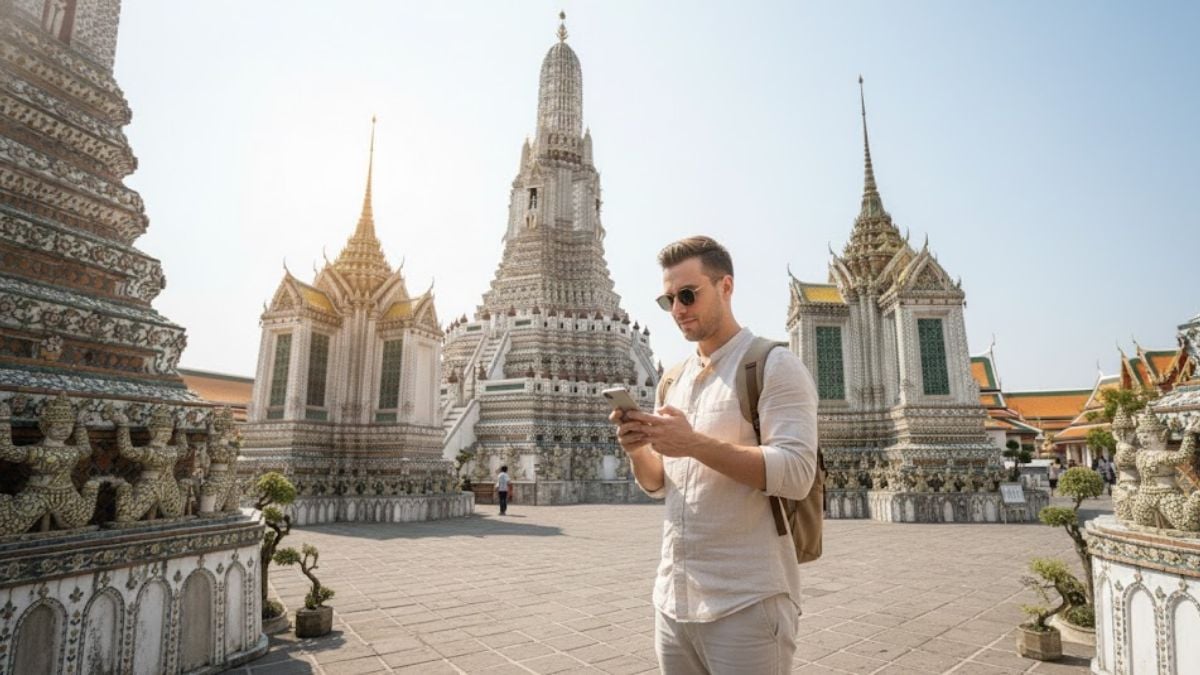
The grounds around the prang are small but well-maintained. There are smaller prangs at each corner, statues of mythical guardians, and a few pavilions. Most visitors move through quickly on their way to the stairs.
The riverfront offers a decent vantage point for photos of the central tower, especially in late afternoon when the sun hits the porcelain directly. If you’re planning to watch Wat Arun sunset, the view from across the river, from Tha Tien or riverside cafés on the opposite bank, is clearer and less obstructed.
The Four Surrounding Prangs
These smaller towers surround the main spire and are easier to overlook in the rush toward the central prang. Each is decorated in a similar style but with different guardian figures at the base. They’re not climbable, but walking around them gives you a sense of the symmetry in the temple’s design. The craftsmanship is detailed enough that it rewards a slower look, particularly if you’re interested in Thai Buddhist iconography.
The Ordination Hall (Quieter Side of the Complex)
Behind the main prang sits a smaller ordination hall with a reclining Buddha inside. It’s quieter here, fewer tourists make it this far, and the hall itself is functional rather than ornate. If you want a moment away from the stairs and the crowds, this area provides it. The Buddha image is restrained and worth a brief stop if you’re not rushing through the site.
Wat Arun Sunset Views from Tha Tien Pier
Technically not part of the temple complex, but the pier on the opposite bank is where most people first see Wat Arun properly. The view from Tha Tien gives you the full profile of the temple against the sky, and it’s one of the most-photographed angles in Bangkok. Early morning and late afternoon offer the best light. Several small cafés and street food stalls line the riverbank here, and sitting with a coffee while watching the temple across the water is a low-effort way to appreciate the site before or after your visit to Wat Arun.
What to Do in Wat Arun Beyond the Climb
Wat Arun is a single-site visit. Once you’ve climbed the prang and walked the grounds, there’s not much else within the temple complex itself. What it does offer is easy access to the rest of Bangkok’s riverside temple circuit.
Most people take the ferry back to Tha Tien and continue to Wat Pho or the Grand Palace. If you want to slow the pace, small cafés and street food vendors near the pier let you sit and watch the river traffic.
Wat Arun at night is worth seeing from the river. The temple is lit up after dark, and while you can’t climb it during those hours, the illuminated spire is visible from several points along the Chao Phraya.
Where to Eat Near Wat Arun
The immediate area around Wat Arun is limited for food. There are a few vendors near the pier selling drinks and snacks, but this isn’t where you’ll find a proper meal. To eat near Wat Arun, cross back to the eastern bank. The streets around Tha Tien pier have plenty of options, street stalls, small shophouse restaurants, and sit-down places catering to both locals and tourists.
Expect to pay 50 to 150 baht for a meal at a local spot. Portions are filling, and if you’re looking for something more curated, riverside restaurants are within a ten-minute walk, though prices increase accordingly.
Which Bangkok Neighborhood to Stay In
Most visitors stay on the eastern bank in areas like Rattanakosin, Khao San, or Silom. These neighbourhoods put you within walking distance or a short boat ride from the major temple sites, and the infrastructure for travellers is well-established.
Staying on the Thonburi side (western bank, where Wat Arun is located) is quieter and less saturated with tourists. The trade-off is more frequent ferry or taxi trips to reach other parts of the city, and lower density of restaurants and services.
When to Visit Wat Arun (Timing and Weather)
Wat Arun is open daily from early morning until evening. The quietest windows are right after opening (around 8:00 AM) and late afternoon. If you want to climb the prang without waiting in a queue, aim for those times.
Weather in Bangkok is warm year-round, with the hottest months from March to May and rainy season from June to October. The temple has minimal shade, so visiting during cooler months (November to February) is more comfortable. Rain doesn’t close the temple, but it makes the stairs slippery.
Sunset is popular for photographing the temple, but you’ll be doing that from across the river. The light on the porcelain-covered prang shifts throughout the day, and late afternoon brings out the textures more clearly than harsh midday sun.
How to Get to Wat Arun from Bangkok
Getting to Wat Arun from central Bangkok is straightforward. Take the BTS to Saphan Taksin station, then catch the Chao Phraya Express Boat to Tha Tien pier. From there, a cross-river ferry runs frequently, fare is 4 baht, crossing takes three minutes. The ferry drops you directly at the temple entrance.
If you’re combining Wat Arun with Wat Pho or the Grand Palace, do those first and save Wat Arun for the afternoon. The eastern bank sites are larger and more time-intensive.
Dress modestly. Shoulders and knees should be covered, and entrance attendants will turn you away if you’re not dressed appropriately. Small scarves and wraps are sold near the entrance if needed. Admission is 50 baht.
Having working mobile data is useful here. The boat routes can be confusing on a first visit, and having a map that updates in real time removes the guesswork. A thailand esim sorted before you arrive means you’re not hunting for WiFi or fumbling with local SIM cards on arrival day.
Who Should (and Shouldn’t) Visit Wat Arun
Wat Arun works well for first-time visitors to Bangkok who want to see one of the city’s more distinctive temples without committing to a full day of temple-hopping. It’s good for couples, backpackers, and slow travellers who appreciate architecture and don’t mind a steep climb. The whole monastery is compact enough that it fits easily into a broader itinerary.
It is not the right choice if you’re looking for a quiet, contemplative temple experience. Wat Arun is popular, there are crowds, particularly during peak tourist season, and the atmosphere leans toward sightseeing rather than spiritual reflection. If mobility or steep stairs are an issue, you can still visit and appreciate the temple from ground level, but you’ll miss the climb and the views.
Final Thoughts on Visiting the Temple of the Dawn
Wat Arun doesn’t need to be the centerpiece of your Bangkok trip, but it earns its place on most itineraries. The architecture is distinct, the views from the prang are clear and worthwhile, and the location along the river makes it easy to fold into a day of temple visits without backtracking. It’s not overhyped, and it’s not underwhelming, it’s exactly what it appears to be from across the water, and that clarity is part of what makes it work.

