
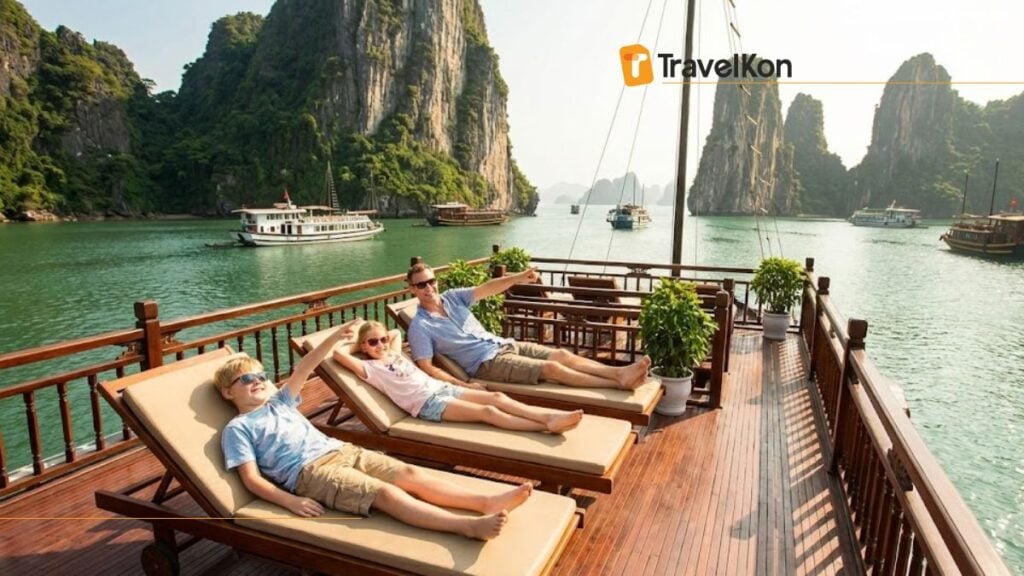
- Vietnam’s north-to-south travel corridor — from Hanoi down to Ho Chi Minh City — is one of the most logistically straightforward routes in Southeast Asia, with trains, buses, and budget flights connecting every major stop.
- Where to visit in Vietnam for the first time with family is easier to answer than most destinations: Hoi An, Ha Long Bay, and Ho Chi Minh City all have well-developed tourist infrastructure and very low safety concerns.
- Unique places to visit in Vietnam extend well beyond the main trail — Phong Nha, Quy Nhon, and Ha Giang offer genuinely different experiences for travellers willing to go slightly off the standard itinerary.
Vietnam is one of the most visited countries in Southeast Asia for a reason that has less to do with marketing and more to do with how the country actually functions for travellers. The tourist infrastructure is well-developed, the costs are low relative to quality, the food is approachable for most palates, and the route logic is clear enough that a first-time visitor can plan a coherent trip without specialist knowledge. It suits backpackers, couples, and slow travellers in roughly equal measure — and the country is long enough that each of those travel styles can find its own rhythm within it.
Before departure, connectivity is worth sorting. A Best eSIM Vietnam for Tourists gives you a local data plan active before you land — useful from the first Grab ride out of the airport, and essential once you’re navigating between cities. Vietnam runs on apps, and arriving without data means making the first day harder than it needs to be.

The North-to-South Route Is Genuinely Logical
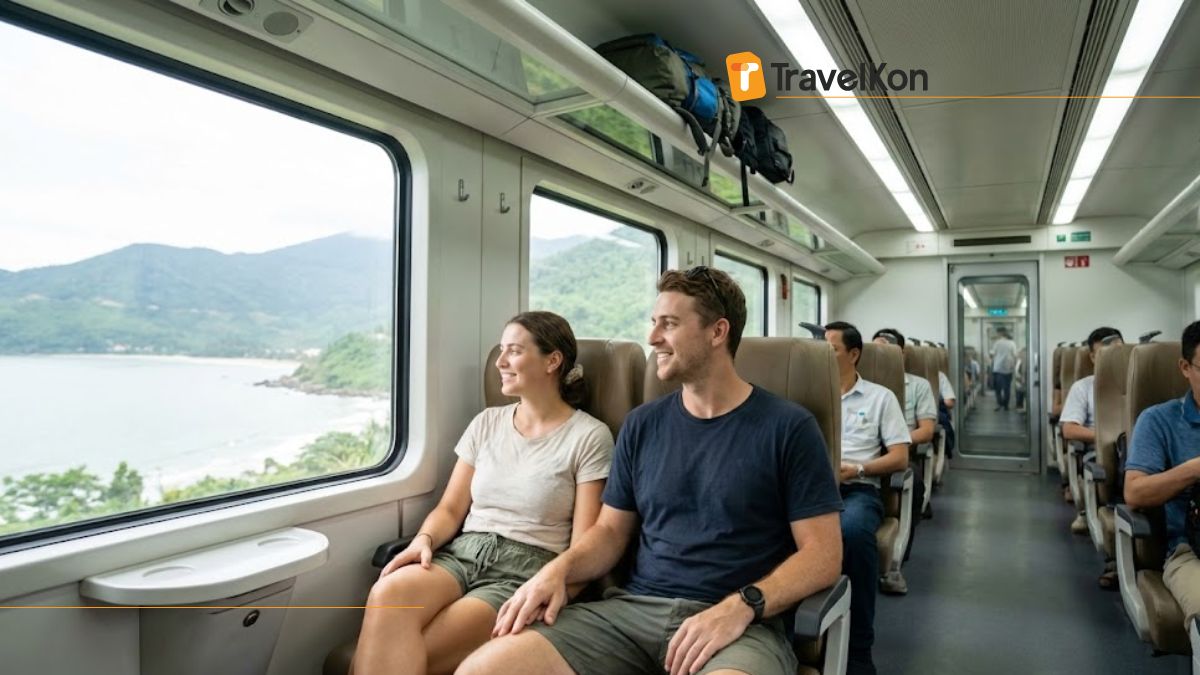
Most first-time visitors follow a corridor between Hanoi and Ho Chi Minh City that has been well-travelled for decades. The Reunification Express train runs the full length of the country and stops at every major tourist hub — Ninh Binh, Hue, Da Nang, Nha Trang — making it possible to build an itinerary around the train schedule without complex planning. Budget domestic flights connect the same cities in under two hours when train travel feels too slow. Open bus tickets, available from dozens of operators, allow hop-on, hop-off flexibility across the whole route for a fixed upfront cost.
The result is that first-time visitors rarely feel stranded or lost. The flow of travellers along this corridor is consistent, the guesthouses and hostels are designed around it, and the transport between stops is reliable enough to adjust plans on relatively short notice. For someone who has never travelled independently in Asia before, this structure reduces the anxiety of the unknown considerably.
Street Food That Doesn’t Require Bravery
Vietnamese food is an entry point into Asian cuisine that works for most Western palates. It’s fresh rather than heavy, herb-forward rather than chilli-dominant, and built around dishes — pho, banh mi, bun bo hue, com tam — that are globally recognised enough to feel familiar on first encounter. The spice levels are generally lower than Thai or Sichuan food, which makes the exploration less confrontational for those who haven’t eaten widely across Asian cuisines.
The plastic-stool pavement culture — plastic furniture, low tables, food cooked in front of you — is one of the defining experiences of eating in Vietnam and requires very little adjustment. Food tours run in every major city and are worth doing early in a trip; they provide context for what you’re eating and remove the hesitation of choosing blindly from an unfamiliar menu.
Safety and the Solo Traveller
Vietnam is consistently regarded as one of the safer countries in Southeast Asia for independent travellers, including women travelling alone. Violent crime against tourists is rare. The more practical concerns are traffic — Vietnamese cities run on motorbikes and crossing a busy road requires a specific technique (walk steadily, don’t stop, let the traffic flow around you) — and the standard vigilance around bags and phones in crowded areas.
Locals are generally patient with first-time visitors and accustomed to communicating across language gaps. The international traveller community on the main trail is large enough that meeting people in hostels, on tours, or on the train requires almost no effort. For solo travellers specifically, Vietnam is a country where isolation is harder to maintain than connection.
Affordable Quality Across Every Budget Level
Vietnam’s pricing structure is one of its most consistent appeals. A genuinely good boutique hotel in Hoi An or Hue — private room, pool, breakfast, attentive service — costs a fraction of what equivalent quality would run in Europe or Australia. Even at the budget end, hostels in Vietnam often include amenities that would be considered mid-range elsewhere: clean facilities, communal spaces, and occasionally pools. Spa treatments, private cooking classes, and guided day tours are priced as everyday options rather than special occasions.
This compression of the price-quality gap means that first-time travellers on almost any budget can access experiences that feel considered rather than compromised. Places to visit in Vietnam for couples particularly benefit from this — the romantic infrastructure of overnight bay cruises, boutique accommodation, and candlelit riverside dining is accessible at a price point that would be impossible in most comparable destinations.
Eight UNESCO Sites in One Country
Vietnam holds eight UNESCO World Heritage Sites — a concentration that rewards even a moderately long trip. Ha Long Bay and the adjacent Lan Ha Bay offer karst limestone scenery on overnight cruises that have become one of the most iconic travel experiences in Asia. Hoi An Ancient Town is exceptionally well-preserved and genuinely walkable. The Imperial City in Hue, the My Son Hindu sanctuary, and the Trang An landscape complex in Ninh Binh round out a list that covers natural wonder, ancient history, and living cultural heritage within a single itinerary.
The accessibility of these sites is part of what makes Vietnam work for first-timers. Most are served by tourist shuttles, well-marked, and staffed with guides available in multiple languages. The learning curve for navigating them is low.
Tech-Ready and App-Friendly
Vietnam is straightforward to navigate digitally. Grab is the dominant ride-hailing app and works reliably in every city, eliminating the taxi negotiation that causes stress in other parts of Southeast Asia. Google Maps covers the country accurately. Google Translate with the camera function handles most menus and signage. Wi-Fi is available in almost every cafe, hotel, and guesthouse, including in smaller towns.
For travellers who want a local data connection from the moment they land, a Vietnam eSIM Tourist from TravelKon is worth activating before departure. It removes the airport SIM queue and ensures Grab and Maps are working before you’ve collected your luggage.
The E-Visa Makes Entry Simple
Most nationalities can now apply for a Vietnamese e-visa online — a 90-day, multiple-entry permit processed through a government portal without embassy involvement. The application takes around 15–20 minutes, costs a modest fee, and is typically processed within three to five working days. The multiple-entry option is useful for travellers who want to use Vietnam as a base and make side trips into Cambodia or Laos.
This ease of entry removes one of the more anxiety-inducing parts of first-time international travel. There is no visa-on-arrival uncertainty, no agent required, and no paperwork beyond the online form and a passport photo. For someone planning their first independent trip to Asia, it’s a meaningful reduction in pre-departure complexity.
What to Expect When You Arrive
Vietnam is not a country that softens its edges for visitors. Cities are loud, traffic is genuinely intense, and the pace of daily life in Hanoi or Ho Chi Minh City takes adjustment. That adjustment usually happens within a day or two, and what initially reads as overwhelming tends to resolve into something that feels energetic and engaging. The country rewards travellers who engage with it directly — who eat at the pavement stall rather than the tourist restaurant, take the train rather than the private transfer, and give themselves enough time to slow down in the places that are worth slowing down for. For first-time visitors to Asia, there are few better starting points.

