

- What is the most beautiful part of Vietnam? Most travellers point to either Ha Giang in the far north or the coastline around Lan Ha Bay — both reward those willing to go slightly off the most-visited path.
- Which part of Vietnam is best for tourists depends more on pace and interest than on any single ranking — the country is long enough that north, central, and south feel like separate destinations.
- Where to go in Vietnam for first timers is less about ticking landmarks and more about choosing a rhythm: city-focused, nature-based, beach-heavy, or some combination of all three.
Vietnam doesn’t have one character. It has ten, at least — and the best places to visit in Vietnam shift entirely depending on whether you’re moving fast or slow, travelling alone or with someone, chasing coastline or mountain landscapes. The country is long enough that the north and south feel like genuinely different countries, connected by a central stretch that has its own distinct identity. First-time visitors often underestimate how much ground the country covers and overestimate how much they can reasonably fit into a single trip.
Before diving into where to go, one practical note: Vietnam’s mobile coverage is strong in cities and along major tourist routes, but moving between regions — especially in the north — means relying on data for navigation, transport bookings, and accommodation. An Unlimited Data eSIM for Vietnam Travel removes the friction of finding a SIM on arrival and keeps you connected whether you’re in a Hanoi alley or halfway up a mountain road in Ha Giang. It’s one of those small logistical decisions that pays off from the first hour.
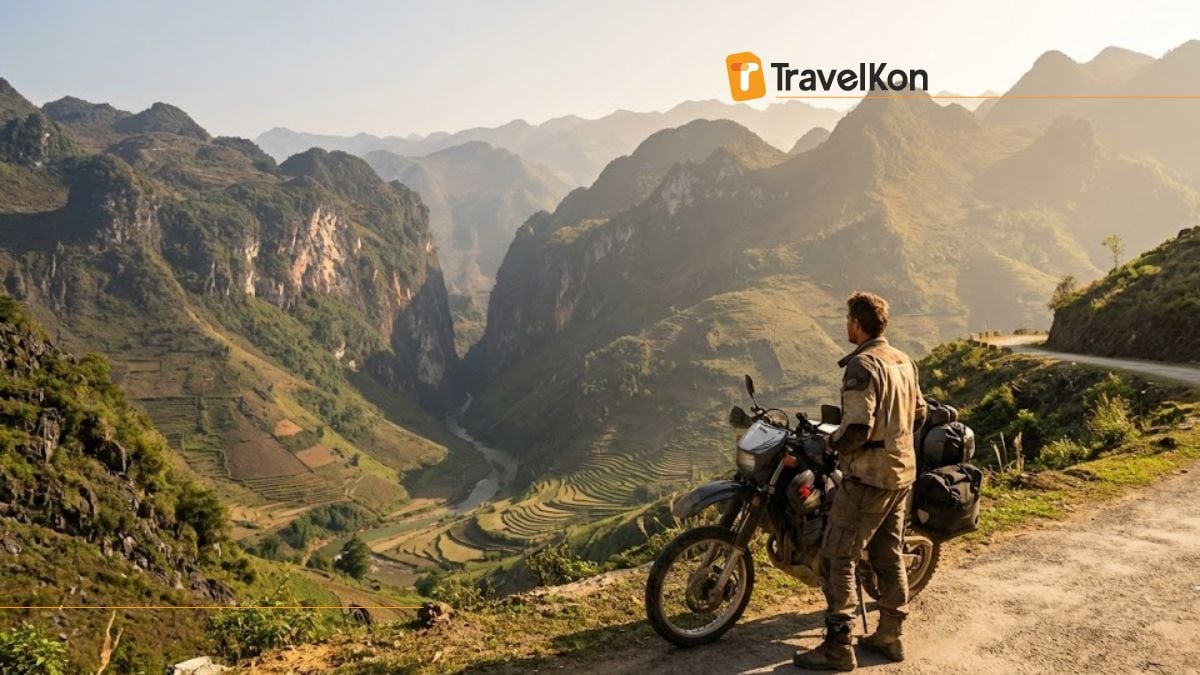

Ha Giang Loop — For Solo Travellers
Ha Giang sits at Vietnam’s northernmost tip and offers something the more-visited parts of the country don’t: a sense of genuine openness. The loop road winds through karst limestone mountains, past ethnic minority villages, and across passes with unobstructed views in every direction. Solo travellers often join “easy rider” tours — guided motorbike journeys with local drivers — which naturally creates a community. Homestays along the route are social by design; it’s difficult to feel isolated here even when the landscape feels remote.
Best Month: October to November, when buckwheat flowers bloom across the plateau and mountain views are at their clearest before winter mist sets in.
Hoi An Ancient Town — For Families
Hoi An is one of the few places in Vietnam where families with young children can walk freely without needing to navigate heavy traffic. The Old Town is compact, largely pedestrianised in the evenings, and built around activities that work for multiple age groups — lantern-making workshops, boat rides through the coconut forest, and tailors who will make custom clothing in 24 hours. The town is visually consistent in a way that makes it easy to explore without a map.
Best Month: March to May, when the weather is dry and mild — practical conditions for walking with children through outdoor markets and temple courtyards.
Lan Ha Bay — For Couples
Lan Ha Bay sits adjacent to the more famous Ha Long Bay but receives a fraction of the boat traffic. The karst landscape is identical; the atmosphere is considerably quieter. Overnight cruises here tend toward smaller vessels with private balconies, and the evenings — when the day boats have left and the water settles — offer a stillness that Ha Long Bay rarely provides. It’s a better choice for couples who want the scenery without the crowd.
Best Month: October to December, when cooler air and clear skies produce the most consistent conditions for sunset views across the karst mountains.
Da Nang — For Digital Nomads
Da Nang has built a functional infrastructure for remote workers: high-speed internet is widely available, the cost of living is low relative to the quality, and the beach is genuinely close to the city centre — not a taxi ride away, but minutes. The remote worker community here is established enough that co-working spaces are plentiful and the social layer is easy to access. It’s a city that rewards a longer stay rather than a stopover.
Best Month: February to May, when weather is reliable enough for beach days without the humidity becoming a factor in daily productivity.
Ho Chi Minh City — For Food Enthusiasts
Ho Chi Minh City operates at a pace and intensity that other Vietnamese cities don’t match. Its food culture runs from pavement stalls serving com tam on plastic stools to rooftop bars with structured menus and serious wine lists. Vespa food tours — which take small groups through the city’s neighbourhoods by motorbike after dark — have become one of the most popular ways for visitors to access the range of what’s available. The city rewards those who approach it as a food destination rather than just a transit point.
Best Month: December to March, when dry season evenings make outdoor eating comfortable and food tours run without rain interruption.
Sapa — For Adventure Trekkers
Sapa’s appeal is physical. Fansipan, the highest peak in Indochina, is accessible from here, and the surrounding valleys contain multi-day trekking routes through ethnic minority villages that are still largely agricultural in character. The terrain is genuinely demanding in parts, and the experience of staying in a village homestay mid-trek is one of the more distinct things available in Southeast Asia. Sapa town itself has grown considerably, but the routes away from it remain compelling.
Best Month: September to October, when the harvest turns the rice terraces yellow and the mountain views are unobstructed before winter cloud sets in.
Dalat — For Honeymooners
Dalat sits at around 1,500 metres above sea level, which gives it a climate unlike anywhere else in southern Vietnam. French colonial architecture from the early twentieth century is still largely intact, and the surrounding landscape — pine forests, flower farms, waterfalls — provides a visual contrast to the tropical lowlands. For couples wanting a honeymoon that doesn’t involve a beach, Dalat offers an atmosphere that is genuinely distinct within Vietnam.
Best Month: December to February, when flower festivals are running and the air is cool and clear rather than misty.
Ninh Binh — For Nature and Slower Travel
Ninh Binh rewards travellers who have time. The landscape — limestone karsts rising from flat paddy fields, rivers running through cave systems — is best experienced by bicycle or rowing boat rather than by tour bus. The pace here is genuinely slow, and the lack of large resort infrastructure makes it more suitable for travellers who want immersion rather than convenience. It’s frequently described as what Ha Long Bay would feel like without the crowds, which is a reasonable description.
Best Month: May to June, when lotus flowers are in bloom across the wetlands and the rice fields are at their most intensely green.
Phu Quoc Island — For Beach and Luxury Travel
Phu Quoc has the most developed resort infrastructure in Vietnam. International hotel brands have established significant properties here, the beaches on the western coast are white and largely clean, and the sunset beach clubs have become a draw in their own right. It’s a different proposition from the backpacker islands further east — more polished, more expensive, and better suited to travellers who want a structured resort experience rather than something improvised.
Best Month: November to March, the peak of the dry season, when water clarity is at its best and rain is rare.
Hue — For History and Architecture
Hue was the imperial capital of Vietnam under the Nguyen dynasty and still carries that weight. The Citadel complex is vast and requires more than a single day to explore properly. The royal tombs scattered across the surrounding hills are architecturally distinct from each other and from anything else in the country. Hue also has a food tradition — Hue cuisine is considered one of Vietnam’s most refined — that gives the city a cultural depth beyond its monuments.
Best Month: January to April, when dry and cooler conditions make it possible to spend extended time outdoors among the temple complexes without the weight of summer heat or the flooding that affects the city in October and November.
Choosing Where to Go
Vietnam works best when treated as a country to route through rather than a checklist to complete. The places above serve genuinely different travel styles, and trying to compress all of them into a single trip produces something that feels rushed from every angle. A more useful approach is to identify one or two regions that match your pace — north for landscape and adventure, central for history and beach, south for food and island time — and build depth there rather than width.
Getting your connectivity sorted before departure is part of that same logic. A Vietnam eSIM Tourist from TravelKon means you arrive with data already active — no SIM queues, no roaming charges, no first-day friction. In a country where transport, accommodation, and navigation all run through your phone, it’s the kind of preparation that earns its place on the pre-departure list.
The country is long, varied, and genuinely rewarding across all of it. The best places to visit in Vietnam are the ones that match the trip you’re actually taking, not the itinerary someone else wrote.

