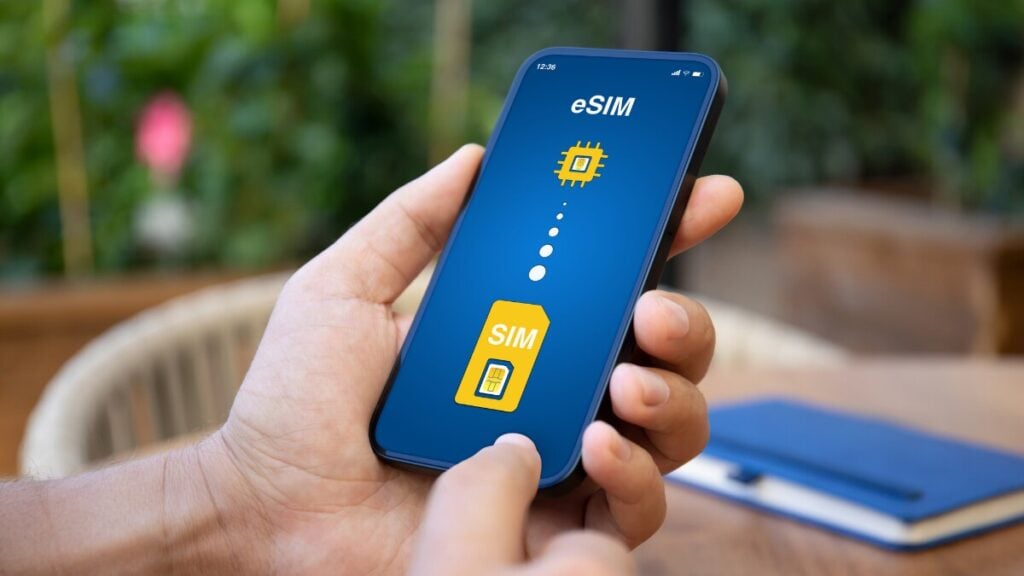
Travelling with mobile data used to mean one of three annoying choices: pay high roaming charges, hunt down a local SIM after landing, or spend part of the trip stuck without connection. Well, an international eSIM completely changes that. So how does an international eSIM work when you land in a new country and your phone just connects without the usual scramble for a local SIM? That’s exactly what we’re getting into. How to actually get an eSIM running on your phone, what the connection feels like once you’re on the move, and the little differences you start noticing the moment you cross into a new country.
What is an International eSIM?
An international eSIM is an eSIM designed for travel outside your home country. Depending on the plan, it may cover one destination, several countries in a region, or multiple regions around the world.
That is the main thing to keep in mind from the start. However, not every travel eSIM works the same way. Some are built for a single trip to one country, while others are built for travellers moving through several destinations on the same journey. For anyone still looking for the simpler starting point, it helps to begin with what a travel eSIM is before getting into the finer details of international use.
How Does an International eSIM Work in Practice?
A traveller chooses a plan based on destination, trip length, and expected data usage. After purchase, the provider sends installation details, usually through a QR code or manual setup information. The eSIM profile is then added to a compatible phone before the trip or just before arrival, depending on the provider’s setup advice.
Once the traveller lands in a covered destination, the phone connects to one of the supported partner networks tied to that plan. From there, the service works like mobile data normally does. Maps load, messages are sent, rideshare apps work, emails come through, and the trip feels far less dependent on airport Wi-Fi.
How International eSIMs Connect to Mobile Networks Abroad
The simplest way to think about this is that the eSIM provider does the network arrangement. That way, you don’t have to source a separate SIM card in every country.
As mentioned above, eSIM providers have access agreements with local partner networks in the places covered by the plan. When the phone arrives in one of those places, it connects to an approved network using the installed eSIM profile. That is how international eSIM connects to networks without requiring a new physical SIM each time.
For the traveller, the process feels fairly straightforward. The phone recognises an available supported network, connects, and starts using the data included in the plan. In most cases, the device may choose the network automatically. However, in some scenarios, a manual network selection may be required if the default connection is weak.
Single-Country vs Regional vs Global eSIMs
This is one of the most important parts of choosing the right plan, and it is often where first-time buyers get caught out.
Single-Country eSIM
A single-country eSIM is built for one destination only. This is usually the best fit for travellers flying into one country, staying there for the whole trip, and wanting a simple, targeted option.
For example, a traveller spending ten days in Japan and nowhere else usually does not need broader coverage. A single-country eSIM is often the cleaner choice.
Regional eSIM
A regional eSIM covers several countries within one area. This suits travellers moving through nearby destinations on the same trip, such as France, Italy, and Spain, or several countries across Southeast Asia.
This is often the smartest choice for multi-stop holidays where border changes are part of the plan. Instead of buying a new SIM in each location, one regional eSIM can keep the trip connected across the region, provided those countries are included.
Global eSIM
A global eSIM is made for broader international coverage across many countries or regions. This works well for longer, more complex trips, or for travellers whose route includes destinations in different parts of the world.
It can be convenient, but it is not automatically the best choice for every trip. Broader coverage can come with different pricing, data allowances, or network priorities, so it is worth checking exactly what is included.
What Happens When You Cross Borders?
If the plan includes the next country, the phone will usually switch from one supported network to another after arrival. In the best-case scenario, that feels seamless. You cross the border, land in the next city, or step off the train, and the service reconnects on a supported network in that destination. If the next country is not covered, the eSIM may stop working for data there until another plan is installed.
That is why you must choose the right plan for your travel needs. A traveller going from Thailand to Vietnam with a regional eSIM that includes both countries may stay connected with little fuss. A traveller using a single-country eSIM for Thailand only should expect to buy another plan before using mobile data in Vietnam. The key point here is not whether the eSIM is digital but rather whether the plan covers the next destination.
When Does an International eSIM Activate?
Most plans begin on installation, while some begin on first connection to a supported overseas network, and others start when the service is first used under the plan’s validity rules. That means there is no universal answer to when international eSIM starts.
The only safe approach is to check the activation policy before purchase and again before installation. Keep in mind that if you install too early without checking the guidelines, you may start the validity clock before the trip even begins. Also, travellers who leave setup too late may arrive without a working connection. The sweet spot is usually to install in advance but activate in line with the provider’s timing guidance.
Does an International eSIM Need Roaming Turned On?
Sometimes, yes. This catches plenty of travellers off guard because they assume roaming should always stay off to avoid extra charges. With some travel eSIM setups, though, data roaming needs to be enabled on the eSIM line for the service to connect properly overseas.
That does not necessarily mean home-carrier roaming charges are being triggered. It often just means the travel eSIM needs that setting switched on so it can connect to supported partner networks abroad.
The important part is making sure the setting is turned on for the correct line. If the phone supports both a home SIM and a travel eSIM, the traveller should confirm which one is handling mobile data.
What Can You Use an International eSIM For?
An international eSIM is ideal for maps, messaging apps, email, web browsing, transport apps, translation tools, and keeping up with bookings while moving around. It also works well for people who need light business access while travelling overseas, such as checking documents, joining app-based calls, or using authentication tools on the move.
One detail worth checking before purchase is whether the plan is data-only. Many travel eSIMs focus on data rather than traditional calls and SMS. That is fine for travellers who rely on WhatsApp, FaceTime, Messenger, Telegram, or similar apps, but it can catch people out if they assume standard calling is included.
International eSIM vs Roaming vs Local SIM
The choice often comes down to convenience, control, and trip style. An international eSIM is usually the easiest option for travellers who want to set things up before departure, keep their home SIM in place, and avoid dealing with physical cards after landing. It can particularly come in handy for trips involving more than one country.
Traditional roaming can feel simpler because it uses the home provider, but it is often less predictable from a cost point of view. It may suit short trips or travellers who value convenience above everything else, but it is rarely the most controlled option for heavy data use.
A local SIM can still make sense in some cases, especially for longer stays in one country, but it often involves more effort. There is usually a need to buy the SIM after arrival, register details, swap cards, and manage a new number or temporary setup.
Our eSIM vs data roaming blog provides more insight as to why most travellers prefer using an eSIM when moving through different countries.
Common Mistakes Travellers Make With International eSIMs
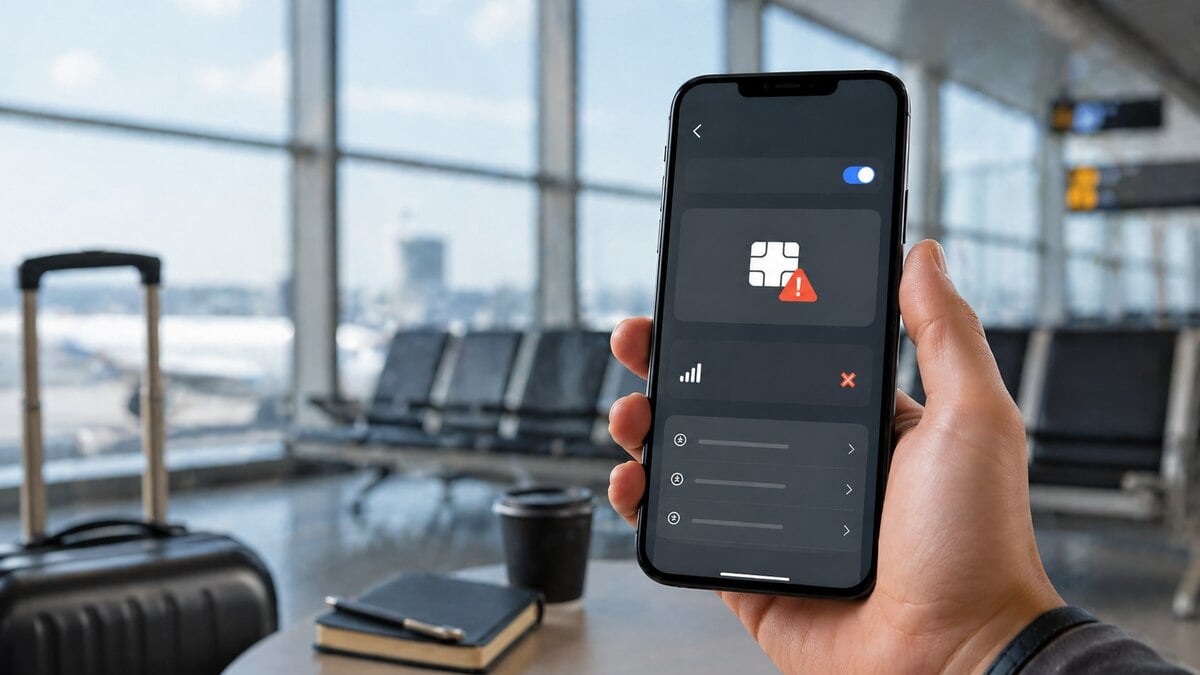
The eSIM itself does not cause most problems. They come from setup gaps, timing mistakes, or choosing the wrong plan.
One common mistake is buying a single-country eSIM for a multi-country trip and assuming it will continue working everywhere. Another is installing too late and trying to troubleshoot at the airport instead of before departure.
It is also common to select the wrong SIM for mobile data, especially on dual-SIM phones. Some travellers leave the home SIM as the active data line, then assume the international eSIM is not working when the phone is simply using the wrong profile.
Validity is another issue. Travellers often focus on the data amount and forget to check whether the plan lasts seven days, fifteen days, or thirty days from activation.
Then there is hotspot use. Tethering a laptop for work, streaming video, or uploading large files can burn through data much faster than expected. A plan that looks generous for maps and messaging can disappear quickly once hotspot use enters the picture.
What to Do If Your International eSIM Is Not Working
A few quick checks solve a surprising number of issues. First, confirm the eSIM is properly installed on the phone. Then check that the correct eSIM is selected for mobile data. After that, review whether roaming needs to be enabled on the eSIM line. Restart the phone, then see if automatic network selection is working properly.
If not, try changing the network manually if the provider allows it. Also, check whether the plan covers the country currently being visited. That sounds obvious, but it is a very common reason for sudden loss of service after crossing borders.
How to Choose the Right International eSIM for Your Trip
The best choice depends on how the trip is actually being taken, not just where it starts. You should also consider trip length because validity periods vary. Data habits are just as important since some travellers mainly need light navigation and messaging, while others rely on tethering, constant browsing, or work access during the day.
Device compatibility is also something to take into account because even the best plan means nothing if the phone does not support eSIM or is carrier-locked.
Takeaways
The simplest answer is that an international eSIM gives a compatible phone access to supported overseas networks through a digital SIM profile, without the need to swap physical cards every time the trip changes location. The more useful answer is that it works well when the traveller chooses the right plan type, understands coverage across countries, checks activation timing, and sets the phone up properly before departure.
That is what makes an international eSIM guide genuinely useful. The technology itself is fairly simple. The real difference comes from knowing how to use an international eSIM in the real world, especially when flights, borders, validity windows, and network settings all come into play.
FAQ
How does an international eSIM work?
It works by installing a digital SIM profile on a compatible phone, which then connects to supported partner networks in covered destinations. The traveller uses mobile data under the rules of the selected plan without needing to swap physical SIM cards.
What is the difference between an international eSIM and a travel eSIM?
They are closely related terms. An international eSIM usually refers to an eSIM designed for overseas use across one or more destinations, while travel eSIM is often used as the broader category.
Can one eSIM be used in multiple countries?
Yes, but only if the plan includes those countries. A regional eSIM or global eSIM may continue working across borders, while a single-country eSIM usually will not.
Does an international eSIM activate when installed or when arriving?
It depends on the provider and plan terms. Some activate on installation, some on first network connection, and some follow other validity rules tied to first use.
Do you need to turn on roaming for an international eSIM?
Sometimes. Some plans need data roaming enabled on the eSIM line to connect overseas, so it is important to follow the provider’s setup instructions.
Can a normal SIM stay active while using an international eSIM?
Yes, many compatible phones allow both to be used together. That can be helpful for keeping the home number active while using the travel eSIM for data.
What should be done if an international eSIM is not connecting abroad?
Check installation, confirm the correct data line is selected, review roaming settings, restart the phone, and check whether the current country is included in the plan coverage.