
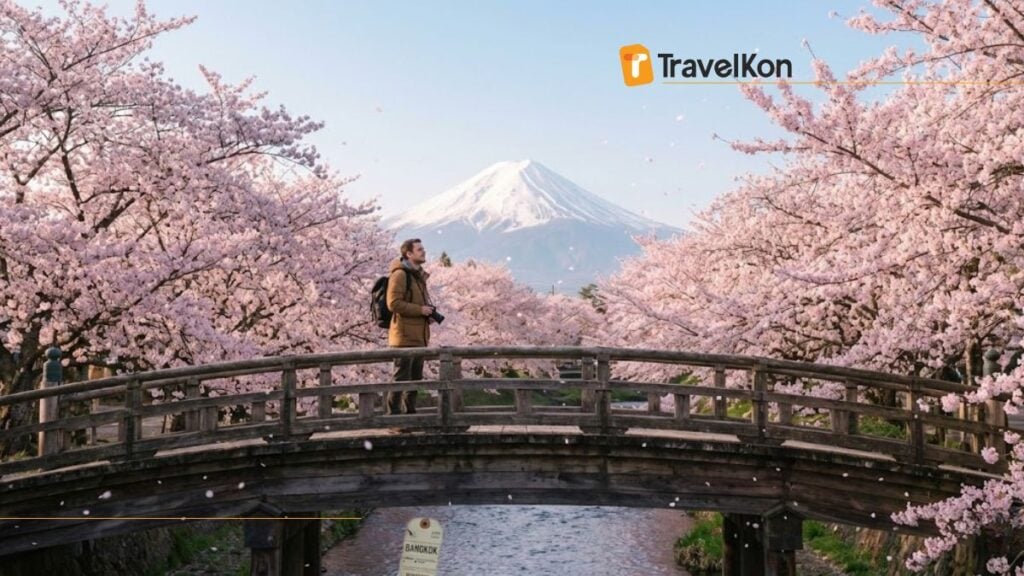
- When do cherry blossoms bloom in Japan varies by latitude; Tokyo reaches full bloom around late March, Kyoto follows days later, and Hokkaido blooms in late April to early May.
- Tokyo cherry blossom season draws millions of visitors annually, with Chidorigafuchi and Meguro River among the most photographed spots; both become genuinely crowded within days of full bloom.
- Sakura season in Japan lasts approximately 7–10 days at peak per location, making flexibility and regional planning more useful than locking onto a single city.
Sakura season is one of Japan’s most anticipated annual events and one of its most logistically demanding periods to travel in. Hotels fill months ahead, trains run at capacity, and popular parks shift from quiet green spaces to shoulder-to-shoulder viewing sites within 48 hours of peak bloom. The experience is worth the effort, but it rewards preparation at every level; accommodation booked early, transit understood in advance, and connectivity sorted before departure.
Traveling Japan during cherry blossom season without reliable mobile data means navigating crowded stations and rapidly changing bloom forecasts on guesswork. Is an eSIM the best option for traveling in Japan during sakura season? For most visitors, yes; the best esim japan plans activate before you land, give you access to real-time bloom trackers, and keep you connected across multiple cities without SIM swaps or pocket WiFi rental queues.
The 2026 Bloom Forecast: When to Go and How Long You Have
Bottom line: Plan your travel window around full bloom (Mankai), not first bloom (Kaika); the difference is 5–10 days and it matters.

Japan’s cherry blossom forecasts are issued by the Japan Meteorological Corporation from January onward. 2026 is tracking a slightly warmer trend, which typically advances bloom dates by a few days.
Expected 2026 bloom dates:
- Tokyo and Nagoya: First bloom (Kaika) around March 20, full bloom (Mankai) by March 28
- Kyoto and Osaka: First bloom around March 24, full bloom by April 1
- Hiroshima and Fukuoka: First bloom late March, full bloom early April
- Sendai and northern Honshu: Full bloom by April 15
- Sapporo and Hokkaido: First bloom late April, full bloom early May
Kaika marks roughly 10% of buds open. Mankai means approximately 80% open; the point most visitors associate with peak bloom. After Mankai, petals begin falling within 3–7 days, creating the “sakura snowfall” effect many travelers specifically seek.
Pro-Tip: A 7–10 day trip can capture full bloom in two or three cities by moving north-to-south, tracking the bloom front. Tokyo first, then Kyoto, using the staggered timing to your advantage.
Iconic Sakura Locations: What Each Spot Actually Offers
Bottom line: The most photographed spots are genuinely impressive; but require early arrival or evening visits to experience without heavy crowds.
Tokyo:
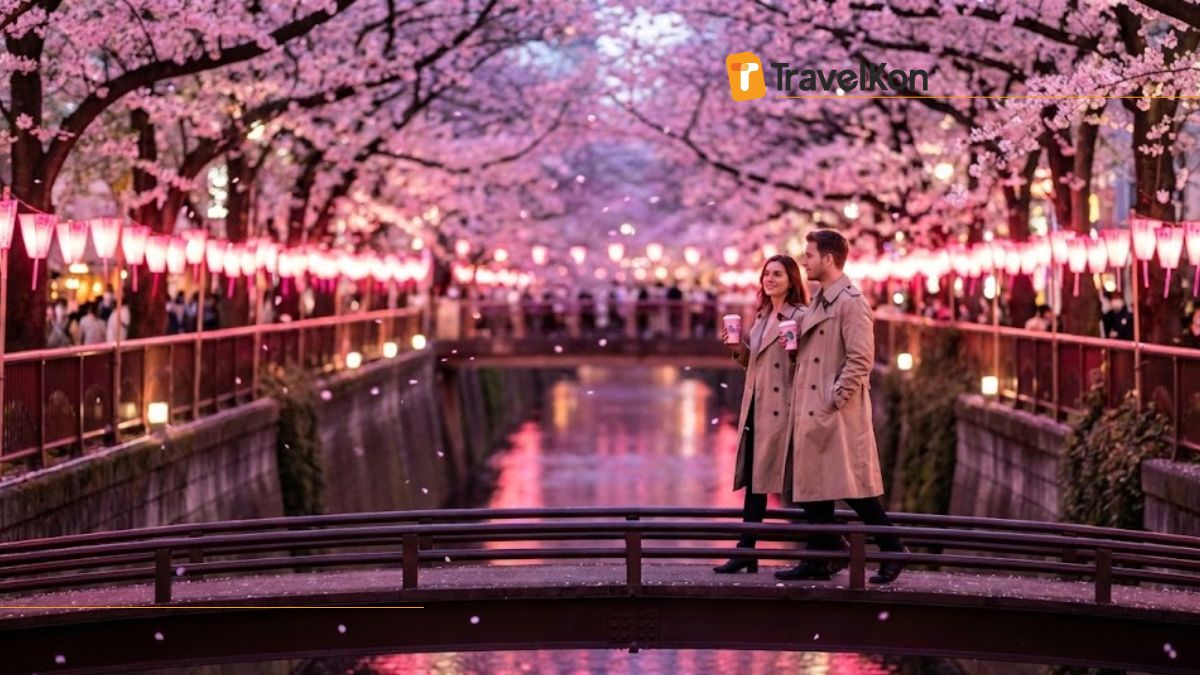
- Meguro River; a 4km canal lined with approximately 800 trees. Evening illuminations during peak bloom create the well-known “pink tunnel” effect. Arrive before 8 AM or after 8 PM for manageable crowds.
- Chidorigafuchi Moat; rowboats can be rented for approximately ¥800 (~$5.30) per 30 minutes, paddling beneath overhanging branches. Queues form by mid-morning on peak days; arrive at opening (9:30 AM).
- Ueno Park; large, open, and accessible. More manageable than Chidorigafuchi but less scenic.
Kyoto:
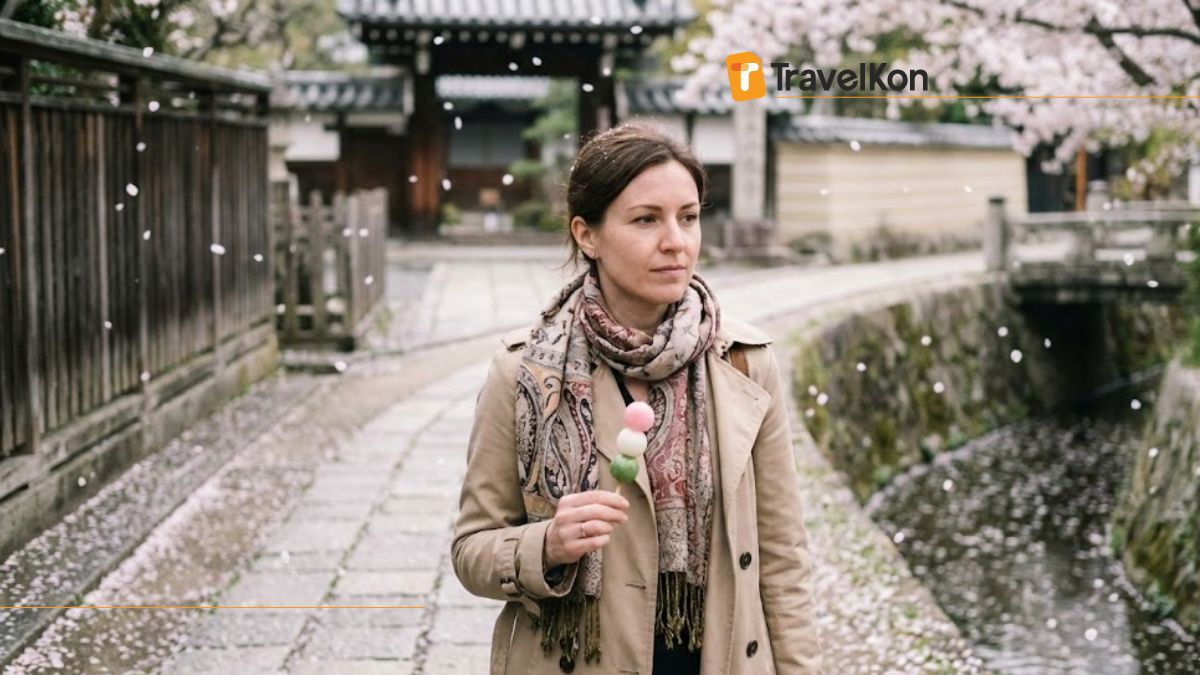
- Philosopher’s Path; a 2km stone canal path lined with approximately 450 trees, best walked early morning before tour groups. Connects Ginkaku-ji and Nanzen-ji.
- Maruyama Park; home to Kyoto’s famous weeping cherry tree (Shidarezakura), lit up each evening during bloom. The park fills quickly after dusk.
Mount Fuji area:
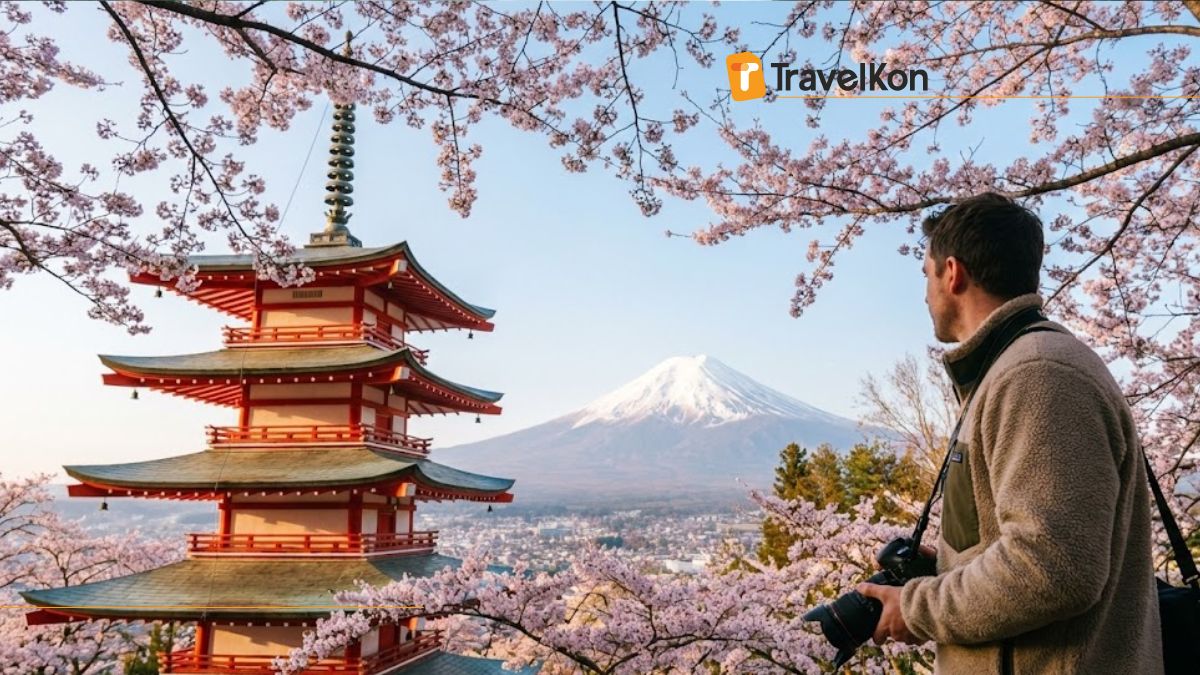
- Chureito Pagoda; requires a 400-step climb but delivers the most photographed sakura composition in Japan: red pagoda, sakura foreground, Mount Fuji behind. Arrive before 7 AM for clear skies.
- Lake Kawaguchiko; the northern shore offers Fuji reflection views with sakura framing the foreground. Best in morning light when the lake is calm.
Avoiding Crowds: Alternative Locations Worth Considering
Bottom line: Several cities offer exceptional sakura viewing with far less congestion than Tokyo and Kyoto.
Kanazawa (Kenrokuen Garden): One of Japan’s three great gardens, with over 400 sakura trees across a landscape of ponds, tea houses, and stone paths. Crowds are lighter than Kyoto’s main sites, and the maintained atmosphere contrasts with the picnic-party energy of urban parks.
Matsue (Shimane Prefecture): A castle town with excellent sakura viewing around the moat. Few international tourists and a distinct castle backdrop.
Early season; Kawazu (Izu Peninsula): Kawazu-zakura blooms from mid-February. The local festival runs approximately 4 weeks; the longest sakura viewing window in Japan. Reachable from Tokyo in approximately 2.5 hours by limited express.
Late season; Hirosaki Park (Aomori): Blooms in late April after the main season ends. The castle moat fills with fallen petals creating the “sakura carpet” effect; petals floating on water; which many consider more visually distinctive than peak bloom itself.
Hanami Culture: What to Know Before You Go
Bottom line: Hanami is a social tradition with specific etiquette; understanding it improves your experience and avoids friction with locals.
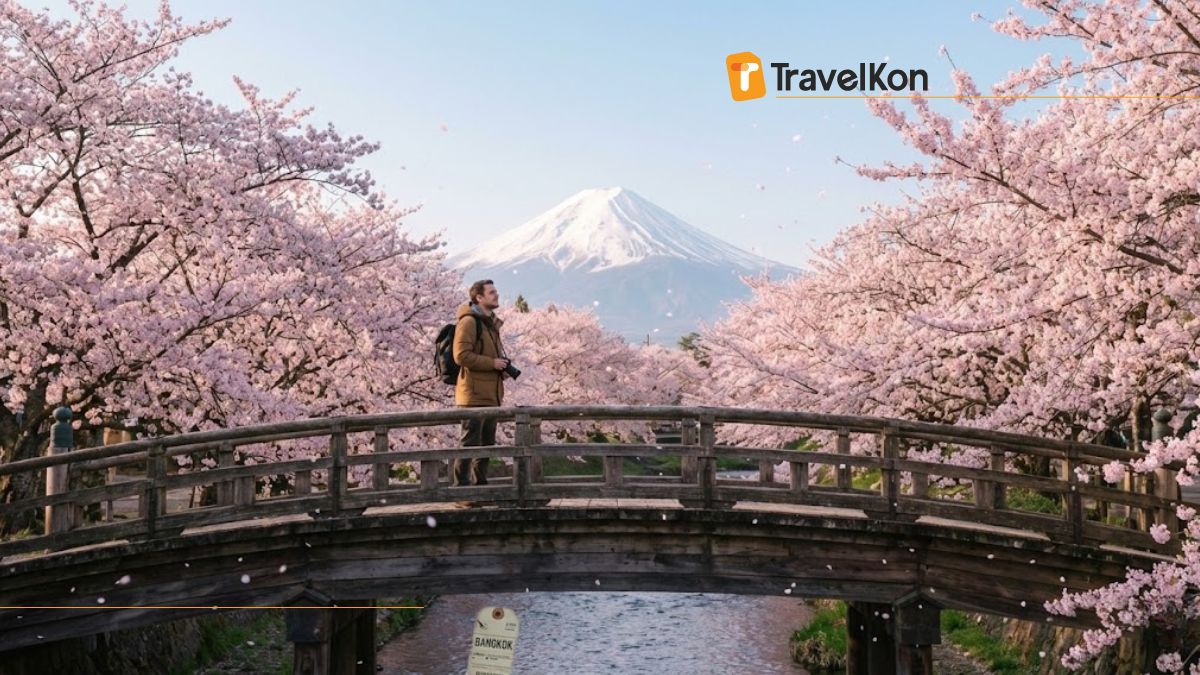
Hanami is Japan’s centuries-old practice of gathering beneath cherry trees to eat, drink, and mark the season’s change. Public parks fill with blue tarpaulin picnic sheets from early morning on peak days.
Spot reservation: In Ueno (Tokyo) and Maruyama (Kyoto), spots are claimed before dawn on peak weekend days by blue tarpaulins. Arriving by 9 AM gives reasonable chance of finding space; arriving at noon on a sunny peak Saturday does not.
Food and drink: Department store basement food halls (depachika) sell hanami bento boxes ranging ¥1,200–¥2,500 (~$8–$17). Convenience stores stock sakura onigiri and seasonal snacks. Drinking alcohol in parks during hanami is common and accepted.
Etiquette:
- Do not touch, shake, or climb cherry trees; this damages branches and is considered disrespectful
- Carry a small bag for your own rubbish; Japan has very few public bins
- Blue tarpaulins on an empty patch mean the space is reserved; place your sheet only on visibly unclaimed ground
Warning: Tokyo parks including Ueno introduced alcohol restrictions in 2025. Check current rules before arriving with drinks.
Travel Logistics for Sakura Season 2026
Bottom line: Book accommodation 6 months ahead, prepare transit before arrival, and check bloom forecasts daily once in Japan.
Accommodation: Tokyo and Kyoto hotels during peak bloom (late March to early April) reach capacity faster than almost any other period. Standard advice is 6 months ahead; in 2026, with post-pandemic luxury travel volumes still elevated, earlier is better. Budget accommodation books out equally fast. If you cannot secure your first-choice city during peak dates, look at Osaka as a base for Kyoto day trips; more accommodation availability at slightly lower prices.
Transit: The Shinkansen between Tokyo and Osaka runs at high capacity during sakura season. Reserve seats rather than relying on unreserved carriages. IC cards (Suica or Pasmo) handle local transit in all major cities; Mobile Suica on Apple or Google Wallet can be set up before departure and avoids the physical card queues at airports. For multiple cities, check whether a regional JR Pass covers your specific route rather than defaulting to the national pass.
Connectivity: Bloom trackers (Japan Meteorological Corporation site and the Weathernews Sakura app) update daily during season. Navigating between multiple bloom locations, checking real-time crowd conditions, and booking last-minute restaurant slots all depend on mobile data. A Prepaid Japan eSIM with Instant Activation activated before departure covers all of this from the moment you land; no rental counter, no physical SIM, no WiFi dependency.
Seasonal Food and Drink: What Sakura Season Tastes Like
Bottom line: Japan’s food industry rotates a distinct set of sakura-flavored products each spring; some worth seeking, some purely aesthetic.
Traditional sweets worth trying:
- Sakura mochi; a pink rice cake filled with sweet bean paste and wrapped in a lightly salted pickled cherry leaf. The sweet-salty combination is specific to this season.
- Hanami dango; three rice dumplings on a skewer in pink, white, and green. Available at convenience stores, street stalls, and traditional wagashi shops.
- Sakura-flavored Kit Kats; widely available at convenience stores and station kiosks; practical as a souvenir.
Limited-edition items: Starbucks Japan releases a spring sakura menu from late January through April. Convenience stores stock sakura-themed breads, drinks, and snack packs throughout the season.
Sakura flavoring is mild and floral rather than intensely fruit-like. The value is in the seasonal specificity rather than the flavor intensity.
Planning Sakura Season Honestly
Sakura bloom in Japan is one of the most rewarding times to visit and one of the most demanding to plan. The bloom window is short, crowds are real, prices are elevated, and accommodation books months ahead. Visitors who find the experience fulfilling are those who arrive with specific locations in mind, flexibility between cities, and realistic expectations about crowd levels at the most photographed spots.A best esim japan plan sorted before departure handles the connectivity side; bloom trackers, train navigation, and accommodation changes all require reliable data in a country where public WiFi is less consistent than most visitors expect.

