
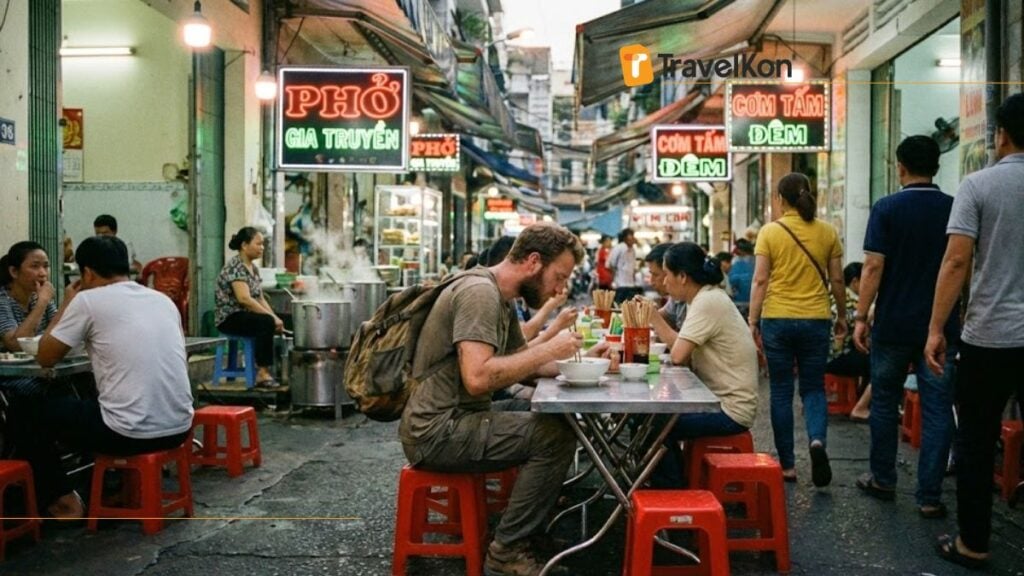
- Ho Chi Minh City (still widely called Saigon) is Vietnam’s largest city and moves at a pace that surprises most first-time visitors — two-wheelers outnumber cars, street food runs around the clock, and the city rarely fully quiets down.
- Most major attractions are concentrated in Districts 1 and 3, making them walkable in combination — though the heat and humidity make midday exploration genuinely demanding between April and October.
- The city suits travellers who approach it as a food and culture destination rather than a sightseeing circuit — the best experiences here tend to be found at street level rather than behind ticket counters.
Ho Chi Minh City is the economic engine of Vietnam — dense, loud, commercially intense, and genuinely energetic in a way that polarises visitors. Some find it overwhelming; others find it the most alive city they’ve visited in Southeast Asia. For first-time visitors it helps to arrive without fixed assumptions and with enough time to move between its registers: the historical weight of the war-era sites, the sensory overload of the markets, the quiet of a century-old pagoda, the noise of a backpacker street after midnight. The city holds all of these simultaneously and makes no apology for the contradiction.
Before arriving, sort your connectivity. Ho Chi Minh City runs on apps — Grab for transport, Google Maps for navigation, booking platforms for restaurants and accommodation. A Vietnam eSIM Tourist activates before you board and gives you a working local data plan from the moment you land, which matters from the first taxi ride out of Tan Son Nhat Airport.
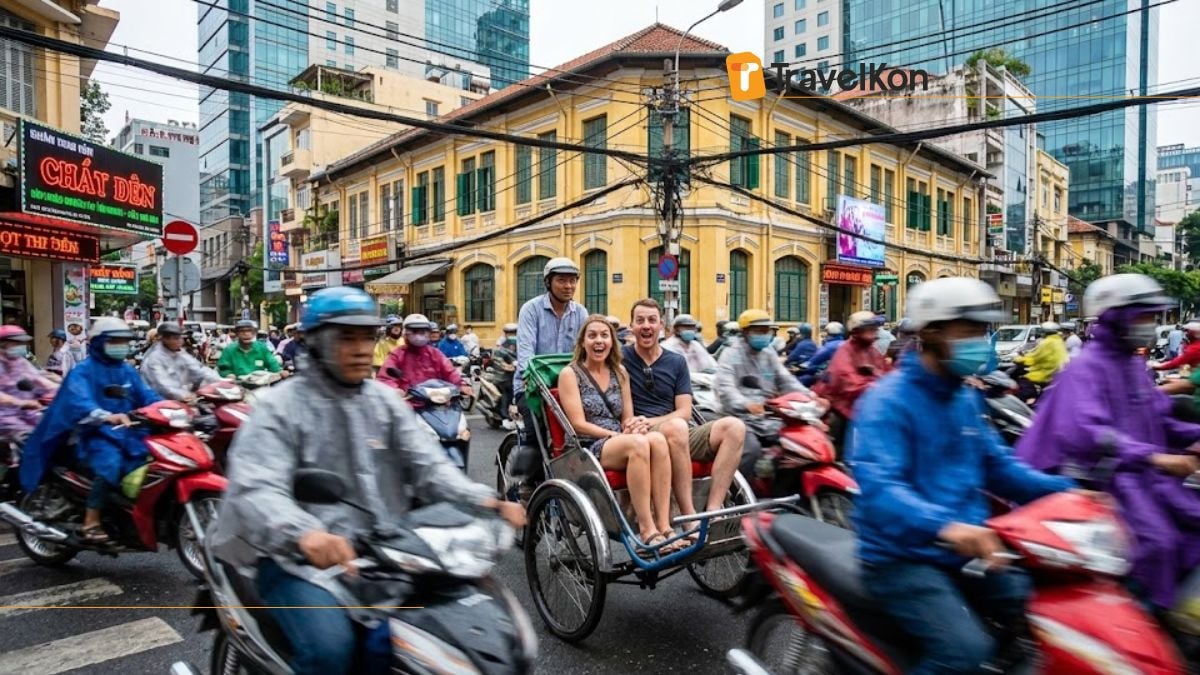

War Remnants Museum
The War Remnants Museum is the most visited museum in Vietnam and one of the most affecting. The courtyard holds captured US military hardware — tanks, aircraft, artillery — displayed with minimal framing. Inside, the Requiem exhibition presents the work of war photographers from all sides who died covering the conflict. The Agent Orange galleries document the long-term environmental and human consequences of chemical warfare with a directness that most visitors find difficult. The museum doesn’t position itself as neutral, but its impact is not primarily ideological — it’s photographic and human. Allow two hours minimum and avoid visiting at the end of a long day.
Independence Palace
Built in the early 1960s for the President of South Vietnam, the Independence Palace (also called Reunification Palace) is a preserved example of modernist architecture that doubles as a historical document. The reception rooms on the upper floors retain their original 1960s furnishings — teak, lacquer, formal layout — while the basement contains the wartime communications centre and bunker network used during the final years of the conflict. North Vietnamese tanks broke through the gates here on 30 April 1975, effectively ending the war. The building has been left largely unchanged since that day, which gives it an unusual quality — less museum, more interrupted moment.
Saigon Central Post Office
Designed by the firm associated with Gustave Eiffel and completed in the 1890s, the Central Post Office remains a functioning post office. Its vaulted ceiling, tiled floors, and two large hand-painted maps of southern Vietnam from the colonial period are well-preserved. The yellow facade and the portrait of Ho Chi Minh above the main hall are the most photographed elements, but the interior architecture — the ironwork, the proportions, the light — is the more lasting impression. Postcards can still be sent from the counters inside, which gives the building a purpose beyond spectacle.
Notre Dame Cathedral
Built between 1877 and 1883 using bricks shipped from Marseille, the Notre Dame Cathedral of Saigon sits at the northern end of Dong Khoi Street and anchors the French colonial precinct of District 1. Its twin neo-Romanesque towers reach nearly 60 metres and remain visible above the surrounding streetscape. The cathedral has been under renovation in recent years, limiting interior access at various points. The square in front — where a Virgin Mary statue allegedly wept in 2005, drawing tens of thousands of pilgrims — remains a gathering point regardless.
Ben Thanh Market
Ben Thanh is the city’s most recognisable market and has operated in some form since the early twentieth century. During the day it sells spices, textiles, fresh produce, coffee, and souvenirs across a dense grid of stalls. Bargaining is standard and expected — initial prices for tourist-facing goods are typically set with negotiation in mind. After 6 PM the surrounding streets shift into a night market format, with outdoor grills, seafood stalls, and a more relaxed atmosphere. The market is not a quiet or slow experience at any time of day, but for travellers interested in Saigon’s commercial character it’s one of the more concentrated expressions of it.
The Cafe Apartments, 42 Nguyen Hue
A nine-storey former residential block on Nguyen Hue Walking Street that has been converted floor by floor into boutique cafes, small studios, and creative businesses. Each unit opens onto a narrow balcony facing the street, creating a layered vertical grid that reads as chaotic from the outside and individually considered from within. The cafes vary considerably in quality; the appeal is the architecture and the view over the walking street and, in the distance, the Saigon River. Worth visiting in the late afternoon when the light is good and the temperature has dropped slightly.
Bitexco Financial Tower
The Bitexco Tower’s lotus-bud silhouette and the helipad protruding from the 52nd floor make it the most identifiable building on the Saigon skyline. The Sky Deck on the 49th floor offers a 360-degree view of the city’s urban sprawl — the French colonial grid of District 1 below, the newer developments spreading across the river, the horizon of a city expanding faster than its infrastructure can follow. EON51, the bar on the 51st floor, is a functional place to watch the sun go down over the river if the Sky Deck entry cost feels steep.
Jade Emperor Pagoda
Built in 1909 by the Cantonese community, the Jade Emperor Pagoda is one of the most atmospherically intact religious sites in the city. The interior is dim and heavy with sandalwood incense, the woodcarvings dense with Taoist and Buddhist imagery, and the Hall of the Ten Hells — dramatic carved panels depicting post-death judgment — unlike anything else in Ho Chi Minh City’s tourist circuit. The tortoise pond in the courtyard is a functioning religious site where locals release turtles as acts of merit. Barack Obama visited during his 2016 state visit, which is noted on a plaque near the entrance.
Bui Vien Walking Street
Bui Vien is the backpacker district’s main artery and operates on a different frequency from the rest of the city. Neon signs, open-front bars, street performers, cheap bia hoi, and an international crowd that peaks after 10 PM and doesn’t fully disperse until well past midnight. The food available ranges from Vietnamese grilled skewers to approximations of Turkish and Western dishes. It’s loud, compressed, and deliberately excessive — best approached as an experience in itself rather than a place to find quiet or particularly good food. For solo travellers looking to meet people quickly, it functions reliably.
Saigon Opera House
The Municipal Theater, completed in 1897, was built to serve the French colonial administration and later became the seat of the South Vietnamese Lower House before returning to its original purpose. The flamboyant French facade has been restored and sits at the intersection of District 1’s most upmarket shopping streets. The A O Show — a contemporary circus and dance production using bamboo — is performed here regularly and is one of the more considered cultural experiences available in the city, combining physical performance with an aesthetic rooted in Vietnamese rural life.
How Long You Need
Two full days covers the war museum, Independence Palace, the colonial precinct, a market, and an evening on Bui Vien. Three to four days allows for the pagoda, the Cafe Apartments, a District 5 food circuit, and a slower pace. Ho Chi Minh City rewards time at street level — eating, watching, walking — more than a checklist approach. A Cheap Vietnam eSIM for International Visitors from TravelKon keeps you connected across all of it, from the first Grab ride to the last late-night navigation back to your hotel.

