TravelKon

singapore itinerary

Singapore 3-Day Itinerary for First-Time Visitors

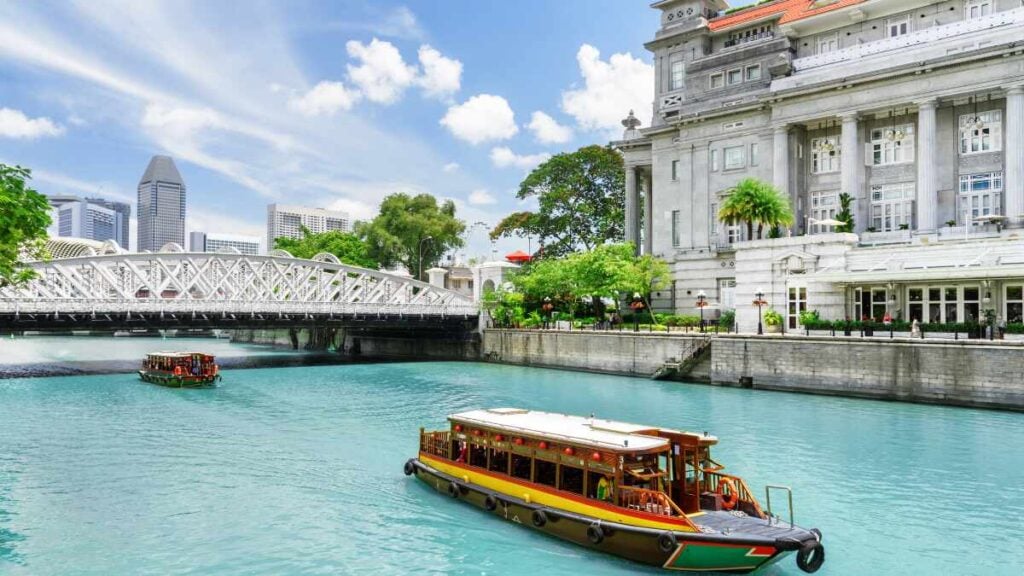
Three full days are enough to cover Marina Bay, Gardens by the Bay, two major cultural districts and one full-day route suited to your interests. The key is grouping stops by area instead of treating Singapore like an attraction checklist. Before you leave, set up mobile access and save tickets, maps, and entry documents offline. You can also compare Singapore eSIMs before flying. Singapore Three-Day Itinerary Overview Period Main Route Suggested Duration Starting Point Day 1 morning Civic District and Marina Bay 2–3 hours City Hall MRT Day 1 midday Lau Pa Sat and indoor break 2 hours Walk from Merlion Park Day 1 afternoon Marina Bay Sands and Gardens by the Bay 4–5 hours Bayfront MRT Day 2 morning Chinatown 3 hours Chinatown MRT Day 2 afternoon Kampong Gelam 2 hours Bugis MRT Day 2 evening Little India or Clarke Quay 2–3 hours Choose one Day 3 Sentosa, Botanic Gardens or East Coast Full day Choose one route Start outdoor sightseeing early, use lunch for an air-conditioned break and return outside later in the afternoon. Carry water, sunscreen and a compact umbrella. Stay near an MRT interchange such as City Hall, Bugis or Chinatown. Our accommodation guide can help you choose where to stay in Singapore based on your budget and travel style.  Before You Arrive in Singapore Australian passport holders normally do not need a visa for a short tourist visit, although immigration decides entry and the permitted stay. With approximately 1.3 million Australians visiting Singapore in 2025, Australia remains one of the country’s strongest source markets, which helps explain the steady flow of short-stay arrivals.  Complete the SG Arrival Card within three days before arrival, including the day you enter. Travellers transferring without passing through immigration are exempt. Avoid unofficial websites charging a submission fee. Getting From Changi Airport to the City Use the MRT when arriving early enough to complete the journey before the final services and when luggage is manageable. Change at Tanah Merah for most central destinations. Check the journey planner using your actual arrival time rather than assuming trains will remain available after immigration and baggage collection. A taxi or ride-hailing service is easier after a late flight, during heavy rain or when several passengers can share the fare. Visit Jewel Changi on departure unless an early arrival leaves several hours before hotel check-in. Jewel is landside, so allow enough time for luggage collection, terminal transfers and security. Day 1: Marina Bay, Gardens by the Bay, and Hawker Food Morning: Civic District and Marina Bay Start around 8.30 am at City Hall MRT. Walk past the National Gallery and Padang, continue to the Fullerton Hotel and finish at Merlion Park. This creates a direct route towards the waterfront. If heavy rain arrives, move the National Gallery or Asian Civilisations Museum forward instead of waiting outside. Midday: Lau Pa Sat and a Heat Break Walk from Merlion Park to Lau Pa Sat for an early lunch. Share dishes such as chicken rice, laksa, rojak or char kway teow instead of spending valuable time in one heavily promoted queue. After lunch, take a proper indoor break. The hotel, ArtScience Museum or The Shoppes at Marina Bay Sands are all practical options. Afternoon and Evening: Gardens by the Bay Take the Downtown Line from Downtown MRT to Bayfront. Visit the Marina Bay Sands waterfront and Helix Bridge viewpoint before continuing to Gardens by the Bay. Choose Cloud Forest if paying for only one conservatory. Add Flower Dome when plants and horticulture are a major interest. Cloud Forest generally operates from 9.00 am to 9.00 pm, although maintenance closures can affect individual attractions. Book the conservatories before arrival during weekends and busy travel periods. Finish at Supertree Grove for the free Garden Rhapsody shows at 7.45 pm and 8.45 pm. Eat at Satay by the Bay or return to Lau Pa Sat for its evening satay street. Choose one rather than scheduling both. Day 2: Chinatown, Kampong Gelam, and an Evening Choice Treat Chinatown and Kampong Gelam as the core route. Add Little India only when energy and weather permit. Morning: Chinatown Start at Chinatown MRT and walk to Sri Mariamman Temple, the Buddha Tooth Relic Temple and Chinatown Complex. Continue towards Maxwell Food Centre, followed by Ann Siang Hill or Keong Saik Road. Cover shoulders and knees when entering places of worship. Shoes may need to be removed. Have lunch at Maxwell Food Centre or Chinatown Complex. If rain disrupts the morning, spend longer inside the temples, Chinatown Complex or Asian Civilisations Museum. Afternoon: Kampong Gelam Take the Downtown Line to Bugis and walk to Sultan Mosque, Bussorah Street, Arab Street and Haji Lane. Allow about two hours unless shopping and cafés are priorities. Check mosque visitor access around prayer times. The Malay Heritage Centre or shops around Bugis provide indoor alternatives when rain becomes persistent. Evening: Little India or Clarke Quay Choose Little India for Tekka Centre, Sri Veeramakaliamman Temple and dinner along Serangoon Road. Choose Clarke Quay or Boat Quay for riverside dining, bars and nightlife. Do not attempt both after a full day in Chinatown and Kampong Gelam. Day 3: Choose the Right Singapore Route Route Best For Main Commitment Sentosa Families and major attractions One ticketed attraction plus one smaller activity Botanic Gardens Nature and a slower day Gardens, orchids and Dempsey or Orchard Road Katong and Jewel Food, architecture and late flights Joo Chiat, Katong and the airport Mandai Wildlife-focused travellers One or two wildlife parks Pulau Ubin Cycling and a quieter day Full-day island outing Option One: Sentosa Choose Sentosa for Universal Studios Singapore, Singapore Oceanarium, the cable car or beaches. Select one major attraction and one secondary activity. Universal Studios can occupy most of the day. Book ahead and check the operating calendar before paying. Combining the theme park, Oceanarium, cable car, beach and evening show creates an expensive race between reservations. Option Two: Botanic Gardens Begin early at Singapore Botanic Gardens. General admission is free, and the

Singapore 3-Day Itinerary for First-Time Visitors Read More »
kyoto day trip by train

Best Kyoto Day Trips by Train: Routes, Times, and Effort Compared

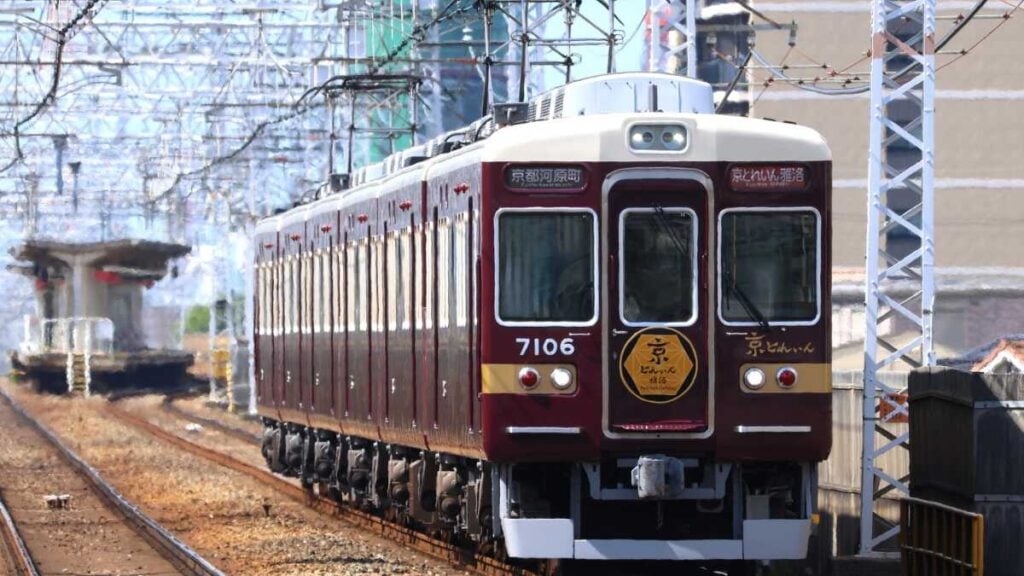
Japan stands out globally, with around 28% of passenger kilometres travelled by rail, and that dependence on trains is exactly what shapes travel here. Kyoto’s rail connections make distant cities look deceptively easy. Before choosing between Nara’s temples, Osaka’s food districts or Hiroshima’s memorial sites, compare Japan eSIMs and keep live train information available throughout the day. Station-to-station time tells only part of the story. Transfers, platform waits, local buses and long walks can turn a fast train ride into a demanding outing. The best Kyoto day trip is the one that matches your interests, available time and energy. Kyoto Day Trips and Approximate Time Destination Typical One-Way Time Best Rail Route Best For Ground Time Effort Uji 17–20 minutes JR Nara Line Tea, temples and a half-day 3–5 hours Low Otsu About 10 minutes JR Biwako Line Lake views and an easy change of pace 4–6 hours Low Nara Around 45 minutes JR Miyakoji Rapid or Kintetsu Temples, deer and history 6–8 hours Low–medium Osaka 30–50 minutes JR Special Rapid or Hankyu Food, shopping and nightlife 7–10 hours Medium Kobe About 50 minutes JR Special Rapid to Sannomiya Harbour views and dining 6–8 hours Medium Himeji Around 45 minutes Direct Shinkansen A major surviving castle 5–7 hours Medium Hikone 50–70 minutes JR Biwako Line A quieter castle town 5–7 hours Medium Hiroshima 1 hour 40 minutes Direct Shinkansen Memorial sites and modern history 6–8 hours High The times listed above are planning estimates from Kyoto Station, so ensure that you add the journey from your accommodation, waiting time and transport after arrival. Keep at least three full sightseeing days for Kyoto before allocating time to day trips from Kyoto. With only two days in the city, leaving usually removes more value than it adds. Nara and Uji for Easy First Trips Nara: The Best First Kyoto Day Trip Nara is the strongest all-round choice for first-time visitors. Take the JR Miyakoji Rapid from Kyoto Station, or compare Kintetsu services if your accommodation is closer to Kyoto Station’s Kintetsu platforms or another station on that network. Follow this walking route: The train journey is simple, but the sightseeing route involves sustained walking. Nara’s deer are wild animals. Keep food concealed until feeding, show empty hands afterwards and supervise children closely. Uji: The Easiest Half-Day Trip Uji suits travellers who want a meaningful outing without losing a full day. Take the JR Nara Line to JR Uji Station, then walk to Byōdō-in, the Uji River and Ujigami Shrine before stopping for tea. Uji pairs naturally with Fushimi Inari because both lie along the JR Nara Line. Check the stopping pattern: JR Inari Station is served by local trains, not every rapid service towards Uji or Nara. Combining Uji and Nara is possible, but it leaves less time for Nara’s major temples. Osaka, Kobe, and Himeji for City or Castle Days Osaka: Best for Food and Nightlife An Osaka day trip from Kyoto works best when the goal is food, shopping and a clear contrast with Kyoto. Choose two connected areas: The JR Special Rapid is convenient for Osaka Station and Umeda. Hankyu services may suit accommodation near central Kyoto and travellers heading towards Osaka-Umeda. Stay for dinner. Returning before Osaka’s evening districts become active defeats much of the purpose. Universal Studios Japan requires a separate full day. Kobe: Best for a Manageable City Day Take a JR Special Rapid to Sannomiya. Choose Kitano or Kobe Chinatown, then continue towards Meriken Park and the harbour. Kobe works well when you want fewer compulsory sights and more time for lunch or waterfront walking. Do not add Arima Onsen unless the hot-spring town is the main priority; reaching it introduces additional rail or bus connections. Himeji: Best for One Major Landmark Take a direct Shinkansen to Himeji and walk along Ōtemae-dōri to Himeji Castle. Visit Koko-en Garden afterwards. Entering the castle first reduces the risk of reaching it after queues have grown. Its interior contains steep staircases, narrow passages and low openings, so travellers with limited mobility should assess the route before entering. Himeji and Kobe can be combined, with Himeji first. The pairing is efficient but creates a longer, faster-paced day. Nature and Quieter Castle Alternatives Kurama and Kibune Reaching Kurama from Kyoto Station normally requires multiple stages via Tōfukuji and Demachiyanagi, or a subway-and-bus combination. Allow roughly an hour or more before beginning the walk. The mountain route between Kurama and Kibune covers 3.9 kilometres and takes approximately two to three hours before temple stops. Wear suitable footwear and check conditions after heavy rain. Autumn weekends can produce crowded Eizan trains. Otsu and Lake Biwa Take the JR Biwako Line to Otsu Station. Continue on foot towards Otsu Port and the waterfront, then add Mii-dera if time and energy permit. The short rail journey does not place you beside every Lake Biwa attraction. Choose one compact section instead of treating Japan’s largest lake as a single walkable destination. Hikone: A Quieter Alternative to Himeji Take the JR Biwako Line towards Hikone, changing at Maibara when required. Walk from Hikone Station to Hikone Castle, then continue to Genkyū-en Garden. Choose Hikone for a quieter castle town and slower pace. Choose Himeji for the more imposing landmark and faster Shinkansen journey. Hiroshima and Miyajima: When the Long Day Is Worth It A Kyoto to Hiroshima day trip works when Hiroshima is a major priority and an overnight stay is impossible. Hiroshima alone provides enough time for Peace Memorial Park, the Atomic Bomb Dome, Peace Memorial Museum and a meal. Adding Miyajima makes the schedule considerably harder. Hiroshima Station to Miyajimaguchi takes approximately 30 minutes, followed by a walk and ferry. For a combined trip: The complete day can exceed 12 hours. Stay overnight if Mount Misen, an unhurried museum visit or Miyajima after the daytime crowds matters. Kōyasan, Kanazawa, Amanohashidate and Ine are also usually better overnight. Day tours from Kyoto become useful for routes involving several connections, but independent rail remains simpler

Best Kyoto Day Trips by Train: Routes, Times, and Effort Compared Read More »

esim battery drain

Does an eSIM Drain Your Battery? What Travellers Should Expect

An eSIM does not normally consume more battery than a physical SIM under comparable conditions. The SIM profile stores network credentials, while the phone’s modem, radio components, processor, display and apps account for most power consumption. Battery life can still fall after installing a travel eSIM if two lines remain active, reception is poor, 5G is unstable or travel apps are using more power than usual. What Causes eSIM Battery Drain? If your phone needs charging earlier overseas, do not delete the eSIM immediately. Check what changed when the new plan was activated. Likely Cause What Happens First Action Weak reception The phone searches for or works harder to maintain service Move to stronger coverage or use trusted Wi-Fi Two active lines The phone remains registered with two networks Switch off the line you do not need Unstable 5G The device repeatedly changes between 5G and 4G Use 5G Auto or test 4G/LTE Background activity Photos, maps, email and apps synchronise after connecting Review battery and data usage Recent setup or update Downloads, indexing and cloud restoration continue temporarily Allow setup to finish while charging Hotspot use Cellular, Wi-Fi and processing operate together Stop tethering when it is no longer required Battery ageing The phone starts with less usable capacity Check battery health or diagnostics Why Travel Can Drain a Phone Faster Weak Reception Increases Battery Use Low signal and periods without mobile coverage can increase power consumption because the phone keeps searching for or maintaining a connection. Underground stations, thick hotel walls, ferries, rural roads and border regions commonly produce unstable reception. A travel eSIM may appear responsible when its roaming partner simply provides weaker coverage than your usual Australian network. Move to an area with stronger reception where practical. If no mobile coverage will be available for an extended period, use Aeroplane Mode until service returns. How Travel Apps Add to the Workload Travel usually increases screen time, GPS use and background data. Common contributors include: A software update, phone restoration or newly installed app can also cause temporary background activity.  5G and Hotspot Use Can Increase Demand A strong 5G connection can transfer data efficiently. Problems arise when marginal coverage makes the phone switch repeatedly between 5G and 4G, and studies show this can increase battery drain by around 6–11% compared to staying on a stable 4G LTE connection, simply because the device keeps searching, reconnecting, and renegotiating signal conditions. On compatible iPhones, 5G Auto switches to LTE when 5G offers no meaningful advantage. Testing 4G/LTE may help during a long day in unstable coverage, although some manufacturers and carriers do not provide a 4G-only option. Hotspot mode also consumes more power because the phone maintains a mobile connection while sharing data over Wi-Fi. Streaming and large downloads add processing load and heat. Keep the phone ventilated and stop tethering if it becomes unusually hot. How Dual SIM Affects Battery Life Dual SIM battery drain comes from maintaining two active network registrations and not from whether either line is physical or embedded. A Dual SIM Dual Standby phone can monitor both lines for calls and messages. Only one line generally carries mobile data at a time, but the second active line still communicates with its network. Stored but switched-off eSIM profiles do not maintain separate network connections. Keeping several old travel profiles installed is therefore different from leaving several lines active. Keep your Australian line active when you need: Otherwise, switch it off, particularly when it displays No Service and keeps searching for a roaming partner. If the home line must remain available, disable its data roaming and select the travel eSIM as the mobile-data line. To avoid unexpected costs, read our guide on how to avoid roaming charges while travelling. For a clearer setup walkthrough, see how to manage cellular data switching with dual SIM. How to Test Whether the eSIM Is Responsible Use an isolation test rather than deleting the eSIM. This will not create laboratory-grade results, but it can identify whether an active second line, weak signal or a particular app is the likely cause. Settings to Check on iPhone Menu names may appear as Mobile Service, Mobile Data or Cellular, depending on the device region and iOS version. Always check your data habits more closely. For step-by-step instructions, see how to check mobile data usage on iPhone. If maximum battery capacity is substantially reduced, an iPhone battery draining fast may reflect battery ageing rather than the eSIM. Settings to Check on Android Android menu names vary by manufacturer and software version. Samsung Galaxy Open Settings → Connections → SIM Manager to confirm the travel eSIM is selected for data and switch off an unnecessary line. Then open Settings → Battery → Battery usage to identify apps or system functions consuming the most power. Google Pixel Open Settings → Battery → Battery diagnostics → Battery draining too quickly on supported Pixel models. You can also check Settings → Battery → Battery usage and Settings → Network and internet → SIMs to review active plans and background consumption. Other Android Phones Search Settings for: Keep battery optimisation enabled for non-essential apps and test 4G/LTE when 5G reception is inconsistent. Do not factory-reset the phone or delete the eSIM as the first troubleshooting step. When to Contact Support Contact the eSIM provider if the travel profile consistently causes: Provide the phone model, operating-system version, destination, selected network and screenshots of any error messages. Keep the eSIM installed unless support directs you to remove it, as some activation codes cannot be reused. Battery-Saving Checklist for Travel Days Before changing any unfamiliar line settings, take a moment to learn how a travel eSIM works so the setup makes sense.  FAQs Does eSIM Use More Battery Than a Physical SIM? Not normally under equivalent network and usage conditions. Both allow the phone to authenticate with a mobile network, while the modem handles radio communication. Differences noticed after switching usually involve coverage, dual active lines, network selection or heavier

Does an eSIM Drain Your Battery? What Travellers Should Expect Read More »

open jaw flight

Open-Jaw Flights Explained: How to Book Multi-City Trips Without Backtracking

Planning a multi-city trip often falls apart when you realise your return flight drags you back to where you started. Open-jaw flights fix that. You can fly into one city and leave from another, saving time, money, and long retraces.  This guide breaks down how to find, price, and book them without confusion. While mapping routes, sort your data early so navigation stays smooth. Before you go, compare global eSIMs to stay connected across borders without swapping SIM cards.  What Is an Open-Jaw Flight?  An open-jaw flight is a return-style itinerary in which the destination and/or origin differ between the outbound and inbound journeys. You complete the gap between those airports independently. A common Australian example is: The Tokyo to Osaka section is called the surface sector and is not included in the long-haul airfare. When the route is drawn on a map, the gap makes it resemble an open mouth. Multi-city describes the search function used to find several flight sectors, while open-jaw describes the route itself. A multi-city search can produce an open-jaw, several connected flights or a combination of separate tickets. How to Book and Compare Open-Jaw Flights Airline websites and flight-comparison tools normally place open-jaw searches under Multi-city. Enter the Route Correctly For the Sydney and Japan example, enter: Do not add Tokyo to Osaka unless you intend to fly that section as part of the booking. The airline search only needs the ticketed flights. Follow this comparison process: Qantas provides a multi-city search for routes departing Australia, while Google Flights can compare different gateways. A lower comparison-site price may involve separate tickets, restricted baggage or an online agent rather than the operating airline. Why the Search May Not Work An open jaw may return a high fare, separate tickets or no result because: Try reversing the itinerary, moving one date or changing one gateway. If the airline still cannot price the route, request assistance before buying unrelated one-way tickets. When an Open Jaw Saves Time or Money Open-jaw flights reduce backtracking more reliably than they reduce airfare. A Japan Time Comparison A Japan itinerary might begin in Tokyo, continue through Kyoto and finish in Osaka. Factor Tokyo Return Tokyo-In, Osaka-Out International route Sydney–Tokyo–Sydney Sydney–Tokyo, Osaka–Sydney Required backtracking Osaka to Tokyo None Intercity travel added solely for departure At least 2 hours and 21 minutes by the fastest Shinkansen None Additional local travel Osaka to Shin-Osaka, then Tokyo to the departure airport Osaka to Kansai Airport Main comparison Lower airfare versus added rail cost and time Higher or lower airfare versus removed backtracking The train time does not include reaching Shin-Osaka, waiting for departure or transferring from Tokyo Station to Haneda or Narita. The practical backtrack can therefore consume much more than the published intercity journey. Use our guide on how to find affordable flights to Japan to compare both entry and exit points. If an open-jaw option comes in slightly higher but saves you the hassle of backtracking and a full travel day, it can still work out as the better value. Vietnam and Europe Examples For Vietnam, fly into Hanoi, travel south and return from Ho Chi Minh City. Test the reverse direction because flight schedules may favour starting in the south. Ensure that you compare flights to Vietnam before fixing the route. Open-jaw flights to Europe work well for holidays moving steadily across several countries. A Brisbane traveller could arrive in London, continue through France and Switzerland, then fly home from Rome instead of returning to Britain. For broader coverage across multiple stops, compare Asia eSIMs if your trip runs through the region. If your route includes European destinations, go for our Europe eSIM plans to keep data consistent across borders.  Calculate the Complete Cost Return itinerary: airfare + backtracking transport + airport transfers + extra accommodation + time lost returning to the original city. Open-jaw itinerary: multi-city airfare + planned surface transport + airport transfers + baggage, seat and payment fees. A standard return may be better when the alternative airport adds another flight, offers poor schedules or creates an expensive one-way car-hire fee. Destination, Origin, and Double Open Jaws Type Example Independent Section Destination open jaw Sydney–Tokyo, then Osaka–Sydney Tokyo to Osaka Origin open jaw Melbourne–Singapore, then Singapore–Sydney Sydney to Melbourne Double open jaw Melbourne–Tokyo, then Osaka–Sydney Tokyo to Osaka and Sydney to Melbourne A destination open jaw is the most useful version for many Australian holidays. You use the same Australian city but different overseas arrival and departure points. An origin open jaw uses different Australian airports. A double open jaw changes both ends of the journey, creating two independent sectors. Changing airports within one metropolitan area may not count as a technical open jaw. Airlines can treat Haneda and Narita as Tokyo or Heathrow and Gatwick as London for fare purposes. Comparing those airports can still uncover better schedules or prices. Tickets, Connections, and Baggage One Booking Is Not Necessarily One Ticket One checkout, itinerary email or booking reference does not prove that every flight is issued on one protected ticket. An online agent may combine separate tickets and label the journey as a self-transfer. Before paying, check: Different airlines can appear on one ticket when suitable ticketing and interline arrangements exist. Other combinations may require separate tickets. The airline has no responsibility for the independent surface sector. If a delayed train or separately booked flight causes you to miss the journey home, you may be treated as a no-show. Reach the final departure city the previous day when the independent sector involves a border crossing, weather-sensitive transport or another flight. Check Baggage at Every Stage Checked baggage does not move across the surface sector automatically. Collect it at the first destination, carry it during the independent journey and check it again at the final departure airport. For air connections, through-checking depends on the ticket and airline agreements. Confirm the destination printed on the baggage receipt. Keep passports, medication, insurance details, electronics and one change of clothing in

Open-Jaw Flights Explained: How to Book Multi-City Trips Without Backtracking Read More »

nyepi in bali

Nyepi in Bali: Dates, Rules, and What Travellers Need to Know

Bali pauses almost all public activity once each year. Traffic disappears, businesses close and darkness settles across the island as Balinese Hindus observe a sacred period of reflection, restraint and renewal. If your holiday falls near Nyepi, it’s worth comparing Bali eSIMs before departure, though mobile data should still be expected to be suspended regardless of the plan selected. Flights, ferries, transfers, meals and accommodation arrangements also need to be settled before the Day of Silence begins. Provisional 2027 planning dates: Nyepi is now widely listed as 9 March 2027, with ogoh-ogoh processions set for the evening of 8 March. Treat 8–10 March as an affected travel period until Indonesia’s official holiday calendar and Bali Airport notice confirm the arrangements. What Nyepi Is and Why Bali Observes It Nyepi is the Balinese Hindu Saka New Year. The Day of Silence is dedicated to self-reflection, spiritual cleansing and a restrained beginning to the new year. The observance follows Catur Brata Penyepian, four central principles: How long does Nyepi last? The central observance runs for approximately 24 hours, traditionally from 6 am until 6 am the following morning. Balinese Hindus may fast, meditate and follow deeper personal restrictions. Tourists are not generally required to fast or remain completely silent inside their accommodation. They must, however, respect restrictions on public movement, visible lighting and disruptive noise. How Nyepi Is Celebrated Nyepi Day forms part of a longer sequence of religious events: Period What Happens Likely Travel Effect Several days before Melasti purification ceremonies take place near the sea and other water sources Processions may affect coastal roads Nyepi Eve Pengerupukan rituals and community ogoh-ogoh processions may occur Roads close and businesses finish early Nyepi, 6 am–6 am Bali observes the Day of Silence Routine transport and public activity stop Following morning Ngembak Geni begins Families gather and services gradually resume Ogoh-ogoh are large symbolic figures commonly paraded on Nyepi Eve. Events differ between communities and can be changed or cancelled. Confirm local arrangements rather than assuming a parade will pass near your accommodation. What Closes and What Tourists Are Expected to Do Nyepi restrictions apply to visitors as well as residents. Traditional security officers known as pecalang patrol local communities and enforce the rules. Service or Activity What to Expect What You Should Do Roads and public spaces Routine movement stops Remain within your accommodation Shops and restaurants Closed Arrange food and supplies early Taxis and ride-hailing Unavailable for ordinary trips Complete transfers before Nyepi Flights Commercial operations suspended Avoid travelling during the closure Ferries and harbours Routine services normally suspended Confirm each route and reschedule transfers Beaches and attractions Closed or inaccessible Move sightseeing to another day Hotel facilities Access varies by property Request written hotel rules Mobile data May be suspended Prepare for an offline day Medical response Available for emergencies Contact reception or emergency services Do not leave the property for a walk, beach visit, exercise session or photography. Avoid drones, flash photography, bright balcony lights and noise that can be heard outside. Electricity is not automatically switched off across every property, but local supply and accommodation rules vary. Confirm whether power, air conditioning, refrigeration, medical-device charging and Wi-Fi will remain available. Keep lights low and close curtains after dark. Serious or deliberate non-compliance may involve pecalang, police or immigration authorities. Hotel instructions should be treated as requirements, not optional recommendations. You can plan a 10-day Bali itinerary that keeps transfers away from the affected period, then see the best places in Bali before or after Nyepi. Flights, Ferries, Hotels, Food, and Medical Planning Plan Flights, Boats, and Transfers Bali Airport suspends ordinary commercial flights during Nyepi. In 2026, the closure lasted 24 hours and affected 440 scheduled flights, both domestic and international. Emergency and specially authorised airport operations may continue, but these exceptions do not cover ordinary passengers. Routine sea transport is also normally suspended. This can affect Sanur routes to Nusa Penida and Nusa Lembongan, Padangbai services towards Lombok and the Gili Islands, and ferries operating through Gilimanuk. Confirm annual harbour and operator notices because closure periods can differ. Arrive at least one day before Nyepi and preferably earlier. Processions may restrict roads on the preceding afternoon and evening. Avoid depending on the first flight, boat or transfer after reopening because delayed services and increased demand may take time to clear. Confirm Your Accommodation Rules Resorts, guesthouses and villas do not operate under one standard guest policy. Some provide meals and quiet access to selected facilities; others restrict guests to rooms or designated areas. Ask before booking: You can read our Bali first-timer travel guide before confirming your accommodation. Prepare Food, Cash, and Medication Restaurants, supermarkets and delivery apps stop operating during Nyepi. Shops may close early, while some ATMs can be unavailable or emptied before the observance. Prepare drinking water, simple meals, snacks, prescription medicine, toiletries, infant supplies and essential dietary products. Villa guests must confirm whether cooking is permitted. Hotel guests should establish exactly which meals are included and when they will be served. Medical emergencies are exempt from movement restrictions. Contact reception and your travel insurer first when practical. Emergency numbers include ambulance and rescue on 118, medical emergencies on 119, and police on 110 or 112. Internet, Mobile Data, and Entertainment For Nyepi 2026, mobile data and IPTV services were suspended for 24 hours. Essential services were exempt. Fixed-line or hotel Wi-Fi may remain available, but this depends on the property and network. An Australian roaming service, SIM or eSIM cannot override a carrier-level suspension. If your journey continues beyond Bali, it’s worth taking a moment to compare Indonesia eSIMs for wider and more consistent coverage across the islands. Prepare for Nyepi offline by downloading: Use headphones at low volume and keep bright screens away from uncovered windows. Final Nyepi Preparation Checklist FAQs Can Tourists Leave Their Hotel During Nyepi? No. Tourists cannot leave for sightseeing, shopping, beaches, exercise or routine transfers. Movement outside accommodation is limited to genuine emergencies. Some hotels allow

Nyepi in Bali: Dates, Rules, and What Travellers Need to Know Read More »

google maps china

Does Google Maps Work in China? Maps, Navigation, and Data Options

With over 2 billion active monthly users as of 2026, Google Maps remains one of the world’s most widely used navigation platforms, yet in mainland China its functionality is heavily limited, so travellers often need alternative mapping apps or offline navigation support.  Some international roaming services, travel eSIMs, and functioning VPNs may provide access through connections routed outside mainland China, and it’s worth taking a closer look at your options early on. That said, ensure that you compare China eSIMs since coverage and accessibility can vary quite a bit depending on the provider and network routing used.  Which Map Setup Should You Use? Device Primary App Secondary App Offline Backup iPhone Apple Maps AMap Global Organic Maps Android AMap Global MetroMan for metro routes Organic Maps Apple Maps provides the simplest English experience for iPhone users. AMap Global offers stronger local detail on iPhone and Android, although some search results and secondary functions may remain in Chinese. Google Maps can still help with reviewing saved places before departure, but it should not be your only map in mainland China. Why Google Maps Can Be Unreliable in Mainland China A mainland Chinese SIM or standard hotel Wi-Fi connects through the local internet environment, which operates under the Great Firewall of China, so services like Google Maps, Gmail, WhatsApp, and other restricted platforms may therefore fail to load or behave inconsistently depending on the connection route.  Three separate questions determine whether a map will be useful: An eSIM may solve the first problem without solving the other two. The same distinction applies to messaging, so check whether WhatsApp works in China before relying on it for hotel or tour communication. GCJ-02 and WGS-84 Can Conflict Mainland map providers use the regulated GCJ-02 coordinate system, while standard global GPS data commonly use WGS-84. When information from the two systems is combined without correct conversion, roads, pins, satellite images and location dots can appear displaced. The phone’s GPS receiver may be working correctly even though the app places you beside the actual road or building. Problems are more likely when: Search for the destination again inside Apple Maps or AMap using its Chinese name. Do not depend solely on coordinates copied from Google Maps. Google Maps Performs Differently by Task Task Practical Reliability in Mainland China Viewing saved places May work with externally routed data Walking directions Potentially outdated or poorly aligned Public transport Less complete than AMap or Apple Maps Driving directions Unsuitable for important journeys Restaurants and shops Listings may be missing or outdated Live traffic Limited or unavailable Satellite comparison Streets and imagery may not align Offline use Limited and unsuitable as the only backup The answer to whether Google Maps works in China with a VPN is conditional. A working VPN may restore access, but it cannot update Google’s local business listings or correct every map-data mismatch. If VPN access is part of the plan, install and test it before departure and read about VPNs you can use in China. Unauthorised VPN services are restricted, and service availability can change. The Best Alternatives to Google Maps in China Apple Maps: Best for iPhone Users Apple Maps is generally the easiest option for English-speaking travellers with an iPhone. It retains a familiar interface and uses authorised local map data inside mainland China. Use it for walking, driving and public-transport directions, but verify important routes after arrival. Data and features displayed while planning from Australia may differ once the device is physically inside mainland China. Apple Maps may not identify every small restaurant or recently opened business. Keep the destination’s Chinese name and address available when an English search fails. AMap Global: Best for Local Detail AMap, also known as Gaode Maps, provides detailed local places, walking routes, public transport, live traffic, station exits and taxi-planning functions. The current iOS version supports English, Simplified Chinese and Traditional Chinese. English support is also available on compatible Android versions, although the complete Chinese interface contains more functions. Some place names, reviews and secondary screens may remain untranslated. To select English: Menu labels and positions can change after an update. If these steps no longer match the installed version, open the app settings and look for 语言设置, which translates to language settings. Test searches in English and Chinese before departure. The results displayed outside mainland China may also differ from those available after arrival. Baidu Maps: Detailed but Chinese-First Baidu Maps contains extensive local business, road and transport information. It is useful when a hotel, attraction or local contact sends you a Baidu pin. The interface remains heavily Chinese, making it a secondary map app for most Australian travellers. Screenshot translation can help interpret menus, but check unfamiliar payment or ride-booking buttons before selecting them. Organic Maps and MetroMan: Useful Backups Organic Maps provides English-language offline streets once the required region has been downloaded. It is suitable for basic orientation but lacks the complete live transport and business information offered by local services. MetroMan is useful for metro routes in major Chinese cities. It can confirm lines, interchange stations and exits, but it does not replace a complete street map. Install the required apps while you plan cities to visit in China. Search for each hotel, railway station and attraction before finalising the itinerary. Offline Maps, Chinese Addresses, and Ride-Hailing Google Maps offline areas should not be your only backup. Offline Google Maps does not provide walking, cycling or public-transport directions. Offline driving also loses live traffic and alternative routes. Save every important destination in four formats: Ask your accommodation for its Chinese name, address and telephone number. Save the information as an image rather than leaving it inside Gmail or cloud-only storage. When booking through DiDi or its Alipay mini-app, paste the Chinese destination address and compare the resulting pin with AMap or Apple Maps. At airports, railway stations and shopping centres, select the named gate, exit or pickup area rather than the general building pin. Google services are not restricted in Hong

Does Google Maps Work in China? Maps, Navigation, and Data Options Read More »

akihabara first timer

Akihabara First-Timer Guide: Anime, Electronics, Arcades and Mobile Data

You leave Akihabara Station through the wrong gate, the location dot drifts beneath the railway tracks, and the shop saved months ago has moved. Meanwhile, the character figure you wanted may be several floors above street level with only Japanese signage pointing towards it. Akihabara is central Tokyo’s best-known district for electronics, anime, manga, gaming and maid cafes. Save an offline Akihabara map before visiting, then compare Japan eSIMs if you need mobile data for directions, translation and live price checks. The district rewards a plan, but it does not require an exhausting shop-by-shop itinerary. Is Akihabara Worth Visiting? Yes, Akihabara tends to resonate with anime fans, gamers, electronics buyers, and travellers curious about Japanese pop culture. Allow three to four hours for a first visit or six to eight hours when hunting for specific collectables. Non-anime visitors can browse cameras, keyboards, PC parts, audio equipment and retro technology, then visit Kanda Myojin or the red-brick Manseibashi complex. Akihabara is less rewarding when treated as a checklist of 20 similar shops. Choose one main interest and one secondary interest before arriving. Why Is Akihabara Famous? Akihabara developed from a post-war market for radio parts and household electronics. As consumer technology moved towards computers and gaming, specialist retailers followed. Anime, manga, collectables, idol culture and themed cafés later became equally prominent, creating the present mix of technical retail and otaku culture. Large electronics retailers now sit beside component stalls and character-goods shops, retaining the district’s Electric Town identity. How to Get There and Choose the Right Station Exit JR Akihabara Station serves the Yamanote, Keihin-Tohoku and Chuo-Sobu lines. The Tokyo Metro Hibiya Line and Tsukuba Express also stop at Akihabara. Suehirocho Station on the Ginza Line is useful at the northern end of Electric Town. If you are unfamiliar with the rail network, you can read through our blog on transport in Japan before visiting, so you’ve got a clearer idea of how everything connects.  From Tokyo Station, take a northbound Yamanote or Keihin-Tohoku service. From Shinjuku, use the Chuo-Sobu Local or change from a Chuo Line rapid service at Ochanomizu. Check the live stopping pattern rather than relying on train colour alone. Station Exit Best For Common Mistake JR Electric Town Gate Radio Kaikan, anime shops, retro games and arcades Following “Central Exit” and starting east of the tracks JR Central Gate Yodobashi Akiba, hotels and eastern-side restaurants Assuming it leads into the anime district JR Showa-dori Gate Hibiya Line transfers and quieter dining Using it when most saved shops are west of the station Suehirocho Station Finishing a northbound Chuo-dori route Walking back to JR Akihabara unnecessarily Most first-timers should start at the Electric Town Gate. Screenshot the official station map and street route to avoid any problems. Anime, Manga, and Collectables Match Akihabara anime stores to what you want to buy: Use a two-pass buying rule. Photograph the item, condition, floor and price, then check another seller before purchasing. For boxed figures, inspect seals, fading, dents and missing-part notices. Keep in mind that unopened only describes condition; it does not prove authenticity or market value. Treat an Akihabara maid cafe as timed entertainment rather than a normal coffee stop. Check the seating charge, compulsory order, session length, performance costs and photography rules. Also, choose a venue with a published menu, and never photograph staff or promoters without permission. Electronics, Retro Games, and Arcades Use Yodobashi Akiba for mainstream electronics and straightforward product comparison. The Electric Town side is better for specialist audio, keyboards, PC components and used equipment. Japan operates on 100 volts. Confirm that any device supports Australian voltage rather than checking the plug alone. Also review menu language, mobile bands, region locks, app availability and international warranty coverage. Super Potato Akihabara is an entertaining retro-game stop, but its fame can mean larger crowds and higher prices. Check console regions, game-language options and the condition of cartridges, discs and internal batteries. An Akihabara arcade commonly places crane games on lower floors and rhythm, racing, fighting or card games above. Read the floor directory and set a spending limit; repeated low-cost attempts can cost more than buying the prize elsewhere. Venue Best For Typical Visit Crowd/Price Note Radio Kaikan Figures, cards and hobby goods 45–75 mins Busy; compare sellers inside Animate Current anime and manga 30–60 mins Busy; standard retail pricing Mandarake Complex Pre-owned and older items 45–90 mins Dense browsing; condition affects price Super Potato Retro games and consoles 20–40 mins Popular and often premium-priced GiGO Crane, rhythm and arcade games 30–60 mins Spending depends on play limits Yodobashi Akiba Mainstream electronics and dining 45–90 mins Broad range; compare Australian prices Shop hours, stock and access can change. Eligible purchases made from1 November 2026 move to a departure-refund system. Retailer participation, passport records and departure verification still apply, so check the current requirements. A Half-Day Akihabara Route This west-side route answers what to do in Akihabara without unnecessary backtracking: For a full day, visit Yodobashi first through the Central Gate, cross to Electric Town, then add Kanda Myojin or Manseibashi. Allow extra time for queues and tax-free purchasing. When to Visit Akihabara Late morning through evening gives the best balance of open shops and illuminated streets. Weekday afternoons are generally easier for deliberate shopping. Part of Chuo-dori becomes a Sunday pedestrian zone from 1:00 pm to 6:00 pm between April and September and until 5:00 pm from October to March. Weather and local conditions can cause cancellation. Visit during daylight for serious shopping and after dark for street atmosphere and arcades. Practical Details for First-Time Visitors Coin lockers are available around major stations, but large spaces can fill quickly, so leave your suitcases at the hotel when possible. Many shops occupy narrow multi-store buildings with small lifts, steep stairs and limited room for prams or luggage. Families should check lift directories because some buildings contain age-restricted floors. Public toilets are easiest to find inside the station, department stores and larger commercial buildings. If buying bulky figures,

Akihabara First-Timer Guide: Anime, Electronics, Arcades and Mobile Data Read More »

china transit visa

Do Australians Need a China Transit Visa? 24- and 240-Hour Rules

A Sydney–Shanghai–Tokyo itinerary may qualify for visa-free transit, while Sydney–Shanghai–Melbourne may not. The difference comes from the countries or regions immediately before and after mainland China, not the length of the airport stop. Travelling after 31 December 2026? Australia’s temporary 30-day visa exemption has not been confirmed beyond that date. Check the current policy before booking. China Transit Requirements Overview Australian ordinary passport holders can currently enter mainland China without a visa for eligible tourism, business, family visits, exchange or transit lasting no more than 30 days. This temporary arrangement remains in effect until 31 December 2026. For an eligible Australian travelling during this period, ordinary visa-free entry is generally simpler than the 240-hour transit policy. It does not require a third-country itinerary or restrict entry to designated transit ports and permitted travel areas. Pathway Maximum Stay Main Condition Australian ordinary visa-free entry 30 days Eligible purpose; temporary policy ends 31 December 2026 unless extended 24-hour visa-free transit 24 hours Normally remain within the restricted port area 240-hour visa-free transit 240 hours Third-country route, eligible ports and permitted areas G transit visa Visa-specific Obtain before travel when no visa-free transit option applies The 240-hour policy is not a visa on arrival, but a permission to enter without a visa during genuine international transit, with final entry approval always resting with border authorities.  How the 24-Hour and 240-Hour Policies Differ China’s 24-hour visa-free transit policy applies at open exit-entry ports to travellers continuing to a third country or region with confirmed onward transport. You generally remain within the restricted transit area. Leaving to collect luggage, transfer between airports or stay in a hotel requires temporary entry permission. A short connection does not guarantee that you can enter mainland China. The longer policy covers Australian and other eligible ordinary-passport holders entering through 65 designated ports across 24 provincial-level regions. Australia is one of 57 eligible countries. The 240-hour pathway allows tourism, qualifying business activity and family visits within authorised areas. Employment, study and news reporting require the appropriate visa. Who Qualifies for 240-Hour Visa-Free Transit? You generally need: Buy the onward ticket before reaching China. Standby travel or plans to purchase a departure ticket after arrival do not satisfy the confirmed-ticket requirement. Border authorities may refuse temporary entry because of previous Chinese visa refusals, recent immigration violations, serious accommodation-registration breaches or other grounds under Chinese law. Meeting the published route conditions does not guarantee admission. The Third-Country Routing Rule Use this test: Country or region A → mainland China → different country or region B A and B must be different. Citizenship, home address and travel after destination B do not alter this test. Route Transit Result Reason Sydney → Shanghai → Tokyo Qualifies Australia and Japan are different Sydney → Beijing → Hong Kong Qualifies Hong Kong is treated as a separate region Auckland → Guangzhou → Melbourne Qualifies New Zealand and Australia are different Hong Kong → Shanghai → Macao Qualifies Hong Kong and Macao are separate regions Sydney → Shanghai → Melbourne Does not qualify Australia appears on both sides Tokyo → Shanghai → Osaka Does not qualify Japan appears on both sides Sydney → Beijing → Shanghai → Sydney Does not qualify Domestic Chinese travel does not create third-country transit Hong Kong and Macao have separate entry systems from mainland China and can satisfy the country-or-region requirement. Leaving mainland China for either region does not automatically permit a later re-entry. For indirect itineraries, check the location immediately before mainland China and the first destination after departure. An airline rebooking can change an eligible route into an ineligible one. Eligible Ports and Permitted Travel Areas A city’s inclusion does not make every nearby airport, station or border crossing eligible. Verify both the entry and departure ports against the current official list. Gateway Example Eligible Ports Permitted Area Beijing region Beijing Capital and Beijing Daxing Beijing, Tianjin and Hebei Shanghai region Shanghai Pudong and Hongqiao Shanghai, Jiangsu and Zhejiang Guangdong Guangzhou Baiyun and Shenzhen Bao’an Guangdong Province Chengdu Chengdu Tianfu and Shuangliu Chengdu and 10 other approved Sichuan cities Xi’an Xi’an Xianyang Shaanxi Province Eligible travellers can cross provincial boundaries only where the current policy permits it. Domestic flights and trains do not provide permission to enter areas outside the approved list. Before booking, plan cities to visit in China and match every stop to the official port-and-area table. How the Arrival Process Works The official 240-hour calculation begins at 00:00 on the day after entry. Follow the deadline recorded by border authorities and avoid booking departure at the last possible moment. When You Need a G Transit Visa A G transit visa may be required when you are genuinely passing through China, but neither ordinary visa-free entry nor the 24-hour or 240-hour policy applies. This may occur after Australia’s temporary 30-day exemption ends, or when: A G visa is specifically for transit. Work, study, journalism and other non-transit purposes require their own visa categories. Applications are completed before departure and generally require a valid passport, visa application, photograph and confirmed onward ticket. Verify the current process with the Chinese Visa Application Service Centre responsible for your Australian location. Missed Flights, Separate Tickets, and Airport Changes A delayed or cancelled flight does not automatically extend visa-free permission. If disruption prevents departure before the recorded deadline, contact the local exit-entry administration immediately and request the appropriate stay permit. Airport changes such as Pudong to Hongqiao or Beijing Capital to Daxing require entry into China and a landside transfer. Confirm that ordinary visa-free entry or the 240-hour pathway applies. Separate tickets increase the risk of baggage collection, additional check-in requirements and route changes. A rebooking through the country you arrived from could invalidate the third-country transit pattern. Documents, Connectivity, and Accommodation Registration Required for 240-Hour Transit Supporting Evidence That May Be Requested Recommended Offline Backups Hotels normally complete accommodation registration during check-in. For a private residence or other non-hotel accommodation, you or the host must register with the local public security

Do Australians Need a China Transit Visa? 24- and 240-Hour Rules Read More »

bali airport arrival

Bali Airport Arrival Guide: Customs, Transport, Wi-Fi and eSIM

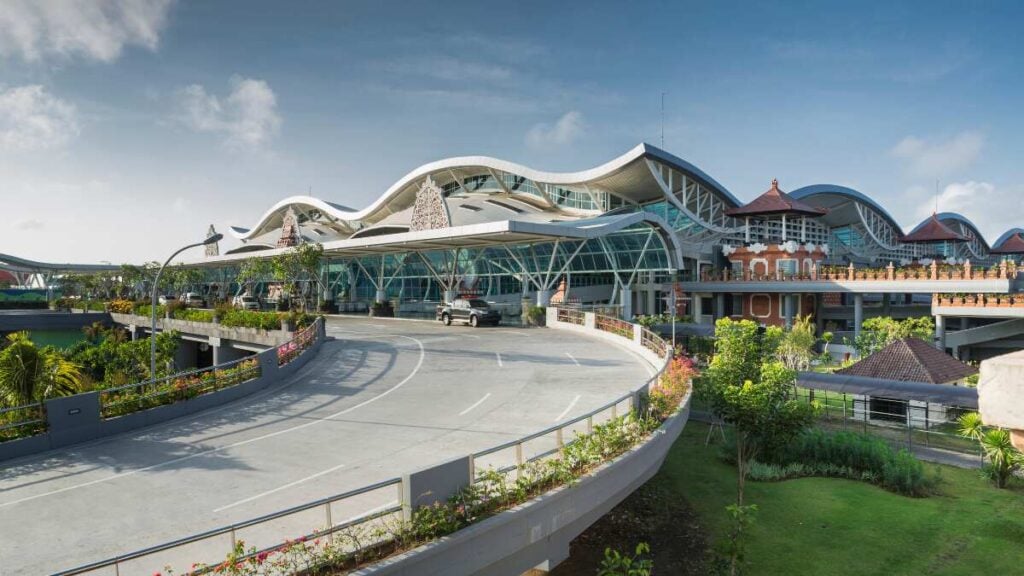
Landing in Bali is the easy part. Getting through the airport smoothly is where things can slow down, especially after a long flight. Between immigration queues, customs checks, sorting transport, and trying to get online, it helps to know what to expect before you arrive.  A bit of preparation can save you from standing around or making rushed decisions. If staying connected is part of that plan, it’s worth taking a moment to compare Bali eSIMs before you fly, so you’re not relying on airport WiFi or joining SIM card queues after landing.  Before You Land at Denpasar Airport Bali Airport is officially I Gusti Ngurah Rai International Airport. You may also see it listed as Denpasar Airport, Ngurah Rai Airport or DPS Airport. It is the main airport in Bali and sits in Tuban, south of Kuta and not central Denpasar. DPS has separate international and domestic terminals. Direct Australian arrivals use the international terminal. For a domestic connection, check whether the airline transfers your luggage or requires collection and rechecking. Separate tickets carry greater risk. Bali recorded 553,328 foreign arrivals in April 2026, and Australians represented 26.46% of that number. As such, queues, transport demand, and airport services can fill up quickly, particularly during peak arrival periods. Complete these tasks before departure: Before packing, read the Bali first-timer travel details and check whether any medication, food, plant material or other goods must be declared. The Bali Arrivals Sequence, Step by Step Stage What to Do Avoid 1. Arrival corridor Follow International Arrivals signs and have your passport ready Stopping to open every app 2. Visa step Use the correct e-VOA route or obtain a VOA if eligible Joining the VOA queue with an approved e-VOA 3. Immigration Use an eligible automated gate or staffed counter Assuming a visa guarantees entry 4. Baggage claim Collect bags and report damage or loss before leaving Passing the airline baggage desk too soon 5. Customs Present the All Indonesia confirmation and follow directions Confusing the visa and arrival-card QR codes 6. Public hall Access facilities and verify your transport Accepting an unsolicited driver immediately Visa and Immigration Travellers obtaining a VOA on arrival should complete that purchase before immigration. Travellers holding the correct e-VOA should follow the relevant signs. Automated gates may be available to eligible passengers, but access can change. Follow current airport instructions rather than assuming eligibility. Check that the visa details match the passport exactly and keep your onward or return ticket accessible. Incorrect information can invalidate a visa and require a new application. Baggage, Connections, and Customs Report missing or damaged luggage before entering the public arrivals hall. For a domestic connection, follow your airline’s transfer instructions; do not assume checked bags will move automatically. The All Indonesia card digitises the customs declaration but does not remove your obligations. Declare relevant food, animal or plant products, controlled medication and restricted goods honestly. Customs may direct you to screening or inspection. Never carry another person’s bag or package through the checkpoint. Note: The levy voucher is not a visa, and neither document replaces the All Indonesia confirmation. Useful Facilities After Customs After customs, public arrivals provides ATMs, currency exchange, toilets, food, mobile services and transport counters. Ask the information desk if a facility is not visible. Obtain only enough rupiah for immediate needs until fees and rates can be compared. Confirm whether your transport accepts cash or electronic payment. For an overnight connection, consider staying near the airport. How to Leave the Airport The best airport transfer depends on your arrival time, luggage, group size and destination. Option Best For Check Before Leaving Pre-booked transfer First visits, families and late arrivals Driver name, phone, meeting zone, vehicle and plate Official airport taxi An airport-arranged car Counter location, fare and payment method App-based ride Travellers with mobile data Designated pickup zone, driver and plate In public arrivals, locate the agreed meeting zone among the name boards and transport offers. Keep your luggage with you and message the driver through the original booking channel. Ignore cancellation claims unless confirmed there, then match the plate before entering. Choosing the Route to Your Resort Area Destination Direction and Arrival Consideration Kuta or Jimbaran Closest major resort areas; confirm the exact hotel entrance Bali Airport to Seminyak North-west beyond Kuta and Legian; southern corridor traffic varies sharply Bali Airport to Canggu North-west beyond Seminyak; congestion around busy junctions is common Bali Airport to Nusa Dua South-east via the toll-road corridor; confirm whether charges are included Sanur East of the airport; road conditions affect onward ferry planning Ubud Inland and farther from DPS; avoid tightly timed activities after landing Do not schedule a tightly timed restaurant booking, tour or ferry after landing. Airport Wi-Fi, SIM Cards, and eSIM Setup Free Wi-Fi is available at Bali Airport, but congestion and login behaviour can change. Save essential documents offline and avoid sensitive transactions on an untrusted public network. An eSIM can provide data without a SIM-counter visit when the phone is unlocked and compatible. Travellers continuing beyond Bali can compare Indonesia eSIMs. Those whose phones lack eSIM support can consider our Indonesia SIM card plans before departure. Before flying: For a more detailed breakdown, check our guide on mobile data before travelling to Bali, which covers typical data needs and the easiest ways to stay connected from the moment you land.  FAQs How Long Does It Take to Leave Bali Airport? There is no dependable fixed time. Simultaneous arrivals, visa choice, immigration eligibility, baggage delivery and customs checks all affect the result. Avoid time-sensitive onward plans and send your flight number to the driver so the pickup can be adjusted. Is There Free Wi-Fi at Bali Airport? Yes, public Wi-Fi is available, although connection quality and login requirements can change. Save documents offline and avoid depending on it as the only way to contact your driver. What Is the Safest Way to Get From Bali Airport to a Hotel? A hotel transfer or reputable pre-booked driver

Bali Airport Arrival Guide: Customs, Transport, Wi-Fi and eSIM Read More »

regional or country esim

Regional eSIM vs Country eSIM: Which Is Better for a Multi-Country Trip?

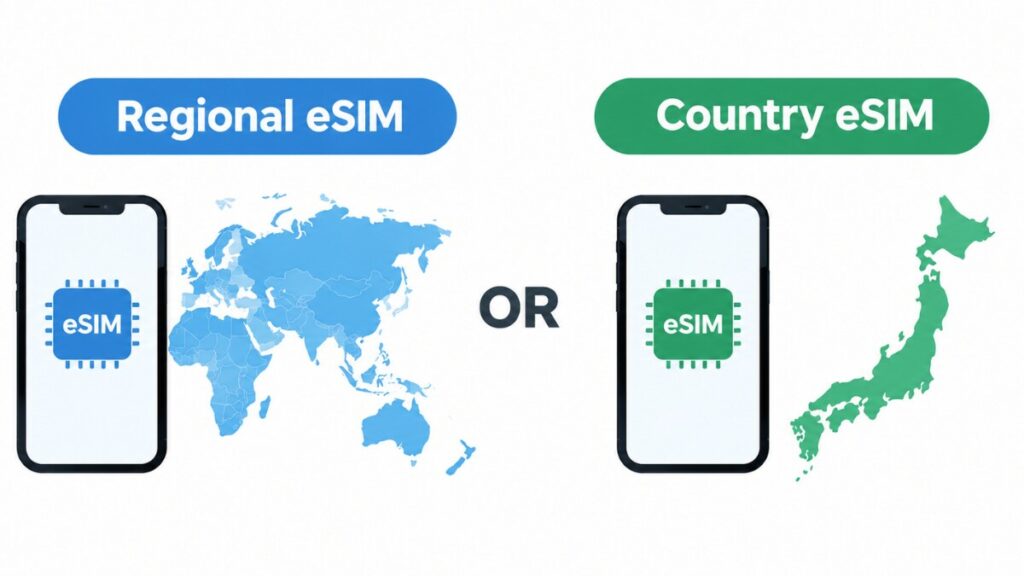
You don’t really think about your phone until it lets you down. It’s usually somewhere between landing, finding your ride, and trying to message your hotel that things start to feel a bit messy. Data drops out, maps stall, and suddenly you’re relying on patchy airport WiFi. When you’re moving between countries, that uncertainty tends to follow you.  Some travellers switch plans as they go, others prefer something that works across borders. Before you get too far into planning, it’s worth checking how TravelKon travel eSIMs line up with the places you’ll actually visit.  Should You Choose a Regional eSIM or a Country eSIM? Choose a country eSIM when most of your trip and data use will be in one country. A regional eSIM makes more sense when several countries on your route are included and a single plan offers enough data, suitable networks and sufficient validity. Always compare equivalent plans rather than assuming regional coverage is always cheaper. Factor Country eSIM Regional eSIM Coverage One destination A defined list of destinations Data Reserved for one country May be pooled, allocated daily or governed by fair-use terms Price per GB Often lower May include a convenience premium Border management Another plan is needed after leaving Usually attempts to register on a partner network Best for Longer stays in one country Multi-country travel within one covered region Key Differences Between Country and Regional eSIMs Country-specific travel eSIMs serve one destination but may still connect through a roaming agreement with a local network. It is not necessarily the same as an eSIM purchased directly from a domestic carrier. A domestic plan may require identification, local payment details, an address or in-person registration. On the other hand, a regional eSIM uses one profile across its published coverage list. A Europe regional eSIM might include France, Italy and Germany, but the word Europe does not prove that Switzerland, Türkiye, the UK or every Balkan country is covered. A global eSIM covers destinations across several regions. It can reduce plan management on a cross-continent trip, although it is not automatically cheaper or available everywhere. Travellers moving between continents can compare global eSIM options against combinations of regional and country plans. All three are digital SIM profiles. For beginner guidance, you can go through our blog on what a travel eSIM is to get the full picture before comparing how different plan types stack up.  Compare the Total Trip Cost, Not the Headline Price Research shows that only a small share of international trips cross more than one border, with about 11% of global travel trips including visits to multiple countries, which helps explain why connectivity choices often vary depending on how far and wide the itinerary stretches. That said, the cheapest advertised plan is not necessarily the lowest-cost option for the full trip. Use this calculation: Total trip cost = required plans + likely replacements + uncovered-country fallback Compare plans with the same data allowance, similar validity and equivalent features. A regional entry price should not be compared with the combined price of larger country plans. Itinerary Usage Pattern Options to Compare Better Starting Point 14 nights in Japan Heavy data use in one country Japan plan versus an Asia plan with the same data and validity Country eSIM Bali, Singapore and Japan Meaningful stays in all three One Asia plan versus three equivalent country plans Regional eSIM, if all three are included 10 nights in Thailand and 1 night in Singapore Most data used in Thailand Thailand plan plus a small second plan versus regional coverage Hybrid combination UK, France, Switzerland and Türkiye Frequent borders within 16 days Europe plan versus four country plans Regional eSIM, after checking every country This route-based comparison is more reliable than adding unrelated prices. You can browse and compare Europe eSIM options or Asia eSIM options with matching allowances and dates. Account for Shared and Unused Data Some regional plans provide one shared allowance across every included country. Others use daily limits or different fair-use conditions, so check the product terms before relying on pooled data. Where data is shared, the benefit can be substantial. With separate 5 GB plans, using 7 GB in Italy, 2 GB in France and 1 GB in Greece requires another Italian purchase while 5 GB remains unused elsewhere. A 15 GB regional plan covering all three would draw the same 10 GB from one allowance. Country plans can still win when one destination accounts for nearly the entire trip. A hybrid approach often works well when a long stay is followed by one brief stop. Check Countries, Networks, and Border Coverage Never buy from the plan name alone: If one country is excluded, a shared border changes nothing. Add a country eSIM, choose broader coverage or use trusted Wi-Fi. Recalculate the total after adding the fallback. At an included border, a regional eSIM normally attempts to register on an eligible network. The handover can take several minutes. Follow the supplied troubleshooting steps and do not delete the profile. Compare Data, Validity, and Hotspot Requirements Check Why It Matters What to Confirm Data Video, backups and laptop work consume data quickly. Total allowance, daily limits and reduced speeds Validity A 15-day plan may not cover a 15-night trip. Start trigger and whether a top-up extends validity Hotspot Some plans restrict shared data or speed. Tethering permission and any separate cap Network 5G depends on the device, location and roaming partner. Named networks in cities, rural areas and islands Calls and OTPs Many travel eSIMs are data-only. Whether the Australian SIM can remain active without unwanted charges Set the travel eSIM as the mobile-data line and disable data switching to the Australian line unless it is deliberately required. Background data, calls and voicemail on the home service may attract roaming charges. Set Up the eSIM Before Departure On iPhone, use Settings > Mobile > Mobile Data to select the data line. iPhone 13 models and later can support two active eSIM lines, although

Regional eSIM vs Country eSIM: Which Is Better for a Multi-Country Trip? Read More »