
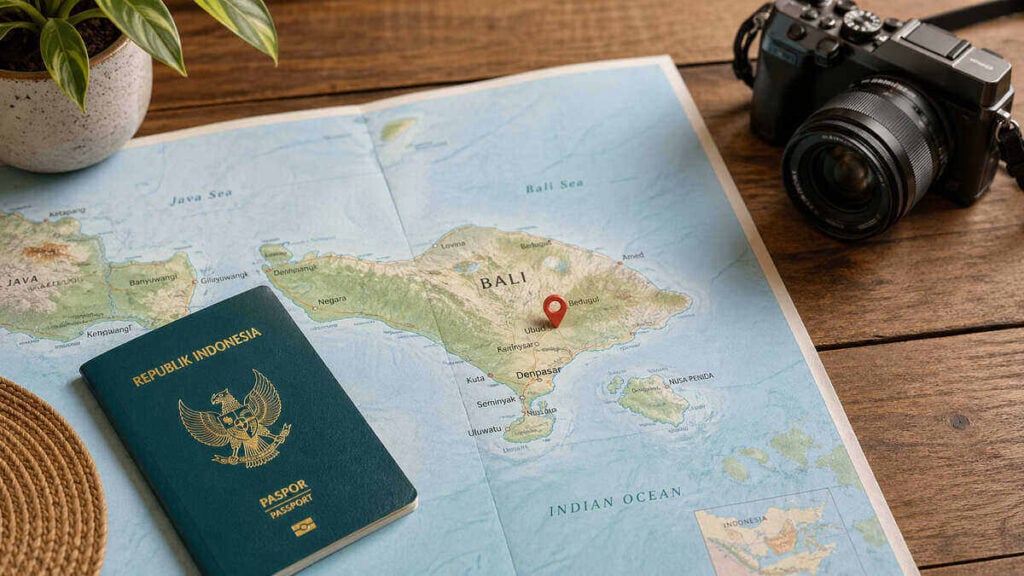
If you have been thinking about how to get a Bali digital nomad visa, you are probably already picturing what a longer stay could look like. Maybe you want more time in Bali without rushing through a short holiday, or maybe you want to work remotely from Bali while keeping your employer, clients, and income outside Indonesia. Either way, it helps to clear up one thing early. Bali does not have a separate visa system of its own.
What People Mean When They Search for a Bali Digital Nomad Visa
As mentioned above, the phrase gets used a lot because Bali is the place readers care about, but the visa rules sit at Indonesia level. In practice, most people searching for a Bali visa for remote workers want to know whether they can stay in Bali while working online for an employer or business based overseas.
The Remote Worker Visa ( E33G) is designed for that, and allows you to carry out assignments from an overseas company, travel to and from Indonesia, and stay for up to one year. However, those under this visa are prohibited from selling goods or services in Indonesia or receiving compensation from individuals or companies in Indonesia, which is why the visa is best understood as a remote work pathway tied to offshore income rather than local employment.
Who This Bali Remote Work Visa Is Best For
As the name implies, this Bali remote work visa path is most relevant for remote employees and some contractors whose work arrangement clearly sits outside Indonesia. It may also suit some founders or consultants, but the current official document requirements specifically include an employment contract with a company established outside Indonesian territory.
That means anyone with a less standard setup should check the fit carefully before applying. If your plan involves local clients, local billing, or taking work inside Indonesia, this is where you need to be cautious.
Bali Digital Nomad Visa Eligibility and Requirements

Before looking at how to apply for the Bali digital nomad visa, it helps to get clear on the current eligibility points and Bali visa requirements. For the E33G route, Immigration currently lists a passport with at least six months of passport validity, a personal bank statement showing at least US$2,000 over the last three months, a recent photograph, a CV, a travel itinerary, proof of income worth at least US$60,000 per year, and an employment contract with a company established outside Indonesia.
Additionally, the visa must be used to enter Indonesia within 90 days from the date of issue, while the stay itself is listed as up to one year. In a nutshell, your application needs to show who you are, that you can support yourself, and that your work arrangement is genuinely offshore. That is the core of the current Indonesia digital nomad visa pathway.
The easiest way to make the process feel manageable is to gather the documents needed before you begin the online form. You also need an account on the eVisa portal, and should prepare electronic files in PDF or JPEG format before submitting the application.
Beyond the formal visa paperwork, it is also smart to sort the practical parts of the move early. That can include your first accommodation details, your flight timing, any health insurance you want in place before departure, and your general arrival preparation. Even where those items are not the core documents listed on the visa page, having them organised makes the move far smoother.
How to Apply for a Bali Digital Nomad Visa Step by Step
1. Start with the official Indonesia eVisa portal
To apply for the Bali digital nomad visa, start with the official Indonesia eVisa system rather than a third-party summary. Bali may be the destination, but the visa sits under Indonesia’s national Immigration framework. The government portal sets out the basic flow clearly: apply, pay, then download the visa once it is approved.
2. Choose the correct visa category
The Indonesian Immigration pages currently identify E33G as the remote worker option for people carrying out tasks from a foreign company while staying in Indonesia, so ensure you choose that if it’s what you need.
3. Create your account and upload your documents
All applicants must have an account on the eVisa platform before applying. Once you are logged in, you can start the form and upload the required files. Your name, passport details, and supporting documents should all match cleanly across the application.
4. Pay the visa fee
For the current E33G route, the official pages list a one-year stay and a fee of 7,000,000 IDR. The Immigration listing also shows the related fee lines attached to the visa. Because official fees can change, it is always worth checking the live government page again before paying.
5. Allow enough time for processing
Currently, processing of the E33G visa takes five working days after payment is received. That gives you a useful baseline for planning, but it is still better not to leave your application until the week of departure.
6. Download the approved visa and prepare for arrival
Once approved, the eVisa portal says the visa can be downloaded from the link sent to your email. Keep digital copies in more than one place before you travel. This is also the point to finish your arrival preparation, confirm your airport transfer and first accommodation, and make sure you understand the broader Bali entry requirements before departure.
Keep in mind that travellers are required to submit an arrival card within three days before arrival. If you want a broader pre-trip checklist, our guide to Bali entry requirements can help you get started.
7. Keep the visa validity and stay period separate in your mind
This is an easy detail to miss. The visa must be used to enter Indonesia within 90 days from the date of issue. However, the visa duration or validity period is different from the period of stay. For E33G, you have a stay period of up to one year.
Important Things to Know Before You Work Remotely From Bali
If your plan is to work remotely from Bali, the main compliance point is that your income and work relationship need to stay outside Indonesia. The digital nomad visa allows assignments from an overseas company, but it also prohibits selling goods or services in Indonesia and receiving compensation from Indonesian individuals or companies. That is the boundary you need to understand before making the move.
It is also worth knowing that this visa does not require a sponsor. For some remote workers, that makes the process feel more straightforward than other long-stay routes. Plus, the stay permit can be extended online through the eVisa system.
Staying Connected While Living or Working in Bali
Remote workers usually care about connectivity almost as much as the visa itself. Staying connected in Bali matters from the moment you land, whether that means using maps, ride apps, banking logins, two-factor authentication, client calls, or hotspot backup during your first few days. Sorting your Bali eSIM before departure is one of the simplest ways to make the move feel easier from day one.
Takeaways
If you are looking into a Bali digital nomad visa, the key is not getting caught up in the label. What matters is finding the right Indonesian visa pathway for your setup, understanding the current application process, and getting your paperwork in order before you go.
For remote workers with offshore income, the current E33G route is the official option to check first. Once you have sorted the visa side, your Bali entry requirements, and practical details like how you’ll stay connected in Bali, the move starts to feel much more straightforward.
FAQs
Do You Need to Show Proof of Income to Qualify for the Bali Digital Nomad Visa?
Yes. The current official requirements include a personal bank statement showing at least US$2,000 over the last three months and separate proof of income worth at least US$60,000 per year.
How Long Does Your Passport Need to Be Valid?
Current official guidance states that your passport must be valid for at least six months. That is one of the most basic Bali visa requirements, so it is worth checking early before you begin the application.
Can Australian Citizens Apply for the Bali Digital Nomad Visa?
Australians should apply through Indonesia’s official eVisa system in the same way as other eligible applicants. Bali does not have a separate visa system for Australians because the framework sits at Indonesia level.
Is It Possible to Extend Your Stay on This Visa?
The current Immigration page says the stay permit for E33G can be extended online through the eVisa system.
Is Bali Treated Differently from Indonesia for Visa Applications?
No. Bali is the destination people are planning around, but the visa itself is Indonesian. That is why searches for a Bali digital nomad visa are really pointing to an Indonesian visa route.

