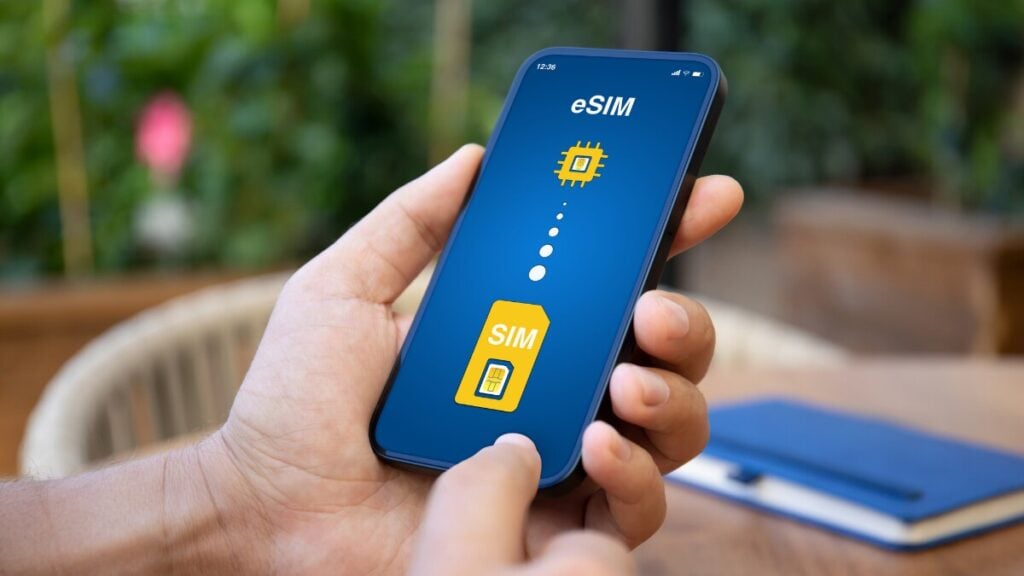
With over 331 million mobile connections, 230 million internet users and 80.5% penetration, Indonesia runs on mobile, something travellers feel in everything from QR menus and ride-hailing to ferry updates, bookings, translation apps and live location sharing.
As such, the first hour after landing in Denpasar is often when your phone is most needed. That becomes even more important during July’s cultural calendar. Bali Arts Festival continues into July, Penglipuran Village Festival brings day-trip traffic into Bangli, and the dry season keeps tourists moving between Canggu, Ubud, Uluwatu, Nusa Penida, Lombok and Jakarta.
Before departure, the cleanest starting point is to choose an Indonesia eSIM plan and decide whether a physical Indonesia SIM card is still needed for local calls, SMS or a longer stay.
Should July Travellers Choose an Indonesia SIM Card or eSIM?
Choose an Indonesia eSIM if the main need is mobile data for maps, WhatsApp, Grab, Gojek, hotel messages, browsing, translation, payment confirmations and ferry coordination. It can be installed before departure and used soon after landing, which is exactly what most short-stay travellers need.
You can go for a physical Indonesia SIM card if the trip depends on local calls, local SMS, local app verification, a local Indonesian phone number or longer-term local use.
That is the real decision. An eSIM is usually better for speed and convenience. A physical SIM is better when local phone-number functions matter.
A data-only eSIM may not include a local phone number or SMS. That is fine for most travel tasks, but it can be a problem if a booking platform, delivery app, bank or local service asks for Indonesian SMS verification.
Best Choice for Most July Travellers
For most July travellers, choose an Indonesia eSIM first. Add a physical Indonesia SIM card only if a local Indonesian number, SMS or voice calls are genuinely needed.
| Traveller Need | Best Option |
|---|---|
Bali, Jakarta, Lombok or Nusa Penida travel | Indonesia eSIM |
Bali-only holiday | Bali eSIM |
Indonesia plus Singapore, Malaysia, Thailand or Vietnam | Southeast Asia eSIM |
Local SMS, calls or Indonesian phone number | Indonesia SIM card |
Older phone without eSIM support | Indonesia SIM card |
Before choosing an eSIM, check that your phone is unlocked and eSIM-compatible. Many recent iPhone, Google Pixel and Samsung Galaxy models support eSIM, but older devices may need a physical SIM card for Indonesia.
Which TravelKon Option Should You Choose?
The best option depends on how your trip is structured, not just where it starts. If you are staying in Bali, our Bali eSIM plans are enough. The right product depends on the route, not just the destination name. Once the itinerary expands to places like Jakarta, Lombok, Nusa Penida, Yogyakarta or Komodo, it makes more sense to compare broader Indonesia eSIM plans.
Travelling across borders into Singapore, Malaysia, Thailand or Vietnam calls for regional coverage instead, making our Southeast Asia eSIM category the most ideal choice. And for those who still prefer physical SIM cards for multi-country trips, especially for flexibility. Taking a moment to match your plan to your actual route helps avoid paying for the wrong coverage or running out of data mid-trip.
What is the Difference Between an Indonesia SIM Card and eSIM?
An Indonesia SIM card is a removable plastic SIM inserted into the phone. It is usually bought before travel or after arrival and may need registration before use.
An Indonesia eSIM is a digital SIM profile installed on an eSIM-compatible phone. There is no plastic card. The traveller scans a QR code or follows installation instructions, then activates the plan when ready.
| Feature | Indonesia eSIM | Indonesia SIM Card |
|---|---|---|
Setup | Install before travel, activate on arrival | Insert the physical SIM and complete setup |
Airport time | No SIM counter required | May require queueing or staff help |
Local phone number | Often data-only, no local number | Often includes a local number, depending on the plan |
SMS | Usually not included on data-only plans | May be included |
Best for | Short trips, Bali events, multi-island data use | Longer stays, calls, SMS and local number needs |
Registration friction | Usually lower for travel eSIMs | Can involve passport and device checks |
Dual SIM use | Can keep home SIM active on compatible phones | May require removing the home SIM on single-SIM phones |
This is why the Indonesia SIM card vs eSIM tourists comparison should not be reduced to price. A cheaper local SIM is not useful if it costs the first hour of the trip, creates registration confusion, removes access to the home SIM, or leaves the traveller offline at the airport pickup point.
Is an eSIM Better for Bali Arts Festival and Penglipuran Day Trips?

Yes, for most July travellers, an eSIM is better for the Bali Arts Festival and Penglipuran day trips because the main need is fast mobile data.
Bali Arts Festival runs from 13 June to 11 July 2026 in Denpasar. That creates a real travel-data problem. A traveller may spend the day in Canggu, Ubud or Sanur, then head into Denpasar for evening performances. Plans shift. Drivers ask for live location. Pickup points are not always obvious. Group messages keep changing.
At festival time, mobile data helps with:
- Checking the latest programme and venue details.
- Finding pickup points around Denpasar.
- Sending live location to drivers, friends or villa hosts.
- Using Grab or Gojek after performances.
- Uploading photos and short videos without relying on venue Wi-Fi.
- Translating signs, food items and transport instructions.
- Confirming dinner bookings or late check-in details.
Penglipuran Village Festival runs from 9 July to 11 July 2026 in Bangli Regency. That is a different connectivity use case. It is a rural day-trip setting where data matters before arrival, during the visit and on the way back.
For Penglipuran, the phone is useful for driver coordination, maps, translation, cashless logistics and live location sharing. A driver may ask for a pin instead of a written address. A villa host may message while the traveller is still on the road. A return pickup may change because of traffic, weather or crowd movement.
The same applies across Bali in July. Canggu traffic makes real-time pickup coordination more useful. Ubud day trips often involve drivers waiting at different entrances or side streets. Uluwatu beach access can be confusing for first-time visitors. Nusa Penida ferries add another layer because hotel pickup, harbour transfers and boat schedules may be handled through separate WhatsApp threads.
The problem is rarely total disconnection. It is the smaller mess: the driver cannot find the villa, the ferry confirmation is buried in WhatsApp, or the Grab pickup point changes while the phone is still hunting for airport Wi-Fi.
With Indonesia’s median mobile download speed at 45.01 Mbps, mobile data is strong enough for normal travel tasks in many populated areas. Coverage still varies by island, beach, hillside, ferry route and rural road, so no eSIM or physical SIM should be treated as perfect everywhere.
When Does an Indonesia SIM Card Make More Sense?
As stated earlier, a physical Indonesia SIM card makes more sense when the traveller needs more than mobile data.
Choose a physical SIM when the trip requires:
- A local Indonesian phone number.
- Local SMS for bookings or app verification.
- Local voice calls to hotels, drivers, restaurants or tour operators.
- A longer stay where local plan management is worth the setup.
- A backup SIM in a second phone or mobile hotspot.
- In-person carrier support at a local shop.
- A phone that does not support eSIM.
This is the stronger use case for travellers spending weeks in Indonesia, attending Jakarta meetings, coordinating with local contacts, or needing a number that Indonesian businesses can call.
The trade-off is setup friction. Buying locally can involve presenting a passport, completing registration, sharing device details, waiting for activation and dealing with shop-specific processes. Airport SIM counters are convenient but not always the cheapest. City shops may offer better value but are less convenient after a long flight.
There is also a home-SIM issue. On some phones, using a physical Indonesia SIM card may mean removing the home SIM. That can be annoying if banking, two-factor authentication or important messages still rely on the home number.
A physical SIM is not automatically better because it is “local”. It is better only when the local number, SMS or calling function is useful enough to justify the extra setup.
What Should Tourists Know About IMEI and Registration in Indonesia?
Indonesia has SIM and device registration processes that can affect tourists using local Indonesian mobile services. This is general travel guidance, not legal advice, and rules can change.
For most short July holidays, IMEI is not the first problem to solve. The practical issue is simpler: buying a local SIM can mean passport checks, device checks and activation delays when the traveller just wants to leave the airport.
The practical points are:
- A local physical SIM may require passport-based registration.
- Device IMEI details may be checked or recorded for local network access.
- Foreign tourists staying more than 90 days are treated differently from short-stay visitors in Customs guidance.
- Roaming and many travel eSIM arrangements can avoid the same in-store tourist SIM process, but plan terms still matter.
- Longer stays, imported phones, multiple devices and heavy reliance on local SIMs deserve extra care.
This is one reason many short-stay travellers prefer an eSIM Indonesia plan for July. It reduces the chance of losing time at a counter, especially when the trip starts with a late Denpasar arrival, a villa transfer or a next-morning festival plan.
The safest setup is simple: keep the home SIM available for banking and critical account SMS where possible, install the Indonesia eSIM before departure, and avoid deleting the eSIM profile unless the provider specifically instructs it. A deleted eSIM can be difficult or impossible to reinstall, depending on the plan.
What Should Travellers Do Before Flying to Indonesia?
The best connectivity decision is made before the flight, not while standing beside luggage at Denpasar airport.
Before departure:
- Check that the phone is unlocked.
- Confirm that the phone supports eSIM if choosing an eSIM.
- Buy the eSIM or SIM before travel where possible.
- Install the eSIM while connected to stable Wi-Fi.
- Do not activate the plan too early unless the plan instructions say to.
- Screenshot installation instructions and QR codes.
- Keep the home SIM active if banking SMS or two-factor codes are needed.
- Download offline maps for Bali, Denpasar, Ubud, Uluwatu and Nusa Penida.
- Save villa, hotel, ferry and driver details offline.
- Carry a power bank during long day trips and festival nights.
All this is important for travellers arriving late, travelling with children, joining a group itinerary, heading straight to a villa or relying on a driver after landing.
Common Mistakes With Indonesia SIM Cards and eSIMs
The wrong mobile setup usually fails in small, annoying ways rather than dramatic ones. The traveller still gets through the trip, but loses time fixing problems that should have been handled before departure.
Avoid these mistakes:
- Buying an unlimited plan without checking fair-use limits.
- Assuming a data-only eSIM includes calls or SMS.
- Waiting until airport Wi-Fi to install the eSIM.
- Deleting an installed eSIM after activation.
- Choosing Indonesia-only coverage when the trip includes Singapore, Malaysia, Thailand or Vietnam.
- Removing the home SIM without considering banking SMS.
- Relying only on mobile data for ferry tickets, hotel addresses or driver details.
- Assuming rural villages, beaches and ferry routes have the same coverage as central Bali.
- Forgetting that an older phone may not support eSIM.
FAQs
Is an Indonesia eSIM Better Than a Physical SIM Card for July?
Yes, for most short-stay July travellers, an Indonesia eSIM is better because it can be installed before departure and used soon after landing. It is especially useful for Denpasar arrivals, Bali Arts Festival evenings, Penglipuran drivers, Grab or Gojek pickup points, villa WhatsApp messages and Nusa Penida ferry coordination.
A physical SIM is better when a local phone number, SMS or local calling is genuinely needed.
Will a Data-Only eSIM Work With WhatsApp in Bali?
Yes, a data-only eSIM can usually support WhatsApp in Bali because WhatsApp uses mobile data once the account is already set up on the phone. Travellers can message villa hosts, drivers, friends and tour operators without needing a local Indonesian number.
A local number may still matter if a new app or service asks for SMS verification.
Can Grab or Gojek Work Without an Indonesian Number?
Grab and Gojek can often be used with mobile data, but account setup and verification requirements can vary. Travellers who already have their accounts working before arrival should have fewer problems than travellers trying to create or verify accounts after landing.
Set up key ride-hailing apps before flying where possible.
Is Airport Wi-Fi Enough to Set Up an eSIM in Denpasar?
Airport Wi-Fi may work, but it should not be the main plan. Installing an eSIM while tired, standing near luggage, trying to find a driver and relying on airport Wi-Fi is a bad start to the trip.
Install the eSIM before departure on stable Wi-Fi, then follow the activation instructions after landing.
Does an Indonesia eSIM include a Local Phone Number?
Many Indonesia eSIM plans are data-only and do not include a local phone number or SMS. That is fine for WhatsApp, maps, Grab, Gojek, email, browsing and translation, but it may not work for services that require local SMS verification.
Is an Unlimited Data Indonesia eSIM Really Unlimited?
Not always in the way travellers expect. Some unlimited data Indonesia eSIM plans include fair-use limits, daily high-speed caps or speed reductions after heavy usage.
Check the plan terms before buying, especially if hotspotting, video calls, cloud backups, TikTok, Instagram Reels or remote work are part of the trip.
Takeaways
July travel in Indonesia moves fast, from Bali events to multi-island routes where timing, navigation and bookings all rely on stable data. A physical SIM can work, but it adds friction at arrival and between stops. A TravelKon eSIM keeps things simple, active from landing and consistent across regions. For most travellers, it is the smoother, more reliable option, especially when plans shift and connectivity needs to keep up without interruption.