Malaysia has become one of Southeast Asia’s most appealing bases for remote workers. Modern cities, strong internet access, affordable living costs, English widely used in business and a growing coworking scene make it a practical option for Australians planning more than a short holiday.
Before departure, planning needs to cover more than the visa application. Documents, insurance, tax, arrival logistics and mobile data are all important. Choosing a Malaysia eSIM before flying helps keep maps, banking apps, accommodation messages and work platforms accessible from the moment the plane lands.
What Is the Malaysia Digital Nomad Visa?
What is often refered to as the Malaysia digital nomad visa is officially known as the DE Rantau Nomad Pass. It is a government-backed programme aimed at remote employees, freelancers, contractors and other digital professionals who want to live in Malaysia while earning income from outside the country.
| Topic | Current Planning Information |
|---|---|
Official programme | DE Rantau Nomad Pass |
Pass type | Professional Visit Pass |
Suitable for | Remote employees, freelancers, contractors and digital professionals |
Stay length | 3 to 12 months |
Renewal | Up to another 12 months |
Maximum stay | Up to 24 months |
Main applicant fee | MYR 1,000 |
Dependant fee | MYR 500 per dependant |
Processing time | Approximately 6 to 8 weeks after complete submission |
Tech income threshold | More than USD 24,000 per year |
Non-tech income threshold | More than USD 60,000 per year |
Can Australians apply? | Yes, once eligibility requirements are met |
Why Malaysia Appeals to Remote Workers
Malaysia offers a strong mix of work and lifestyle benefits. For example, Kuala Lumpur has modern offices, coworking spaces, transport connections, cafes and international airport access while Penang offers a slower pace, strong food culture and a creative community. Johor Bahru, on the other hand, appeals to travellers who want access to Singapore. Langkawi suits those chasing a more relaxed island lifestyle.
To make it even better, Malaysia is highly connected. ICT contributed 23.4% of the country’s economy in 2024, while internet penetration reached 98.0% by the beginning of 2026.
For remote workers, that means:
- Reliable internet in major cities
- Strong mobile data availability
- Established digital banking
- Modern transport apps
- Coworking options
- Easy regional travel connections
As you can see, Malaysia is not just attractive because it is affordable but also because the everyday systems remote workers rely on are already well developed.
Malaysia Digital Nomad Visa Eligibility Requirements
Eligibility depends on profession, income, work arrangement and documents.
| Requirement | What to Expect |
|---|---|
Passport | Valid passport meeting programme requirements |
Income | Minimum annual income based on profession |
Work type | Remote work, freelance work, contracting or digital business |
Income source | Overseas employer, overseas clients or business income |
Insurance | Medical insurance |
Documents | Contracts, proof of income, bank statements and identity documents |
Dependants | Spouse, children and parents |
Local work | Local Malaysian employment requires a different pathway |
The biggest eligibility filter is overseas income. Remote employees need evidence of employment with a foreign company. Freelancers and contractors need contracts, invoices, payment records and bank statements that clearly prove the work and income source.
Income Requirements
Current income requirements are split by profession. Technology and digital professionals need an annual income of more than USD 24,000 while non-tech professionals need more than USD 60,000. This is one of the most important checks before applying. If the income requirement is not met, the rest of the preparation will not carry the application.
Documents to Prepare
The exact document set depends on whether the applicant is a remote employee, freelancer, contractor or business owner. Preparing files by category makes the process easier.
Remote Employee Documents
Remote employees should prepare:
- Valid passport
- Passport photos
- CV or professional profile
- Employment contract
- Employer confirmation letter
- Recent payslips
- Bank statements
- Tax documents
- Health insurance documents
- Good conduct or police clearance documents
- Digital copies of every file
Freelancer and Contractor Documents
Freelancers and contractors should prepare:
- Valid passport
- Passport photos
- CV or professional profile
- Freelance agreements
- Client contracts
- Invoices
- Proof of recent payments
- Bank statements
- Tax documents
- Health insurance documents
- Good conduct or police clearance documents
- Digital copies of every file
Dependant Documents
Applicants bringing dependants should prepare:
- Dependant passport copies
- Relationship documents
- Marriage certificate for spouse
- Birth certificates for children
- Supporting identity documents
- Health insurance documents for dependants
How to Apply for the Malaysia Digital Nomad Visa
1. Confirm the Official Route
Start with the DE Rantau Nomad Pass and confirm that it matches the intended stay, income source and work type. Tourist entry, remote work and long-stay permission are separate things.
2. Check Eligibility
Review:
- Occupation category
- Income threshold
- Passport validity
- Insurance
- Dependants
- Application fees
- Processing time
3. Gather Documents
Prepare every document before starting the application. This is where many applicants slow themselves down. Missing contracts, unclear income records or mismatched names create unnecessary back-and-forth.
4. Submit Through the Official Channel
Use the official application pathway. Keep copies of all documents, confirmations and payment records.
5. Wait for Approval
Processing is around 6 to 8 weeks after a complete submission. Avoid major non-refundable commitments until approval is confirmed.
6. Prepare Arrival Essentials
Before flying, organise:
- Airport transfer options
- Accommodation address
- Banking access
- Authentication apps
- Work chat apps
- Offline copies of documents
- Travel insurance details
- Mobile data
This reduces stress during the first few hours after landing.
Best Places in Malaysia for Digital Nomads
Kuala Lumpur
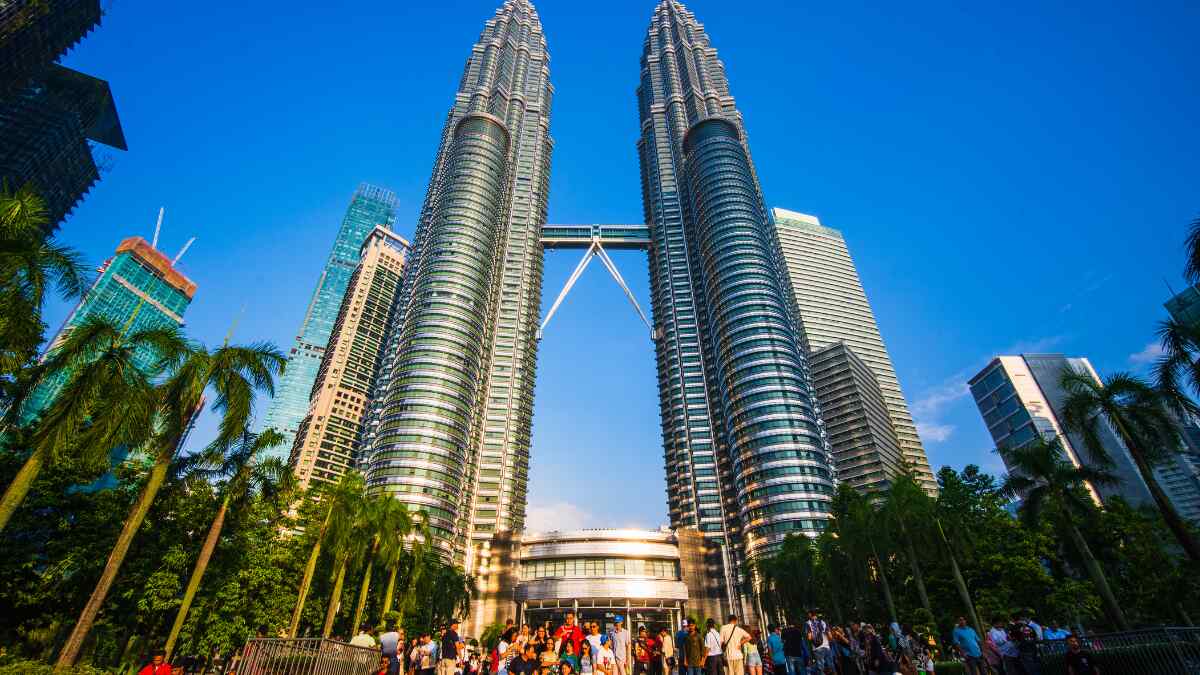
Kuala Lumpur is the most practical starting point for many remote workers. It offers coworking spaces, international hotels, public transport, cafes, shopping centres, healthcare access and strong airport connections.
In fact, it is the best fit for first-timers who want convenience, reliable work infrastructure and easy access to business services from day one.
Penang
Penang, especially George Town, suits remote workers who want culture, food, cafes and a slower pace than Kuala Lumpur.
It is a strong option for freelancers, solo travellers and remote workers who prefer a calmer daily routine without giving up city convenience.
Johor Bahru
Johor Bahru is useful for remote workers who want to stay close to Singapore. It suits travellers with regional meetings, Singapore connections or multi-country plans where Malaysia is the main base but Singapore access still matters.
Langkawi
Langkawi suits remote workers looking for beaches, nature and a slower lifestyle. It is less business-focused than Kuala Lumpur, so it works best for travellers who prioritise lifestyle over coworking density, client meetings or city infrastructure.
Cyberjaya
Cyberjaya is Malaysia’s technology-focused hub, making it ideal for digital professionals who want a quieter base with a tech-oriented environment, newer infrastructure and access to Kuala Lumpur when needed.
How Mobile Data Fits Into Remote Work Planning
Mobile data is not just a travel convenience when planning to work remotely from Malaysia. It is part of the arrival setup.
The first few hours after landing can involve airport transfers, accommodation check-in, messaging hosts, using maps, opening banking apps, receiving two-factor authentication codes, checking email, joining work chats and confirming transport.
A Malaysia travel eSIM can help with:
- Airport arrival
- Maps and public transport
- Rideshare and taxi apps
- WhatsApp, email and work chat
- Banking apps and authentication codes
- Accommodation messages
- Translation tools
- Hotspot backup for laptop work
- Checking visa, travel and insurance documents online
Public Wi-Fi can be useful, but it should not be the only connection plan for remote work. Hotel Wi-Fi can be slow, airport Wi-Fi can be unreliable, and coworking access may not be available immediately after arrival.
New to eSIMs? Our guide on how international eSIMs work gives you a clearer sense of how your connection actually behaves, whether you’re using a regional, single-country, or global plan.
Choosing the Right TravelKon Malaysia eSIM for Remote Work
The right TravelKon eSIM depends on how the trip is structured and how much work will be done from the phone or laptop.
For remote workers, the safest choice is to buy slightly more data than a normal holiday plan, particularly if hotspot will be used as a backup for laptop work.
| Usage Type | What You’re Doing | Approx. Data Use (per day) |
|---|---|---|
Light Remote Work | Maps, WhatsApp, email, banking apps, browsing, transport apps | 100–300 MB |
Daily Remote Work | Teams, Zoom, Google Meet, Slack, cloud docs, uploads, hotspot use | 800 MB – 2.5 GB |
Note: Video calls are the biggest drain. One hour on Zoom or Teams can easily eat 600 MB to 1.2 GB, depending on quality. Add hotspot use or file uploads, and things climb fast.
Multi-Country Travel
If the trip includes Malaysia plus Singapore, Thailand, Indonesia, Vietnam or other nearby destinations, a regional Southeast Asia eSIM is more practical than a Malaysia-only option. This will save you from buying a new plan every time the itinerary changes.
For remote workers, working data on arrival protects the first day of travel, particularly when banking, transport, accommodation and work messages all depend on the phone.
FAQs
Does Malaysia Have a Digital Nomad Visa?
Yes. The common search term is Malaysia digital nomad visa, but the official programme is the DE Rantau Nomad Pass.
Can Australians Apply for the Malaysia Digital Nomad Visa?
Yes. Australians can apply once they meet the current eligibility requirements, including income, work arrangement, insurance and document requirements. The most important filters are overseas income, valid remote work and the ability to prove the work arrangement clearly.
How Long Can You Stay?
The DE Rantau Nomad Pass is valid for 3 to 12 months and can be renewed for another 12 months. This gives eligible applicants a maximum stay of up to 24 months.
How Much Does It Cost?
Current guidance lists MYR 1,000 for the main applicant and MYR 500 per dependant.
What Is the Processing Time?
Processing is around 6 to 8 weeks after complete submission.
Can You Bring Your Family?
Yes. Dependants can include a spouse, children and parents of the main pass holder. Prepare relationship documents, passport copies and supporting identity documents before applying.
Can You Work for a Malaysian Company?
No. The DE Rantau route is intended for remote work connected to overseas income. Local Malaysian employment requires a different visa or work pathway.
Can You Leave Malaysia and Return?
The DE Rantau Nomad Pass supports travel in and out of Malaysia during the pass validity. Check pass conditions before booking regional travel so re-entry details are clear.
Does the Visa Lead to Permanent Residency?
No. The DE Rantau Nomad Pass is a temporary remote-work pathway, not a permanent residency or citizenship route.
What Happens if Your Remote Job Changes?
A job or client change can affect the pass conditions if it changes the income source, employment status or ability to meet renewal requirements. Keep updated contracts, invoices and income records throughout the stay.
Is Tax Included in the Visa Application?
No. Visa approval and tax residency are separate issues. Length of stay, income source, Australian tax residency and Malaysian tax rules all matter, so tax planning should be handled separately from the visa application.
Do You Need a Malaysia eSIM Before Arrival?
Yes. A Malaysia eSIM helps with maps, airport transfers, accommodation messages, banking apps, work chat and hotspot backup from the first day.
Can a Malaysia Travel eSIM Be Used for Hotspot?
Many travel eSIMs support hotspot. Check this before purchase because hotspot use can consume data quickly, especially when using video calls or cloud software.
Takeaways
The Malaysia digital nomad visa is best understood as the DE Rantau Nomad Pass, a temporary remote-work pathway for freelancers, contractors, remote employees and digital professionals earning income from outside Malaysia.
Malaysia is a strong option for Australian travellers who want reliable infrastructure, city convenience, regional access and a lower-cost base in Southeast Asia. The best approach is to confirm the DE Rantau requirements, prepare documents early, review tax separately and avoid major commitments until approval is confirmed.
Connectivity should also be planned before departure. A reliable Malaysia travel eSIM helps keep maps, messages, banking, work apps and hotspot backup ready from the moment the trip begins.