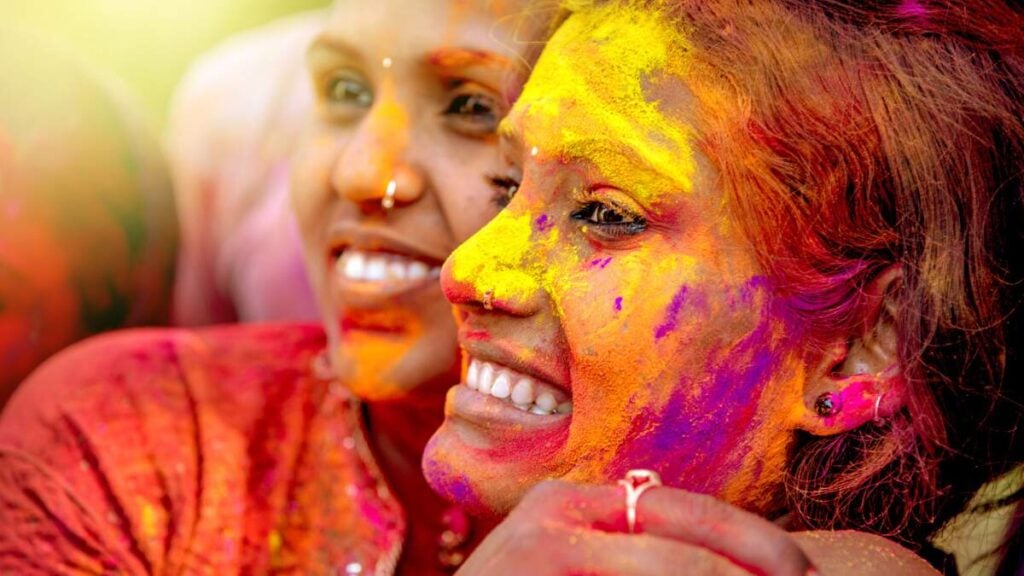
Few experiences capture India’s festive spirit quite like Holi. Streets disappear beneath clouds of coloured powder, strangers exchange greetings, and music spills from temple courtyards into surrounding neighbourhoods. For Australian travellers, joining the celebrations offers a fascinating introduction to Indian culture, although choosing the right destination and preparing for the festivities can make a considerable difference to your experience.
When Is Holi 2027?
Holi 2027 is expected to be celebrated on Monday 22 March or Tuesday 23 March in India, depending on regional traditions and religious calendars. Drik Panchang lists Holika Dahan on Sunday 21 March and Rangwali Holi on Monday 22 March, while government holiday schedules in some regions list Holi on Tuesday 23 March.
| Location | Holika Dahan | Colour Celebrations |
| New Delhi (religious calendar) | Sunday 21 March | Monday 22 March |
| Uttar Pradesh (government holiday calendar) | Monday 22 March | Tuesday 23 March |
| Sydney, Australia (religious calendar) | Monday 22 March | Tuesday 23 March |
Holi follows the Hindu lunar calendar. According to Drik Panchang, the full moon of Phalguna begins at 6:21 pm IST on 21 March. Local sunrise, sunset and ritual timings influence when communities observe the festival.
Government holidays do not necessarily determine when individual temples and neighbourhoods celebrate. Travellers heading to Mathura or Vrindavan should therefore keep both colour days free until local programmes are confirmed.
Several related festival dates have already been announced.
| Related Event | Dates | Status |
| Braj Rangotsav, Uttar Pradesh | 16–30 March | Official festival window |
| Braj Holi Festival, Bharatpur | 17–18 March | Official tourism event |
| Dhulandi Festival, Jaipur | 22 March | Official tourism event |
| Rang Panchami | 27 March | Religious calendar date |
India’s official tourism website has published the dates for Braj Rangotsav and the Braj Holi Festival in Bharatpur. Individual temple programmes and local celebration schedules should become clearer closer to March.
What Happens During Holi?
Holi celebrates the arrival of spring and the triumph of good over evil. The festivities generally centre on two occasions: Holika Dahan and Rangwali Holi.
Holika Dahan recalls the Hindu legend of Prahlad, a young devotee of Vishnu whose father, the demon king Hiranyakashipu, wanted him killed. According to tradition, the king’s sister Holika carried Prahlad into a fire, believing herself protected from the flames. Prahlad survived, while Holika burned.
Families commemorate the story by lighting bonfires, gathering for prayers and making offerings.
The following day’s colour celebrations draw on traditions associated with Krishna and Radha. People throw coloured powder (gulal), splash coloured water and exchange greetings of “Holi hai!” Traditional treats include gujiya, a sweet filled pastry, and thandai, a spiced milk drink.
Some businesses close or operate reduced hours during Holi, while transport services may experience disruptions. Avoid arranging important transfers during the main colour celebrations.
If India’s religious festivals interest you, our Diwali in India guide offers another perspective on the country’s festive traditions and regional customs.
Where to Celebrate Holi in India
Your choice of destination will shape the kind of Holi you experience. Temple towns offer centuries-old religious traditions, while larger cities have organised celebrations that may be more manageable for first-time visitors.
| Destination | Best For | Crowd Levels | Family Suitability |
| Mathura and Vrindavan | Religious and temple traditions | Very high | Challenging with young children |
| Barsana and Nandgaon | Lathmar Holi | Very high | Requires careful planning |
| Udaipur | Royal Holika Dahan traditions | Varies by event | Depends on arrangements |
| Jaipur | Cultural performances and organised events | Moderate to high | Good at suitable venues |
| Delhi | Ticketed parties and hotel celebrations | High in public areas | Better at organised events |
Braj: Mathura, Vrindavan, Barsana and Nandgaon
Braj is closely associated with the life of Krishna and hosts some of India’s most elaborate Holi celebrations. Festivities traditionally extend for approximately 40 days, beginning around Basant Panchami.
Barsana and Nandgaon are famous for Lathmar Holi, during which women playfully strike the shields of participating men with wooden sticks. Vrindavan also hosts Phoolon Ki Holi, where flower petals form part of the celebrations.
More than 4.4 million devotees had reportedly visited the Braj region by 3 March during the 2026 festivities, according to figures attributed to local police officials.
Lathmar Holi generally takes place several days before the main colour celebrations. Consider arriving around 15 March if you want to experience the wider Braj festivities in 2027, and book flexible accommodation until individual event dates are confirmed.
Udaipur
Udaipur celebrates Holi with traditions associated with the Mewar royal family. The city’s royal Holika Dahan ceremony at the City Palace offers visitors an opportunity to experience the festival’s ceremonial side.
Contact the palace administration or your accommodation provider for 2027 ceremony dates, visitor access and pass requirements. Hotels and resorts may also arrange colour celebrations, providing an alternative to crowded public gatherings.
Jaipur
Jaipur combines traditional festivities with organised cultural events. Rajasthan Tourism has announced the Dhulandi Festival at Khasa Kothi for 22 March 2027.
The event is expected to feature traditional music, dancing and colour celebrations. Confirm admission arrangements closer to the festival.
Jaipur is also a practical choice for travellers combining Holi with sightseeing around Rajasthan’s forts, palaces and markets.
Delhi
India’s capital hosts Holi celebrations ranging from neighbourhood gatherings to ticketed music festivals and hotel events.
An organised celebration may be preferable for first-time visitors who are unfamiliar with local customs. Before booking, check whether the package includes colours, refreshments, changing facilities and appropriate security arrangements.
Getting to Braj and Where to Stay
Mathura is well connected to Delhi by rail, with services such as the Bhopal Shatabdi Express and Taj Express stopping at Mathura Junction. Check current schedules through the IRCTC website and reserve seats early, as demand increases around Holi.
Private transfers via the Yamuna Expressway are another option, although festival traffic can extend journey times considerably.
Mathura makes a convenient accommodation base for visiting Vrindavan and neighbouring towns. Barsana is approximately 40 to 50 kilometres away by road, depending on your route.
March generally brings warm days across the region, with daytime temperatures in nearby Agra often reaching the low 30s. Pack breathable clothing and carry drinking water during outings.
Suggested Four-Day Holi 2027 Itinerary
| Date | Suggested Activities |
| Sunday 21 March | Travel to Mathura, check into your accommodation and attend Holika Dahan if locally scheduled. |
| Monday 22 March | Participate in confirmed colour celebrations or attend temple ceremonies. |
| Tuesday 23 March | Join any remaining scheduled Holi celebrations and explore the surrounding area. |
| Wednesday 24 March | Return to Delhi or continue to Agra. |
This itinerary covers both possible main celebration dates. Allow additional days from around 15 March if Lathmar Holi and other earlier Braj traditions are priorities.
What Should You Wear and Bring to Holi?
White clothing is popular during Holi because coloured powders stand out against the fabric. However, wet white cotton can become transparent, and synthetic colours may leave permanent stains.
Prepare for the celebrations with the following:
- Old cotton clothing: Choose breathable garments you would not mind staining. Long sleeves and full-length trousers provide additional skin coverage.
- Closed shoes: Wear comfortable footwear with good grip, as water and powder can make streets slippery.
- Protective eyewear: Wraparound sunglasses can help prevent powder from entering your eyes.
- Hair oil and sunscreen: Hair oil may make colour easier to wash out, while sunscreen protects against UV exposure.
- Waterproof phone pouch: Protect your device against splashes, moisture and coloured powder.
- Waterproof document holder: Keep your passport and visa protected while carrying them as required under Indian law.
Eye injuries are a recognised risk during Holi. One medical study documented 21 patients presenting with colour-related eye injuries over four days during the 2018 celebrations.
Avoid throwing powder directly towards anyone’s face, and remember that colours marketed as natural or herbal can still cause irritation.
How Do You Take Part Safely and Respectfully?
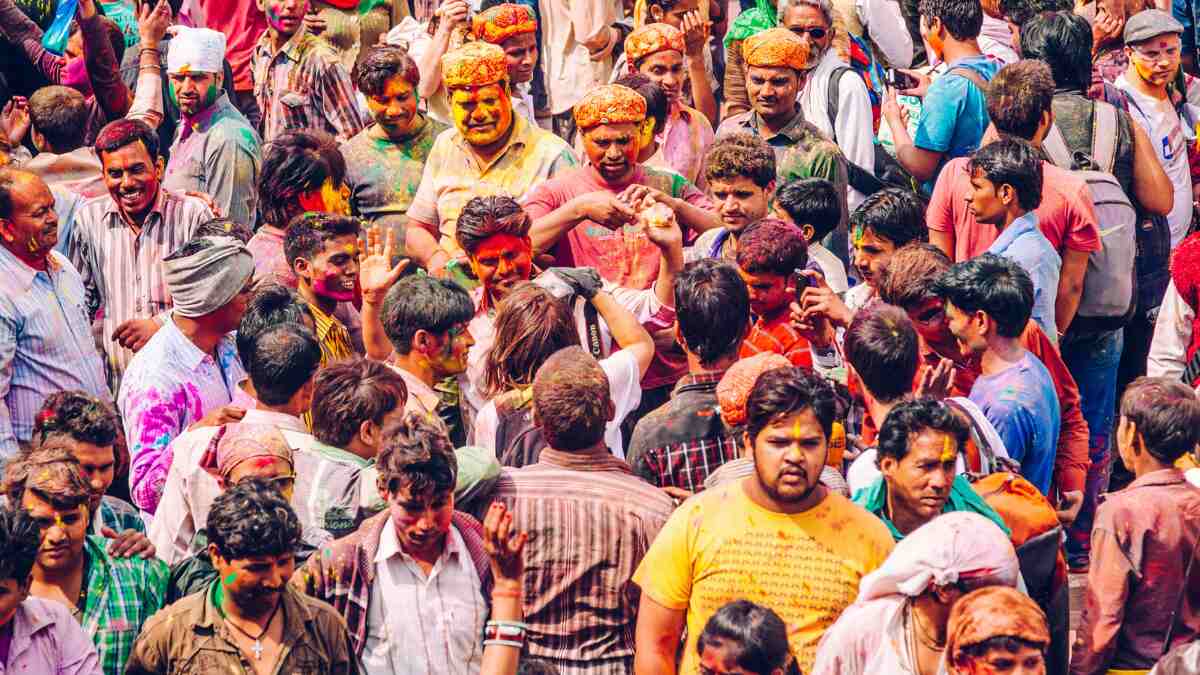
Exercise extra caution when joining Holi celebrations in India, particularly in busy temple towns. Narrow streets and temple entrances can become dangerously congested during religious gatherings, making it difficult to move freely or leave when crowds build up.
Celebrate with trusted companions, identify exits before entering crowded spaces and leave if movement becomes restricted. Female travellers should be aware of the risk of harassment and consider attending organised events with appropriate security.
Drink only from trusted sources and avoid bhang, a cannabis-based preparation sometimes served during Holi. Its strength can vary, as can its legal status across Indian states.
Reading through these cultural awareness tips for India before departure can help you understand temple etiquette, appropriate clothing and respectful interactions with local communities.
Always ask permission before applying colour to someone. If you want others to stop, raise your palms and say “bas”, meaning enough.
India’s general emergency number is 112, while the Ministry of Tourism operates a 24-hour tourist helpline on 1800 111 363. Knowing how emergency calls with a travel eSIM work can help you arrange a reliable means of contacting emergency services before attending crowded celebrations.
Do not rely solely on a data-only eSIM for conventional emergency voice calls.
What Do You Need Before You Fly to India?
Australian passport holders should prepare their travel documents well before departure. As of November 2026, India’s entry requirements include:
- Valid passport: Check the passport validity requirements applicable to your visa.
- Indian visa: Eligible Australian travellers can apply for an e-Visa through the official Indian Visa Online website before departure. Ensure your intended arrival point accepts e-Visas.
- e-Arrival Card: Complete the online form within three days before travelling to India.
- Health self-declaration: India currently requires an online declaration within 24 hours before arrival as part of Ebola screening measures.
- Travel insurance: Arrange suitable coverage for medical treatment, unexpected travel disruptions and planned activities.
Border health measures and immigration requirements may change before March 2027. Consult Smartraveller and official Indian government sources shortly before departure.
How Should You Set Up Your Phone for Holi Day?
Finding friends in crowded streets, accessing hotel reservations and arranging transport become more challenging during Holi. Comparing India eSIM plans before departure gives you time to assess network coverage, data allowances and validity periods for your itinerary.
Many travel eSIMs can be installed over Wi-Fi before departure, although activation requirements vary by provider and plan.
Once you arrive, select your travel eSIM for mobile data and enable data roaming if required by your provider. Keep your Australian SIM available for banking verification messages if necessary, but disable data roaming on that line and turn off automatic mobile data switching where supported.
A little additional preparation can help when mobile networks become congested:
- Download offline maps of Mathura and Vrindavan.
- Screenshot accommodation addresses and booking confirmations.
- Arrange a meeting point with your travelling companions.
- Set ride-hailing pickup locations on accessible main roads.
- Check whether your eSIM supports hotspot sharing.
- Carry a fully charged portable power bank.
TravelKon offers multiple connectivity options for travellers visiting India. If you are unsure how to choose an eSIM for India, consider your trip duration, expected data consumption and the destinations you intend to visit before purchasing a plan.
FAQs
What Date Is Holi in 2027?
Holi is expected to take place on 22 or 23 March 2027 across different parts of India. Drik Panchang lists 22 March as Rangwali Holi in New Delhi, while some government holiday calendars list 23 March. Check local schedules before travelling.
When Is Holi 2027 in Australia?
Sydney’s religious calendar lists Holika Dahan on Monday 22 March and Rangwali Holi on Tuesday 23 March 2027. Community festivals may take place on nearby weekends, and observance dates can vary by location.
Where Is the Best Place to Experience Holi in India?
Mathura, Vrindavan and the wider Braj region offer traditional religious celebrations. Udaipur, Jaipur and Delhi provide alternatives for travellers interested in royal ceremonies, cultural performances or organised events.
What Should You Wear to Holi?
Wear old cotton clothing, comfortable closed shoes and protective eyewear. Carry a waterproof phone pouch and protect essential travel documents from coloured powder and water.
Is Holi Safe for Tourists?
Tourists can reduce their risks by attending organised celebrations, travelling with trusted companions, avoiding overcrowded areas and following local safety advice. Women travelling alone should exercise particular caution.