TravelKon

Budget Europe Trip Top Tips to Stretch Your Euros

Budget Europe Trip: Top Tips to Stretch Your Euros

Are you planning a European adventure but concerned about the costs? Totally understandable! Keeping your spending in check while exploring this vibrant continent can be tricky. Fear not, though, because there are countless ways to enjoy a budget Europe trip without missing out on its wonders. From securing budget accommodations to utilising affordable connectivity, Note down these tips from our co-founders to save big bucks while still soaking up all the incredible experiences Europe has to offer! 6 Tips for a Budget Europe Trip 1. Explore Budget Accommodation Consider Hostels If you’re mindful of your expenses while in Europe, consider staying at hostels. These budget-friendly options are incredibly popular across the continent, with a wide variety available in every city. Whether you’re travelling solo, with family, or with friends, hostels offer diverse lodging options, including dormitories, private rooms, and even family suites to suit your preferences. One of the biggest draws of hostels is their affordability compared to conventional hotels. Despite the lower price tag, many hostels boast prime locations, like the Flying Pig Downtown Hostel in Amsterdam or The House of Sandeman in Porto. Additionally, they often promote a sense of community among guests and kitchen facilities that allow travellers to prepare their own meals and cut costs further. Stay with a Local Exploring Europe with friends can be a budget-friendly option as you can divide accommodation costs among your group. But what if you’re on a solo trip or don’t have friends to stay with? Consider connecting with locals through hospitality exchange services. These platforms allow users to find hosts who offer free accommodations for short-term stays. Aside from saving on lodging expenses, staying with locals provides an opportunity to connect with residents who can offer insider tips and advice about the area. Find Work Exchange Options Another effective way to save money on lodging while you’re on a Europe trip is by exchanging work for free accommodation. Various places like hostels, farms, and local businesses often offer opportunities for travellers to work for a few weeks in return for a complimentary bed and sometimes meals. This option allows you to delve deeper into the local culture, explore the surroundings, and build connections with residents. 2. Choose Budget-Friendly Activities Check Out Free Attractions and Museums You’ll find numerous nature attractions like beaches and beautiful parks that are free to visit and perfect for picnics across Europe. Additionally, many cities offer free entry to some of their tourist spots. For instance, in several Italian cities, famous attractions waive their fees every first Sunday of the month, while all public museums in London are open to visitors at no cost. Moreover, major European cities offer free walking tours, allowing visitors to explore city attractions and delve into history. Remember to tip your guide at the end as a gesture of appreciation for their time and expertise! Opt for Budget-Friendly Attractions When it comes to expenses, you’ll generally find that prices rise as you head north or west in Europe, such as in France and the UK. For budget-friendly travel, consider exploring southeastern Europe, including countries like Croatia and Romania, where costs tend to be lower. As a general guideline, straying from tourist hotspots gives you more affordable options. However, if a particular destination truly captivates your interest, it might just be worth the extra investment. Remember to not focus on budgets so much and consider other factors like unique experiences or personal preferences when making your decision! Make Use of City Tourist Cards Local tourism offices frequently offer tourism cards that provide access to various attractions, tours, and restaurants within the city. With these cards, you can enjoy free entry and significant discounts on activities. Some providers also include discount vouchers, complimentary guidebooks, maps, and priority access to make your trip even more convenient. 3. Eat and Drink Wisely Seek Out Food Discounts While travelling, dining out is likely on your agenda, but it doesn’t have to cost a fortune to enjoy delicious meals. In Europe, numerous websites, like TheFork, offer discounted restaurant bookings that allow you to try out delicious yet budget-friendly meals during your trips. Try Local Cuisine If you’re watching your spending closely, it’s best to steer clear of the pricey, tourist-filled restaurants. Instead, opt for local sandwich shops, pizza joints, or outdoor street vendors for more budget-friendly meals. One way you can find these gems is by stepping away from sightseeing streets or asking locals for recommendations on their favourite dining spots. Carry a Reusable Water Bottle In many parts of Europe, tap water is safe for consumption. To save some more extra bucks, consider bringing along a reusable water bottle during your trip. By refilling your bottle with tap water whenever possible, you can stay hydrated all while minimising the consumption of single-use plastic bottles. Cook Your Own Meals Apart from accommodation costs, food and drinks can also eat up a lot of your budget in Europe. One smart way to save money is by cooking your own meals. Start by shopping at local food markets which you can find in almost every city across Europe, such as Mercat Central de València in Valencia, Spain or Apt Marché in Provence, France, then cook your meals at your accomodation’s kitchen. 4. Find the Most Economical Means of Transportation Book Flights in Advance Planning ahead can save you a lot, especially when it comes to flights. To avoid high fares, try booking your flights to Europe about 4 months in advance. According to Forbes, the best deals for flights to Europe are typically found around 129 days before departure, but can range from 50 to 179 days prior. During your search, consider using sites like Skyscanner to compare airlines, airports, dates, and times so you can find the flights that fit your budget and travel itinerary the best. Use Public Transportations Train travel is widely favoured in Europe for its speed, comfort, and scenic views. If you’re travelling across multiple countries, consider investing in a Rail

Budget Europe Trip: Top Tips to Stretch Your Euros Read More »

Complete List of eSIM Compatible Phones & Devices

Complete List of eSIM Compatible Phones & Devices

Wondering if your device supports eSIM? Curious about how to check its eSIM compatibility? Look no further! In this article, we’ll guide you through a complete list of eSIM-compatible phones and devices and show you how to check if yours supports eSIM. eSIM offers numerous advantages, including convenience, cost-effectiveness, better security, and eco-friendliness, making it an appealing option for travellers. However, it’s essential to note that your device must be carrier-unlocked and eSIM-compatible to utilise this technology. The great news is that as of 2024, more and more smartphones worldwide are now equipped with eSIM capability. Find out if yours does too with our latest eSIM compatibility guide! List of eSIM Compatible Phones & Devices eSIM Supported Phone & Device List 1. Apple Interested in exploring the world of eSIMs with your iPhone? Apple’s got you covered with a wide range of models supporting this feature, from the iPhone 11 and later to various iPad models.Here’s the full list: Keep in mind: 2. Samsung Fantastic news for Samsung users! If you own a Galaxy S, Z Fold, Z Flip, or Galaxy Note device, you can now relax knowing that all these models support eSIM technology. No need to fret about compatibility anymore!Check out this list for more details: Additional notes: 3. Google Pixel Did you know that Google Pixel models from Google Pixel 3a and later support eSIM technology? Here’s a handy list for you: Just a heads up: 4. Oppo Explore these Oppo devices that support eSIM technology: 5. Huawei Did you know that Huawei smartphones are the first Chinese smartphone to include eSIM support? Take a look at the lineup of Huawei devices that come with eSIM capabilities: 6. Xiaomi Here’s a refined list of Xiaomi devices equipped with eSIM compatibility: *Please always check if your device has eSIM fucntion by checking if your phone has an EID number. 7. Motorola Curious if your Motorola devices can utilise eSIM? From the Razr series to the Edge series, here’s a complete list of eSIM-compatible Motorola models: 8. Rakuten Here’s a refined list of Rakuten devices compatible with eSIM: 9. Sony Sony Xperia models from Xperia 10 III Lite and later support eSIM technology! Do you see your device on this list? 10. Honor Explore the latest eSIM-enabled devices from Honor, featuring: 11. Sharp Did you know that Sharp also offers eSIM support with the following models? 12. Others The excitement doesn’t stop there! Don’t miss out on these additional eSIM-compatible devices: Is My Phone eSIM Compatible? Are you wondering whether your phone can use eSIM? Apart from checking if your device is mentioned above, it’s wise to double-check if your device supports eSIMs before purchasing an eSIM. Here’s an easy way to find out: 1. Check If Your Phone is Unlocked Firstly, ensure that your phone can work with any carrier. Some carriers may restrict eSIM use to phones bought directly from them. 2. Watch Out for Phones from Other Countries Be cautious with phones from other countries, also known as grey imports; they might not support eSIMs, even if they’re the same model sold in your country. 3. How to Check for eSIM Compatibility? An Electronic IDentifier (EID) serves as a digital fingerprint for eSIMs. If your phone has one, it’s eSIM-ready. Here’s how to check: So, have you spotted your device on the list and checked for the EID? If so, your device is ready for eSIM! Visit TravelKon’s website to discover the ideal eSIM plans for your upcoming travels. If your device doesn’t support eSIM, no problem! TravelKon also offers a variety of travel SIM cards with fantastic benefits to ensure your trip goes smoothly. Frequently Asked Questions (FAQs) Can I have multiple eSIMs in one device? Yes! you can install multiple eSIMs profiles onto your device; however, the number of eSIMs you can have active depends on your device. For instance, Android devices typically support 5-7 eSIMs, with only one active at a time. On the other hand, iOS devices can accommodate up to 20 eSIMs, with up to two active simultaneously. Can I install an eSIM on multiple devices? Sadly, no. You can only use an eSIM on one device at a time. If you need to keep all your devices connected, simply use a device with an active eSIM as a mobile hotspot. This way, you can conveniently share internet access with your other gadgets! Can I switch eSIM between devices? Once you’ve activated a TravelKon eSIM on your device, most eSIM, once installed, becomes locked to that specific device and cannot be transferred to another device, however you can contact Travelkon to see if the option is available. If you want to connect another device with an eSIM, we recommend getting separate eSIMs for each device, or simply sharing the data using hotspot if you prefer to stick with just the one eSIM.

Complete List of eSIM Compatible Phones & Devices Read More »

Internet Access in Japan Travel SIM vs Roaming vs Local SIM

Internet Access in Japan: Travel SIM vs Roaming vs Local SIM

Staying connected to the internet while travelling can often be tricky, including for travellers in Japan. There are multiple options available such as roaming, travel SIM cards, or local SIM cards, but finding the option that best suits your needs is challenging. Additionally, navigating a foreign country like Japan, where you may not speak the language, can pose another hurdle when seeking advice from locals. However, fear not! In this article, we’ve outlined all the available connectivity options for tourists in Japan, empowering you to make an informed decision and stay connected throughout your adventure! Internet Access in Japan: Roaming, Travel SIM, and Local SIM 1. Roaming with your home SIM Using international roaming from your home country is one way to stay online while travelling. It enables your device to connect to a local provider’s network in another country, allowing you to use services such as calls, texts, and data abroad. This service is typically provided through agreements between your home carrier and foreign carriers. International roaming is convenient since your device might automatically connect upon disabling Airplane Mode. However, it can be extremely expensive and may prove to be the costliest option, especially if you have high data usage. For Australian tourists, there are several providers you can choose from: Telstra If you’re planning a trip abroad, Telstra offers an International Day Pass. Once activated, this feature remains active as soon as you use your phone outside Australia, charging only for the times you use it overseas. Upon your return to Australia, you won’t incur any charges even if you keep it active. With the International Day Pass, the plans and fees vary depending on your destination country. For instance, in Japan, it costs $10 per day, providing access to 1GB of data, as well as unlimited calls and texts. If you exceed the daily data limit, Telstra will send a message with a top-up option. Optus Optus offers Optus Daily Roaming, which automatically activates when you travel overseas. Upon using your phone after landing, you’ll receive a text confirming that your roaming has been activated. Optus Daily Roaming provides access to 5GB of data, along with unlimited standard texts and calls for $5 per day. This plan is available for travellers visiting countries in Optus’s Zone 1 list, which includes Japan. 2. Japan Travel SIM or eSIM Another way to access the internet while enjoying your time in Japan is by using a travel SIM card. Travel SIM cards offer global coverage, along with the option to choose from extended and robust plans, making it easier for tourists to use the internet, send texts, or make calls. With a travel SIM, you can conveniently order your SIM card online and have it delivered to your doorstep. Better yet, if you have an eSIM-compatible device you can order a travel eSIM which is sent instantly via email! You can activate both of these options anytime you like, whether it’s just before your trip or upon arrival in your destination country. Travel eSIM and SIM cards are also a much cheaper option, particularly when compared to roaming charges. If you’re seeking an affordable, reliable, and convenient travel eSIM or SIM card provider with responsive support, consider TravelKon! TravelKon TravelKon is an Australia-based provider of travel SIM cards and eSIMs, offering prepaid data plans for more than 180 countries, including Japan. Not only is TravelKon affordable and convenient, but it also stands out for its reliable connectivity and responsive customer support. Assistance is readily available through Messenger, WhatsApp, and email whenever you have questions or need help. There are several plans you can choose to complete your Japan trip including but not limited to (prices are in AUD): Product Quota Data Validity Price Japan SIM Card 3 – 50 GB 30 Days $19 – $79 Softbank Japan SIM Card 5G 15 – 50 GB Until expiry date $39 – $69 Japan Docomo IIJ eSIM 3 – 50 GB 30 Days $14 – $75 Japan eSIM Saver 10 – 50 GB 30 Days $12 – $78 Japan eSIM Unlimited Max Unlimited Data 1 – 30 Days $9 – $99 TravelKon Japan SIM card and eSIM Plan* For more details on the available options, explore TravelKon’s physical SIM Cards Japan options and Japan eSIM. 3. Japan Local SIM To ensure connectivity throughout your Japan trip, you can also consider purchasing a local prepaid data SIM card. This option provides reliable and fast internet at a lower cost than roaming, and you won’t need to return the card afterward. However, there are some drawbacks to using local SIM cards, such as language barriers or ID registration. Additionally, there’s no instant connection upon landing, as you’ll need to purchase the SIM card from airports or stores, or wait for delivery. Here are some local Japan SIM cards that tourists can choose from: Softbank If you find yourself in Japan without a SIM card and are looking for a trusted option with extensive coverage, consider SoftBank, one of the biggest telecommunication companies in Japan, which covers almost every corner of the country. SoftBank offers a Prepaid SIM for Travel plan, with prices varying depending on the retailer. However, you can purchase an additional 500MB of data for $17*, valid for 31 days. Mobal Whether you’re planning a short or long Japan trip, Mobal provides flexible options. Its long-trip plans include mobile data, texts, and calls, while the short-trip plans focus solely on data usage. With Mobal’s long plan, you can purchase your SIM for $30 and choose the package that best suits your needs. One of the most popular packages offers 5GB of data, along with free incoming calls and texts, for only $32.50* per month. Sakura Mobile Sakura Mobile provides high-speed mobile data with extensive coverage, encompassing most of Japan. It offers unlimited data through six different plans, each varying in price and validity period: Days Price 8 $50 15 $72 30 $100 45 $160 60 $176 90 $264 Sakura Mobile Japan SIM

Internet Access in Japan: Travel SIM vs Roaming vs Local SIM Read More »

how an esim works

What Is a Travel eSIM and How Does It Work When Travelling?

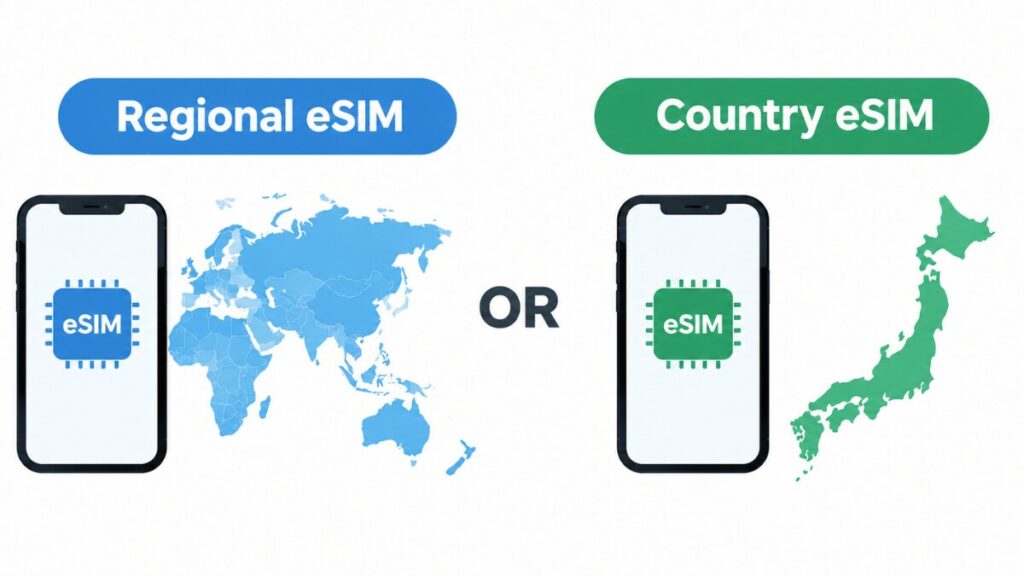
Travelling with mobile data used to mean either paying high roaming fees or trying to find a local SIM card after landing. A travel eSIM gives you a simpler option. You can often set everything up before you leave, keep your usual SIM in your phone, and avoid scrambling for airport Wi-Fi or a local phone shop on arrival. This guide explains what a travel eSIM is, how travel eSIMs work when travelling, how TravelKon eSIM activation works, how to check your data usage, and what to do if your eSIM is not working properly. What is a Travel eSIM? A travel eSIM is a digital version of a SIM card designed for use abroad. Instead of inserting a small plastic card into your phone, you download an eSIM profile to a compatible device. That profile connects you to a supported mobile network in your destination. If you have been wondering what an eSIM for travel is, think of it as a more convenient way to get mobile data overseas. It is still a SIM in practical terms, but it is stored digitally inside your phone rather than as a removable card. These eSIMs are popular because they help travellers get online quickly without changing their normal number or handling a second physical SIM. Depending on your setup, you may be able to use your regular SIM for calls and texts while using your travel eSIM for data. How Do eSIMs Work When Travelling? In most cases, the process is simple. First, you choose and buy a plan for the country or region you are visiting. After purchase, you receive the eSIM details, usually as a QR code or manual installation information. You then install the eSIM profile on your phone before departure or when you are ready to use it. Once you reach your destination, you switch on the travel eSIM for mobile data, check that the correct settings are enabled, and your phone connects to a partner network supported by your plan. In some cases, roaming needs to be enabled on the eSIM line for the service to work properly, even though you are using an eSIM plan rather than your home carrier’s standard roaming. So if you are asking how travel eSIMs work, the short answer is that it gives your phone a digital mobile plan for overseas use, letting you connect in the same way a physical SIM would, but without swapping cards. Why Choose a Travel eSIM Instead of Roaming or a Physical SIM? The main reason travellers choose an eSIM for travel is convenience. You can usually set it up before you fly, which means you are not relying on airport kiosks, local stores, or hotel Wi-Fi to get connected. It can also give you better cost control. Instead of using your home carrier’s roaming charges without much visibility, you choose a plan in advance and know what data allowance you are working with. Also, a physical SIM can be easy to lose, and swapping SIM cards can be annoying if you want to keep your regular number active. A travel eSIM lets many users keep their main SIM in place while adding travel data on top. For short trips, work travel, stopovers, and multi-country travel, that simplicity is often the main selling point. How to Install and Activate a TravelKon eSIM For first-time users, installation and activation are the parts that matter most. TravelKon eSIM activation is usually straightforward when you take it step by step. 1. Purchase the right plan To activate travel eSIM, start by choosing the TravelKon plan that matches your destination and trip length. Make sure the country or region is correct before buying. 2. Receive your eSIM details After purchase, you should receive your eSIM details by email. This will normally include a QR code or manual setup information. 3. Install the eSIM profile Open your phone’s SIM or mobile network settings and add the eSIM using the QR code or the manual details provided. This installs the travel eSIM on your device, but it does not always mean it is active for use straight away. 4. Check if your phone is compatible Before installation, make sure your handset supports eSIM. If you are unsure, check our list of eSIM-compatible phones and devices. 5. Review any key settings After installation, check whether the correct APN or network settings are needed. Some plans work immediately, while others may need a small manual adjustment based on the instructions you receive. 6. Select the correct eSIM for data If your phone has more than one SIM active, make sure the TravelKon eSIM is selected as the line used for mobile data. This is a common step people miss. 7. Enable roaming if required Some travel eSIM plans require data roaming to be enabled on the eSIM line. This can sound strange, but it is often part of how the service connects to supported partner networks overseas. 8. Connect on arrival Once you arrive, turn on the eSIM line if needed, make sure mobile data is assigned to it, and allow the phone a moment to connect. In most cases, it should join a supported network automatically. How to Check Your TravelKon Data Usage There are usually two simple places to start. And the first is your TravelKon order or account information, where available. Depending on the plan and setup, usage details may be visible through the provider’s order updates or customer support flow. The second is your phone itself. Most smartphones let you see how much mobile data has been used by each SIM or eSIM line. In your cellular or mobile data settings, you can often view usage for the active period and check whether the TravelKon eSIM is the line consuming data. This is helpful because it shows real device-side usage, even if you just want a quick sense of how fast data is being used. If you are close to your limit, checking your phone settings can

What Is a Travel eSIM and How Does It Work When Travelling? Read More »

15 Travel Essentials to Pack for Traveling Overseas

15 Travel Essentials to Pack for Travelling Overseas

Travelling to a new country is super exciting, but packing can be a hassle. Don’t worry, we’ve got a list of things you absolutely need to take with you to make your trip stress-free and fun. Be it navigating bustling cities or exploring serene landscapes, be sure to pack these travel essentials for your next trip abroad. They’ll help you tackle unpredictable weather conditions, handle emergencies, and stay fit throughout your journey! Must-Have Travel Essentials for Any Overseas Trip 1. Passport and Travel Documents Make sure you’ve got your passport and any visas you need. Check that your passport will be good for at least six months after your trip. Don’t forget to get travel insurance. It helps cover you for things like lost luggage or medical emergencies. Many credit cards offer travel insurance, so read the details to make sure you’re protected. 2. Travel Wallet Simplify your travel with a single travel wallet to keep all your essentials safe and accessible – passport, cards, train or bus passes, and cash. Never forget your essentials again! 3. Universal Power Adapter Don’t get stuck with dead devices! Bring a universal adapter so you can charge your phone and other gadgets anywhere. 4. Travel-Sized Toiletries Opt for travel-sized toiletries to save luggage space and maintain personal hygiene while travelling. Having these essentials readily available in smaller sizes ensures you are prepared for unexpected delays or layovers. Whether you find yourself stuck in an airport or spending an unplanned night in a hotel, having travel-sized toiletries allows you to freshen up and feel comfortable wherever you are. 5. Medications and First-Aid Kit Don’t forget any medications you need, and pack a small first-aid kit just in case. A well-stocked kit includes items like pain relievers, antihistamines, adhesive plasters, gauze, and copies of important health documents. Consult a healthcare professional for personalised advice on the specific supplies you need and remember to replenish your kit regularly. 6. Travel-Friendly Backpack or Daypack Choose a lightweight, durable backpack or daypack to carry your essentials so you can take photos, browse maps, or simply enjoy your trip without having to worry about carrying around a bulky bag. 7. Comfortable Walking Shoes Make sure you have lightweight, comfy shoes for walking around all day. If you plan to hike or walk on rugged trails, consider packing additional shoes designed for these activities. 8. Weather-Appropriate Clothing Take into account the season and the activities you have planned. If you’ll be engaging in outdoor activities, bring suitable gear like rain jackets, waterproof shoes, or hats. For unpredictable weather or travelling between seasons, items like lightweight jackets, cardigans, or sweaters are recommended as they can be easily layered or removed as needed. 9. Sunscreen Remember to protect your skin from the sun’s rays with sunscreen, even during winter months or cloudy days. 10. Reusable Water Bottle Stay hydrated while minimising environmental impact by bringing along a reusable water bottle. This allows you to conveniently refill it during your journey, cutting down on the use of single-use plastics. 11. Travel-Sized Umbrella or Lightweight Rain Jacket When travelling to places with unpredictable weather, it’s crucial to prepare for sudden changes. Carrying a compact umbrella or lightweight rain jacket is recommended for protection from rain showers, ensuring you stay dry while exploring. 12. Travel SIM or eSIM Connectivity during travel is crucial for getting around and staying connected with business contacts and loved ones. With a travel SIM or eSIM, you can get instant connectivity upon arrival, all without the dangers of public Wi-Fi networks and the expensive roaming rates charged by providers. Check if your device is eSIM-compatible and browse our travel SIM and eSIM plans to find the right one for your next trip abroad! 13. Nutritious, Non-Perishable Snacks Be prepared for long journeys or unexpected delays by packing nutritious, non-perishable snacks like trail mix, chips, and whole grain crackers! 14. Portable Power Bank Charge your electronic devices while you’re out and about with a portable power bank so you won’t miss capturing memorable moments or end up navigating through unfamiliar streets with a dead battery. 15. Digital Luggage Scale To avoid excess baggage fees, weigh your luggage in advance using a portable digital luggage scale. This not only helps you save costs but also reduces stress and avoids delays at check-in. By packing these 15 travel essentials, you’ll be ready to embark on your overseas adventure with confidence and peace of mind. Remember to tailor your packing list to your specific destination and personal preferences, and start your preparation as early as possible to make room for visa applications, related health documents, and accommodation or ticket bookings.

15 Travel Essentials to Pack for Travelling Overseas Read More »

Japan Travel Guide 2024 
7 Must Do Activities

Japan Travel Guide 2024: 7 Must-Do Activities

Planning a trip to Japan? Renowned for its rich culture, quirky experiences, and breathtaking landscapes, Japan offers a myriad of unforgettable activities for travellers of all tastes. Whether you’re drawn to iconic landmarks or seeking hidden gems off the beaten path, the country promises a travel adventure you simply can’t get anywhere else. For an unforgettable Japan trip, check out this guide for seven activities to include in your itinerary! Things to Include in Your Japan Travel Itinerary 1. Explore Japan’s Culinary Delights One of the highlights of any trip to Japan is undoubtedly its cuisine. Whether you’re a sushi lover, a diehard ramen fan, or a tempura addict, there is a vast array of culinary delights to explore during your Japan trip.From Tsukiji Market in Tokyo to Gyoza Street in Utsunomiya, be sure to explore the local specialties of whichever prefecture you visit in Japan.Tokyo ramen suggestions from our co-founder: Mutekiya Savour the goodness of a hearty pork broth, tender cha-shu (pork belly) slices, and perfectly cooked ramen noodles that will surely delight your taste buds with Mutekiya’s rich umami flavour! To avoid long lines, we recommend visiting outside peak lunch and dinner hours. But trust us, the wait is totally worth it! Narkiyu Who hasn’t heard of the Michelin-starred Narkiyu? Their unique “Tan-Tan” ramen style is a culinary experience not to be missed. The broth bursts with flavor, offering a delightful hint of spice and sesame aroma, perfectly complemented by minced meat, green onion, and their homemade noodles, creating a harmonious bowl of ramen. Since February 2024, they have implemented a new reservation system. You can no longer simply walk in and queue up. Instead, you’ll need to obtain a numbered ticket, so we recommend arriving between 8 AM and 9 AM to secure your spot. If you’re lucky, you might snag the coveted 11 AM slot, which marks their opening time. 2. Visit Mount Fuji No visit to the land of the rising sun (aka Japan) is complete without witnessing the awe-inspiring beauty of Mount Fuji, the highest peak and an iconic symbol of the country. Book a JR train ride to the Fuji Five Lakes region, where you can hike trails like the Yoshida Trail or Subashiri Trail to reach the summit. Consider spending the night to catch the sunrise at the summit for an unforgettable spectacle that will stay with you forever. Where to find the best view of Mt. Fuji: Chureito Pagoda Nestled atop a hillside in Japan’s Fuji Five Lakes region, the Chureito Pagoda offers a mesmerising view of the iconic Mt. Fuji. The pagoda’s five-story structure provides travellers an unparalleled vantage point to capture Mt. Fuji’s beauty throughout the seasons with nothing obstructing their view. Lawson at Kawaguchiko Station Dubbed the “prettiest convenience store”, this Lawson by Kawaguchiko Station boasts a stunning backdrop of majestic Mt. Fuji. Whether you are grabbing some light bites or refreshing beverages, enjoy the panoramic views from the storefront and take out your phone or camera for some jaw-dropping shots you won’t get anywhere else! 3. Stroll Along Tokyo’s Vibrant Streets Tokyo, the bustling capital city of Japan, is a vibrant metropolis and melting pot of cultures filled with endless things to do. Whether you’re looking for the latest fashion trends in Harajuku, vibrant nightlife in Shinjuku, or traditional crafts in Asakusa, Tokyo has something for every traveller. Need some ideas on where to go? Here are our top picks: Takeshita Dori Known as a hub of youth culture and fashion, Takeshita Street in Harajuku is a kaleidoscope of colourful shops, quirky cafes, and vibrant street art. It’s a must-visit destination for fashion enthusiasts and trendsetters. Nakamise-dori Street Leading up to Senso-ji Temple, Nakamise Shopping Street in Asakusa is steeped in history and tradition. Here, visitors can explore rows of souvenir shops selling traditional Japanese crafts, snacks, and souvenirs. Shibuya Crossing As one of the world’s busiest intersections, Shibuya Crossing embodies Tokyo’s bustling energy. Flanked by neon lights, towering skyscrapers, and a sea of pedestrians, it’s an iconic symbol of modern Tokyo. Ginza Chuo-dori Ginza is Tokyo’s upscale shopping district, and Chuo-dori is its main thoroughfare. Lined with luxury boutiques, department stores, and gourmet restaurants, it’s a haven for high-end shopping and dining experiences. Omotesando Avenue Often referred to as Tokyo’s Champs-Elysées, Omotesando Avenue is a tree-lined boulevard known for its upscale boutiques, trendy cafes, and cutting-edge architecture. It’s a fashionable and chic destination for shopping and people-watching. 4. Immerse Yourself in a Traditional Tea Ceremony Sign up for a traditional tea ceremony (chanoyu) session to indulge in a moment of pure relaxation as a skilled tea master unveils the intricate steps of brewing and presenting matcha green tea. The gentle aroma and smooth texture of matcha, combined with the serene and comforting ambiance of a tatami-matted tearoom—what else could we ask for? See our recommended tea ceremony locations to include in your Japan travel: Taihoan Taihoan, a historic tea house located within the grounds of Taihoan Garden. Taihoan invites visitors to engage in an authentic tea ceremony at an affordable rate. Set in a traditional tea house ambiance, guests are served matcha (with occasional days featuring regular green tea), while the host graciously imparts knowledge on proper tea ceremony etiquette. Fukujuen Ujicha Kobo Fukujuen Ujicha Kobo hosts a range of interactive tea-related workshops, including matcha grinding classes where participants can master the art of preparing their own tea. The session culminates in a tasting experience, allowing participants to enjoy the tea they’ve freshly ground. No prior booking is necessary. Additionally, the facility houses a restaurant offering a variety of tea-infused meals and snacks. 5. Go Cherry Blossom Viewing If you’re visiting Japan in the spring, don’t miss the chance to see the cherry blossoms (sakura) in full bloom. Join locals and tourists alike as they gather beneath the graceful pink petals for hanami (flower viewing) picnics in parks and gardens. Check out the dates for local hanami festivals and obey local rules (such as treating

Japan Travel Guide 2024: 7 Must-Do Activities Read More »

0
    0
    Your Cart
    Your cart is emptyReturn to Shop