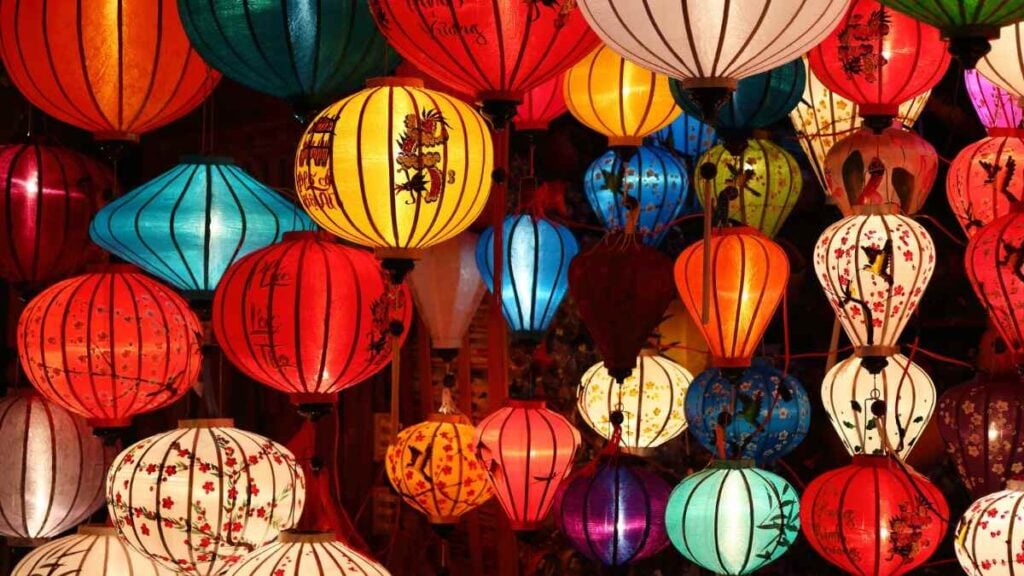
Once a month, Hoi An’s old town takes on a different feel as shopfront lights go out, motorbikes are kept away from the riverside streets and colourful paper lanterns drift along the Hoài River. It’s the monthly celebration commonly known as Hoi An’s Lantern Festival, also called the Full Moon Festival.
When Is the Hoi An Full Moon Festival Each Month?
The Hoi An Full Moon Festival runs on the 14th day of every lunar month, from sunset until about 9–10 pm. The next nights are 22 November and 22 December 2026, then 21 January and 19 February 2027.
| Lantern night | Weekday | Sunset in Hoi An | Notes |
| 22 November 2026 | Sunday | 5:16 pm | Weekend; peak flood months |
| 22 December 2026 | Tuesday | 5:24 pm | Australian school holidays |
| 21 January 2027 | Thursday | 5:41 pm | School holidays; last full moon before Tết |
| 19 February 2027 | Friday | 5:54 pm | Nguyên Tiêu, the busiest night of the year |
| 21 March 2027 | Sunday | 6:00 pm | Weekend; drier evenings |
| 20 April 2027 | Tuesday | 6:05 pm | |
| 19 May 2027 | Wednesday | 6:13 pm | |
| 18 June 2027 | Friday | 6:23 pm | |
| 17 July 2027 | Saturday | 6:25 pm | Weekend |
| 15 August 2027 | Sunday | 6:14 pm | Weekend |
| 14 September 2027 | Tuesday | 5:52 pm | Mid-Autumn eve; wet season starts |
| 13 October 2027 | Wednesday | 5:30 pm | Peak flood months |
| 11 November 2027 | Thursday | 5:17 pm | Peak flood months |
The lunar month starts at the new moon, so the 14th often lands one or two days before the moon is astronomically full. That gap is why some calendars for the lantern festival Hoi An holds each month print dates a day out. On every night in the table, the moon is 92–100% lit and already up by sunset, though in April and June it sits only just above the horizon.
Confirm close to travel. Since 1 July 2025, Hoi An has been part of Da Nang city, so official notices now come from Da Nang and the Hoi An heritage centre.
Central Vietnam’s wetter months run from roughly September to December, with floods most likely in October and November. In late October 2025, floodwater in the old town reached 1.78 metres. For the bigger seasonal picture, see where to go in Vietnam in December and January.
The 14 September night is the eve of Mid-Autumn (Tết Trung Thu), one of the year’s biggest lantern nights, with children’s lantern processions and lion dances.
What Happens on a Full Moon Night in the Old Town?

Rằm is a traditional day for offerings at home altars and pagodas, and Hoi An households set theirs out on the eve. The old town has built its lantern night around that custom since 1998, dimming electric lights and keeping vehicles out of the core streets. It is a fragile setting as the town holds 1,107 protected timber-frame buildings.
Hoi An lanterns hang year-round over Trần Phú, Nguyễn Thái Học and Bạch Đằng streets, and the lantern shops stay open late every night. The 14th adds:
- Footpath altars, with incense, fruit, flowers and paper offerings.
- Assembly hall rituals at Phúc Kiến, Quảng Triệu and Triều Châu from early evening.
- Flower lanterns (hoa đăng), small paper lanterns holding a candle, sold by riverside vendors.
- Folk performances: bài chòi (a sung card game from central Vietnam), poetry readings and lion dances.
- Dimmed lights in many businesses, though not all. Closing hours change, so trust only times in a current official notice.
On an ordinary day, 2,000 to 5,000 people arrive in the old town. A full moon night squeezes more into a few riverside blocks.
How to Release a Flower Lantern
- Buy from a riverside vendor, with small notes ready.
- Choose the stone steps or a sampan. The steps cost nothing. For a boat, agree the price and duration before boarding.
- Keep the flame low, clear of sleeves and overhead lanterns, and lower it onto the water. Don’t lean out of a moving boat to push it along.
Why Is 19 February 2027 Different?
Tết begins on 6 February 2027, and many family-run shops close for the first few days. The 19 February lantern night is the first full moon after Tết and opens Nguyên Tiêu (also called Thượng Nguyên), which runs from the 14th to the 16th of the first lunar month: Friday 19 to Sunday 21 February.
The festival joined Vietnam’s national intangible cultural heritage list in 2023. Rituals take place at the Quảng Triệu and Triều Châu assembly halls, Ông Pagoda (the Quan Công temple) and Bà Pagoda.
Expect the year’s heaviest crowds. Book rooms early and do not forget to check Vietnam public holidays to plan around during your trip. Arrangements also shift around Tết.
What Does Full Moon Night Cost?
| Item | Typical cost | Tip |
| Flower lantern (hoa đăng) | Often 5,000–15,000 VND | Carry small notes |
| Sampan ride | Usually 100,000–200,000 VND per boat, about 15–20 minutes | Agree on price and time first |
| Old-town ticket | Check the price at a ticket booth | May be checked at old-town entrances; also covers the heritage sites |
Vendor prices can rise on Nguyên Tiêu. Ticket booths now include smart machines that take international cards, alongside staffed counters.
How Do You Plan the Evening?
Sunset shifts by over an hour across the year, so plan around it. Clock times are approximate:
| When | What to do |
| 2 hours before sunset | Leave Da Nang, or spend the afternoon on a couple of Hoi An things to do near the river, such as Tân Ký old house and the Phúc Kiến assembly hall |
| 1 hour before sunset | Take a boat while the landings are quiet, or walk the lantern streets while you can still see the layout, then eat |
| Sunset | Claim a spot away from the An Hội bridge, where the crush is worst |
| First 2–3 hours after dark (about 7–9 pm) | Peak crowds and the longest boat queues. Watch the assembly hall offerings from the street or release a lantern from the steps |
| About 3 hours after dark (around 9 pm) | Boat queues ease for a late ride. Day-trippers request their ride home by about 9:30 pm |
Eat before the lanterns go up. Try cao lầu, the town’s signature noodle dish, or mì Quảng and cơm gà (chicken rice) in the side streets. Snack later at the An Hội night market across the river.
Plan for the crowd. Swap the pram for a baby carrier, keep phones in front pockets, and leave a hired scooter at a paid parking lot on the edge of the old town.
Be a respectful guest. Walk around offerings rather than over them, and ask before photographing anyone at an altar.
Stay at least one night nearby so lantern night doesn’t feel rushed, particularly if you’re fitting Hoi An into a two-week Vietnam itinerary and want enough time to enjoy the evening.
How Do You Get There from Da Nang, and Where Should You Stay?
Da Nang airport is about 30 km north of Hoi An. The drive often takes 40 to 50 minutes, longer in full moon traffic.
- Old Town: Walk back to bed after the boats finish. Expect noise and evening vehicle limits, so ask the hotel at check-in where a car can drop you.
- An Bàng or Cẩm Thanh: Quieter beach and coconut-village bases 10 to 15 minutes away, with a ride-share or bicycle back after dark.
- Day trip from Da Nang: Pre-book a return driver, or walk to a main road outside the pedestrian zone before requesting a car.
Ride-hailing back to Da Nang or An Bàng late at night is far easier with mobile data for the app, a live pin and the driver chat. Before you fly, compare Vietnam eSIM plans for Hoi An and Da Nang on coverage in the areas you will visit, validity for your trip length and support for your handset. Check each plan’s inclusions rather than assuming calls, SMS or hotspot use.
What Should You Set Up on Your Phone?
- Drop a meeting-point pin before the group splits up, on a corner off Trần Phú rather than the An Hội bridge, the hardest place to find anyone after dark.
- Save the hotel’s drop-off point, not just its address. Cars can’t enter the pedestrian streets, so drivers need the nearest road, in Vietnamese with accents.
- Keep your Australian SIM active for bank OTPs. Adding a card to a ride-hailing app or paying a hotel deposit may trigger a text code, so check your provider’s roaming charges for incoming SMS.
Our Vietnam eSIMs can be installed at home before you leave Australia, so data may be ready when you land in Da Nang. Ensure you check each plan’s coverage, validity, device compatibility and hotspot inclusions.
Before You Go
- Double-check the date using a Vietnamese lunar calendar, as well as any updates from Da Nang or Hoi An authorities.
- If you’re travelling on an Australian passport, check the Vietnam eVisa requirements for Australians before booking your trip.
- Keep some small notes handy for lantern purchases, boat rides and street food.
- A light rain jacket is worth packing between September and December. Bring a power bank, too, especially if you’ll be out taking photos all evening.
FAQs
Is the Hoi An Lantern Festival Every Month?
Yes, on the 14th day of each lunar month. The next is 22 November 2026; the table above lists the following 12 months.
What Time Does the Full Moon Festival Start?
At sunset, from about 5:15 pm in November to 6:25 pm in July, winding down by about 9–10 pm.
Which Full Moon Night Is the Busiest?
The first full moon after Tết, which falls on 19 February 2027 and opens the three-day Nguyên Tiêu festival. Book accommodation early.
Do You Need a Ticket to Enter Hoi An Old Town on Full Moon Night?
A ticket may be needed, and rules have changed in recent years. Check the current requirement and price at a ticket booth on arrival or through official Hoi An and Da Nang sources.
Can You Visit on a Day Trip from Da Nang?
Yes. Allow extra travel time on full moon evenings and arrange the return ride before late evening.