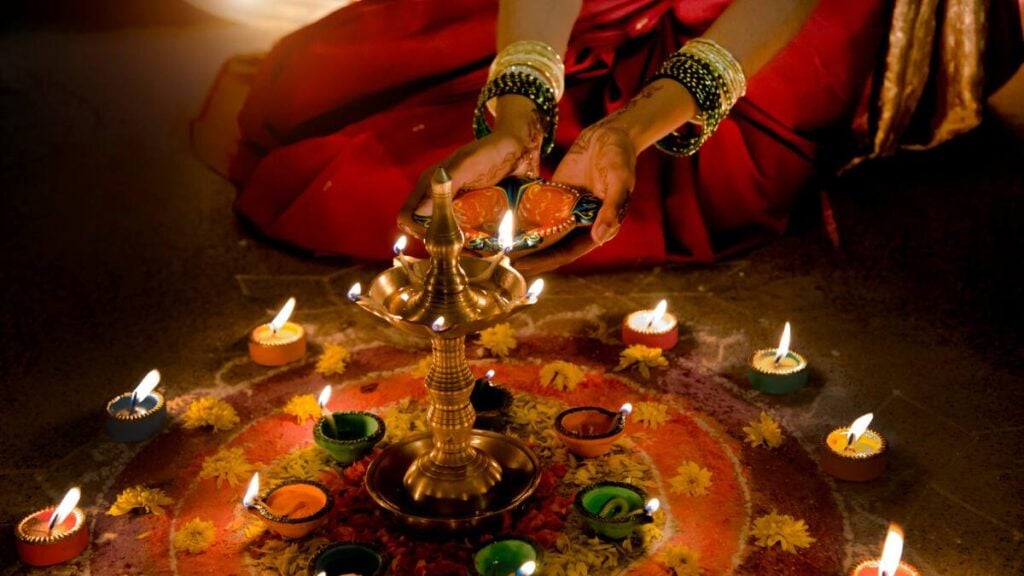
Rows of lamps, decorated bazaars and sweets shared between neighbours make Diwali in India an inviting time to travel. Your experience depends on the destination. Jaipur’s market streets, Ayodhya’s devotional setting and Varanasi’s later riverside celebration call for different plans.
Choose the local occasion before fixing your festival itinerary. Reliable mobile data can help with directions, booking access and transport updates, so ensure you compare India eSIM plans for a Diwali trip by coverage, validity, device compatibility and inclusions.
When Is Diwali in India in 2026?
The main Diwali 2026 holiday in India falls on Sunday 8 November 2026. Associated celebrations extend across several days, with regional differences in dates and practices.
| Occasion | Published Date | Travel Implication |
| Main Diwali holiday | Sunday 8 November 2026 | Choose the local celebration you want to attend |
| Varanasi Dev Deepawali | 24 November 2026 | Plan a separate, later Varanasi visit |
Dev Deepawali is not the main Diwali holiday. The dates are 16 days apart. If photographs of Varanasi’s lamp-covered ghats are the reason for travelling, choose the later observance rather than expecting the same programme on 8 November.
Ayodhya’s Date Remains Provisional
The current tourism listing advertises Deepotsav for 6 November 2026. Final local confirmation is still needed before using that date for event-specific bookings.
Wait for the confirmed programme and visitor-access instructions before committing to non-refundable travel centred on Deepotsav. A listed date does not establish registration requirements, viewing areas or temple hours.
Why Does Diwali’s Date Change?
Diwali follows a Hindu lunisolar calendar rather than a fixed Gregorian date. The principal celebration is associated with the new moon; local calendar conventions also affect related observances and prayer timings.
Use the main holiday date for broad planning and the calendar for your chosen city when arranging a particular ceremony.
Why Is Diwali Celebrated, and Who Observes It?
The Diwali festival celebrates light overcoming darkness, knowledge overcoming ignorance and good overcoming evil. Its name derives from Deepavali, meaning a row or series of lights.
Religious meanings differ. Hindu traditions include Rama’s return to Ayodhya, worship of Lakshmi and Krishna’s defeat of Narakasura. Jain communities commemorate Mahavira’s liberation. Sikh Bandi Chhor Divas honours Guru Hargobind’s release from imprisonment.
That context helps you choose a destination. Ayodhya’s connection with Rama gives a visit a different focus from Amritsar’s Sikh observance.
Common Observances Associated With Diwali
These cultural reference points do not form one universal dated schedule.
| Observance | Common Focus | What Visitors Should Understand |
| Dhanteras | Prosperity, preparations and auspicious purchases | Shopping activity can begin before the main holiday |
| Naraka Chaturdashi | Traditions associated with Narakasura’s defeat, including ritual bathing in some communities | Timing and customs vary by region |
| Chhoti Diwali | A name commonly used for the preceding celebration in parts of northern India | Do not assume it has an identical date or meaning everywhere |
| Lakshmi Puja | Worship, lamps and household gatherings | Much of the evening centres on homes and religious spaces |
| Govardhan Puja or Bali Pratipada | Different regional traditions involving worship, offerings and family customs | Follow the observance relevant to your destination |
| Bhai Dooj | Relationships between siblings | Primarily a family occasion |
Some communities begin earlier or continue longer. Lamps, rangoli, sweets and gifts connect many celebrations, but India does not follow one uniform programme.
Which Destination Suits Your First Diwali Trip?
Jaipur is a practical first choice for festive market streets alongside heritage sightseeing. Choose another base when its religious setting or particular observance is your main reason for travelling.
| Destination | Best Fit | Main Planning Consideration |
| Jaipur | Decorated bazaars and daytime sightseeing | Keep the evening within a manageable walking area |
| Ayodhya | Rama-related devotion and Deepotsav | Obtain the final public-event programme |
| Varanasi | Religious life along the Ganga | Distinguish main Diwali from later Dev Deepawali |
| Amritsar | Sikh context and devotional activity | Follow the Golden Temple’s visitor requirements |
These cities offer different settings rather than interchangeable versions of the same celebration.
Choose One Principal Festival Base
Ayodhya suits a devotional visit. The city’s religious significance extends beyond Deepotsav, but attending the public event requires its own confirmed arrangements.
Varanasi suits travellers interested in riverside religious life. If adding a boat outing, establish the operator, boarding point, duration and cancellation conditions. Do not assume it includes access to every festival viewing area.
Amritsar offers Sikh context through Bandi Chhor Divas. Allow time for entry instructions and worshippers rather than treating the Golden Temple as a quick photography stop.
Keep these destinations as alternatives for the festival portion of your trip. Moving between several cities around one holiday leaves less time to understand any of them.
How Can You Plan a First Diwali Evening in Jaipur?
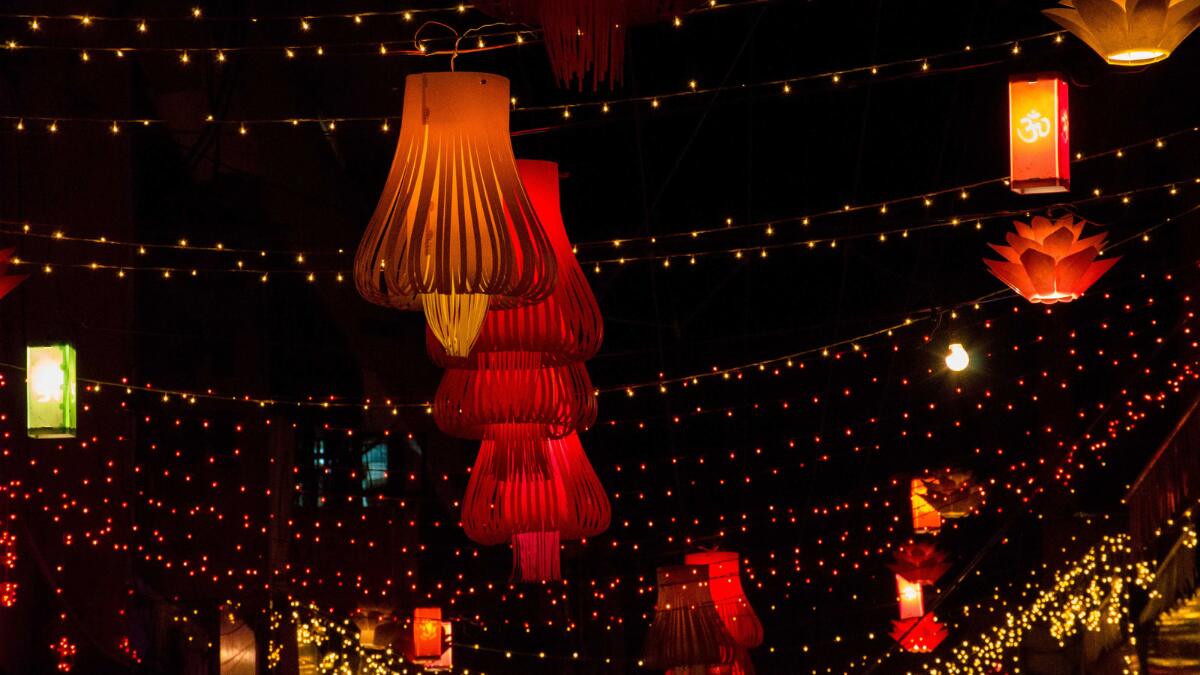
Focus on Johari Bazaar, with Bapu Bazaar as an optional extension. Both are established Jaipur shopping districts.
Allow roughly two to three hours for dinner, one bazaar walk and a sweet-shop stop. Hotel transfers and the optional extension are additional.
Follow a Compact Bazaar Plan
- Eat near your walking start or accommodation. Arrange a restaurant with confirmed holiday hours so dinner does not require an extra cross-city journey.
- Begin near Badi Chaupar. Use the square as your orientation point before entering Johari Bazaar.
- Walk south towards the Sanganeri Gate area. Choose a comfortable section of the market rather than making the full walk compulsory.
- Pause at an open sweet shop. Buy a small selection and leave time to enjoy it.
- Return to your agreed collection point. Add nearby Bapu Bazaar only if access, time and energy permit.
The appeal is festive street life, decorations and shopping. Follow temporary barriers and local directions; public streets do not provide access to private ceremonies.
If the evening becomes crowded, remove the second bazaar first. A shorter walk and an unhurried meal are more manageable than rushing between several market areas.
Decide Whether a Guide Would Help
A guide can provide cultural interpretation, help communicating with vendors and assist with arranging a visitor-welcoming activity.
Before booking, request the meeting point, duration, intended route and precise inclusions. If household participation is advertised, establish that a host has explicitly agreed to welcome visitors.
Pay for a clearly described experience rather than a vague promise of authentic Diwali. Guiding does not automatically provide privileged access to temples or controlled events.
How Should You Plan Accommodation and Transport?
Choose accommodation by the journey back from your selected evening area.
| Base Type | Advantage | Trade-Off |
| Walking distance from your evening area | Easier breaks and fewer transfers | Street noise and walking conditions |
| Outside the busiest streets | More separation from activity | Dependence on a vehicle for the return |
| Near an onward transport hub | Convenient departure | Potentially longer festival journeys |
For Jaipur’s suggested evening, compare the actual route to Johari Bazaar. A property described as central may still require transport.
Book the Room and Journey Together
The standard advance reservation period for many Indian trains is60 days, excluding the journey date. Some services have shorter limits. October planning for early November is already within that window.
Eligible international travellers have a separate Foreign Tourist Quota option extending up to 365 days. Conditions differ, and bookings beyond the ordinary reservation period can involve later berth allocation. Read the reservation status before relying on the journey.
Use a Two-Night Festival Base
For the main holiday, arrive on 7 November, keep 8 November’s daytime schedule light and depart on 9 November with time for your transfer. Adjust those dates for a separately confirmed local event.
Save the hotel, walking start and collection location, then use these ways to prepare offline maps and limit navigation data before heading out.
Before paying, resolve four booking details:
- Event: final date, visitor access and any reservation.
- Accommodation: check-in, essential meals and vehicle access.
- Evening outing: restaurant hours and return collection.
- Onward travel: reservation status and connection time.
Avoid placing an important festival evening immediately before a tight international departure.
What Etiquette Should Visitors Follow?
Public celebrations and private worship have different access rules. Ask before joining prayer, entering a home or photographing worshippers.
Follow each religious site’s footwear, clothing and photography instructions. At a gurdwara, observe its head-covering guidance.
For a household invitation, ask about arrival time and whether a small gift is appropriate. Do not assume alcohol is suitable. Explain dietary requirements beforehand.
Knowing how local customs shape everyday interactions can make the experience easier, so respectful cultural etiquette when visiting India is worth reviewing before your trip.
Enjoy Food Without Disturbing Offerings
Kaju katli, gulab jamun and regional sweets are useful starting points at a sweet shop. Recipes vary, so ask about ingredients and preparation when allergies matter.
Buy food or accept it when offered. Leave ceremonial offerings untouched, keep loose clothing clear of lamps and avoid blocking doorways for photographs.
Account for Noise, Smoke and Local Rules
Firework permissions depend on current local orders. Products being sold do not establish permission to use them.
Review restrictions and air-quality readings before a long outdoor evening. Keep an indoor alternative and an easy exit if conditions become uncomfortable, particularly when travelling with children or companions sensitive to noise.
Choose a costume-free, practical outfit for walking: comfortable footwear, modest clothing and layers appropriate to your destination’s forecast.
How Do You Keep Useful Phone Access During Celebrations?
An India-covered data plan can support translation, transport updates and accommodation contact. Coverage, calls, SMS and activation conditions remain product-specific.
A data-only eSIM does not replace your home number for bank verification or account messages. If the home SIM remains installed, check its mobile data and roaming settings before travelling. These steps can help you avoid accidental roaming charges during the trip.
Complete essential account verification before departure. IRCTC’s foreign-tourist process uses international mobile verification, so access to the registered number matters.
FAQs
Is There One Ticket for Diwali?
No. Streets, temples, organised activities and private gatherings have separate access arrangements. Book named events individually where required.
Can Tourists Join Household Celebrations?
Only through an invitation or explicit permission. A decorated home is not a public attraction.
Is Dev Deepawali the Same Celebration?
No. Varanasi’s separate later observance is currently listed for 24 November 2026.
Do Shops and Attractions Follow Normal Hours?
Not necessarily. Establish the holiday hours of the specific places you intend to visit, and arrange essential meals and transport before the evening begins.