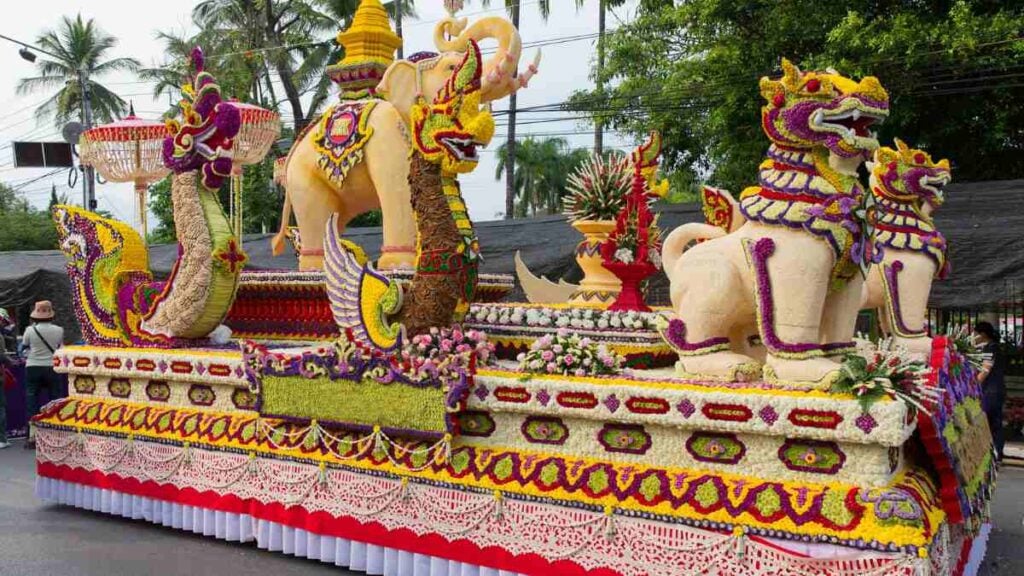
The Chiang Mai Flower Festival draws thousands of domestic and international visitors each February. The 2026 edition featured 25 decorated floats, with over one million flowers from more than 100 plant species planned for its garden displays. Traditional Lanna performances and elaborate floral exhibitions bring Chiang Mai’s horticultural heritage to life throughout the festival weekend.
Unlike Thailand’s Lamp Festival (Yi Peng), which typically takes place in November and is famous for its sky lanterns, the Flower Festival centres on colourful street processions and floral exhibitions. The 2027 edition promises another opportunity to experience Chiang Mai’s horticultural heritage during the cooler months.
| Key Facts | Details |
| 2027 dates | To be confirmed |
| Expected edition | 50th |
| Parade | Traditionally Saturday morning, departing from Nawarat Bridge |
| Venue | Nong Buak Haad Public Park (Suan Buak Haad), corner of Bumrung Buri Road and Arak Road, Old City |
| Entry | Traditionally free |
| Booking advice | Choose flexible flights and accommodation |
What Is the Chiang Mai Flower Festival?
First held in 1977, the festival celebrates the region’s horticultural heritage towards the end of the cool season, when the valleys and hill farms surrounding Chiang Mai produce an abundance of flowers. Look for damask roses, yellow and white chrysanthemums, orchids and tulips cultivated for seasonal displays.
Chiang Mai Province and the city municipality organise the celebrations. At the heart of the festival is a parade featuring floats covered in fresh flowers, marching bands and performers dressed in traditional Lanna clothing.
When Is the Chiang Mai Flower Festival 2027?
The Chiang Mai Flower Festival is expected to return for its 50th edition in February 2027. Although 5–7 February is a possible date range, the official schedule remains unconfirmed. Recent editions have taken place on different weekends, making early predictions unreliable.
The 2025 festival was originally scheduled for 31 January–2 February before being postponed in a notice dated 18 January 2025. In 2026, the province confirmed the festival would run from 13–15 February just 10 days before opening.
| Edition | Festival Dates | Parade Day | Date Announcement |
| 48th (2025) | Friday 7 – Sunday 9 February | Saturday 8 February | Rescheduled on 18 January 2025 |
| 49th (2026) | Friday 13 – Sunday 15 February | Saturday 14 February | Announced 3 February 2026 |
| Expected 50th (2027) | To be confirmed | Traditionally Saturday | Awaiting announcement |
Book flexible fares and accommodation, and avoid non-refundable reservations until the dates are confirmed. From early January, check announcements from Chiang Mai City Municipality, the Tourism Authority of Thailand and Chiang Mai Citylife.
Flower Festival or Charming Flower Festival?
Chiang Mai hosts several floral celebrations throughout the cooler months, and their similar names can cause confusion when planning a trip.
The Charming Chiang Mai Flower Festival runs from 27 November 2026 to 3 January 2027 at Chiang Mai PAO Garden. The edition’s theme, Blossoming Heritage, brings together illuminated gardens, seasonal flower displays, cultural performances and evening entertainment.
| Event | When | Where | Parade? | Cost |
| Chiang Mai Flower Festival | Three days in February | Nong Buak Haad Public Park | Traditionally Saturday morning | Free |
| Charming Chiang Mai Flower Festival | 27 November 2026 – 3 January 2027 | Chiang Mai PAO Garden | Primarily garden displays and light shows | Free |
| Flora Festival | Typically November to February | Royal Park Rajapruek | No | Admission fees apply |
| Yi Peng Lantern Festival | Typically November | Across Chiang Mai and surrounding areas | Parades during joint Yi Peng and Loy Krathong celebrations | Public celebrations are generally free; private lantern releases are ticketed |
Royal Park Rajapruek’s seasonal exhibition dates and admission fees vary, so check the current schedule before visiting.
What Happens at the Festival?
Previous editions provide a useful indication of what visitors can expect in 2027, although individual activities and entertainment schedules remain subject to confirmation.
By Day in the Park
- The parade: The 2025 procession featured 25 decorated floats, accompanied by marching bands, Lanna dance troupes and community groups. Floats are traditionally displayed in and around the park afterwards.
- Gardens: Themed flower beds, orchid exhibitions and landscaped competition gardens fill the park, giving visitors plenty to explore beyond the parade.
- Stalls: Local growers sell plants, while community artisans offer handicrafts and One Tambon One Product (OTOP) goods.
- Additional activities: The 2026 programme included choral performances at Tha Phae Gate, a children’s painting competition and a photography contest.
Australian travellers should avoid bringing live plants, seeds or bulbs home unless they meet Australian biosecurity import requirements. Flowers, wooden souvenirs and other relevant plant-based products must be declared on arrival. Penalties of up to A$6,600 may apply for undeclared biosecurity risk items.
Evenings, the Pageant and the Judging
The festival continues after sunset. In 2026, the park’s opening ceremony took place on Friday evening, running from 5 pm to 8 pm. A separate formal ceremony accompanied Saturday morning’s parade.
Beauty pageants, cultural performances and floral competitions have also featured in previous editions. Participating organisations compete for recognition through their elaborate float designs, with arrangements often reflecting northern Thailand’s cultural traditions.
Check the official 2027 programme for pageant dates, judging arrangements and evening performances.
Parade Route and Viewing Spots
In 2026, the parade departed from Nawarat Bridge on the Ping River at 7:30 am. Floats traditionally assemble along Charoen Muang Road on the eastern bank before crossing towards the Old City.
The procession moves slowly, allowing spectators to appreciate the floral arrangements and accompanying performances.
The traditional parade route includes:
- Nawarat Bridge, crossing the Ping River from the east.
- Tha Phae Road towards Tha Phae Gate.
- Kotchasarn Road along the eastern moat.
- Chang Lor Road along the southern moat.
- The area around Nong Buak Haad Public Park.
The precise 2027 route and departure times remain unconfirmed.
Best Places to Watch the Parade
| Viewing Spot | What to Expect |
| Tha Phae Road | Close-up views of floats travelling towards the Old City |
| Tha Phae Gate | An attractive backdrop for photographs and cultural performances |
| Kotchasarn Road | Additional viewing opportunities along the eastern moat |
| Nong Buak Haad Public Park | Floral exhibitions and stationary floats following the procession |
Temporary road closures can affect ride-hailing services on parade morning. Arrange a meeting point away from the procession and consider walking from your accommodation if you are staying within the Old City.
Comparing Thailand eSIM plans before departure can help you stay connected when arranging transport, sharing your location or coordinating with fellow travellers. Download offline maps as a backup, since mobile networks can become congested during large public events.
Where to Stay During the Chiang Mai Flower Festival
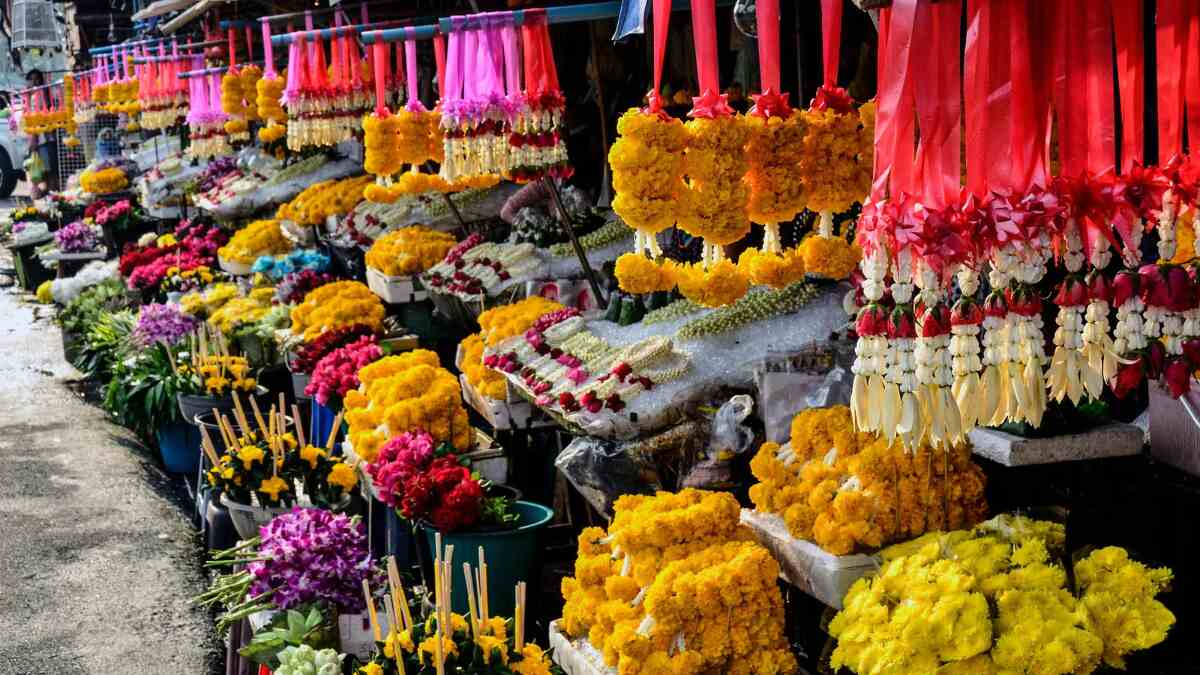
The southern Old City puts you within walking distance of Nong Buak Haad Public Park and the southern section of the moat. Accommodation near Tha Phae Gate is convenient for travellers hoping to photograph the morning procession.
Nimmanhaemin, west of the Old City, offers contemporary hotels, independent cafés and restaurants. However, reaching the parade from this neighbourhood may require additional travel time because of temporary road closures.
Contact your hotel a day or two before the festival to ask about traffic restrictions and suitable pickup locations.
Getting There From Australia
Most Australians travelling to Chiang Mai will need at least one flight connection. Bangkok is a convenient gateway, although connecting services through Singapore and Kuala Lumpur provide alternatives.
When comparing flights to Thailand from Australia, consider the total journey time, baggage allowances and whether your connecting flight departs from the same airport. February falls within Chiang Mai’s popular cool-season travel period, so flexible early bookings are worth considering.
Your options for travelling from Bangkok to Chiang Mai include:
| Transport Option | Approximate Travel Time | What to Know |
| Domestic flight | 1 hour 10 minutes to 1 hour 25 minutes | Flights depart from both Suvarnabhumi and Don Mueang airports. |
| Overnight train | 10.5–14 hours | Services depart from Krung Thep Aphiwat Central Terminal. Sleeper berths can sell out during busy periods. |
| Overnight bus | 9–11 hours | An affordable alternative, with services departing from Bangkok’s Mo Chit 2 terminal. |
Transport fares vary according to the operator, service class and booking date. Compare current prices once the festival dates are confirmed.
Australian passport holders are eligible for a 30-day visa exemption for tourism under the arrangements introduced on 15 September 2026.
Travellers must also complete the free Thailand Digital Arrival Card (TDAC) within three days before arrival. Submit your information through the official immigration portal to avoid unnecessary third-party fees. Check passport validity and entry requirements before departure, as immigration rules can change.
Getting Around Chiang Mai
Red songthaews, the city’s shared pickup trucks, operate throughout Chiang Mai. Agree on the fare before boarding. Grab and Bolt also serve popular tourist areas, although road closures and increased demand may affect availability during the festival.
Installing a few useful travel apps for Thailand before departure makes navigating unfamiliar streets, arranging transport and communicating with local businesses considerably easier. An air-quality monitoring app is also worth having during the dry season.
Set Up Your Phone Before You Fly
Install your travel eSIM before departure if your plan permits advance installation. Activation procedures and validity periods vary, so check when your selected plan begins before enabling it.
Save offline map locations for Nawarat Bridge, your preferred viewing spot, your accommodation and an alternative meeting point. Screenshot your TDAC confirmation and hotel pickup instructions so they remain accessible without an internet connection.
TravelKon offers Thailand eSIM options for travellers attending the Flower Festival. Check your device compatibility, data allowance, network coverage and plan validity before purchasing.
Weather and Haze in February
February in Chiang Mai is generally dry and sunny, with cooler mornings and warm afternoons. Typical temperatures range from approximately 16°C to 33°C, although daily conditions vary.
The month can also bring elevated air pollution associated with forest fires and agricultural burning. Thailand’s 24-hour ambient air quality standard for PM2.5 is 37.5 µg/m³, compared with the World Health Organization’s guideline of 15 µg/m³.
On 18 February 2026, three days after the Flower Festival, Hot district recorded 71.3 µg/m³, nearly double Thailand’s national standard. Chang Phueak recorded 34.4 µg/m³ on the same day, illustrating how pollution levels can vary considerably across the province.
Haze generally intensifies towards March and April, but February conditions can fluctuate. Check live air-quality readings before spending extended periods outdoors.
What to pack for the festival:
- A well-fitting N95 or KN95 mask for periods of elevated air pollution.
- A light jacket for cooler mornings.
- A hat, sunscreen and sunglasses for daytime activities.
- Comfortable walking shoes.
- A refillable water bottle.
Travellers with asthma or underlying heart or lung conditions should seek medical advice before visiting during the dry season.
Make a Weekend of It
The Sunday Walking Street along Ratchadamnoen Road offers an opportunity to browse handicrafts, sample northern Thai food and enjoy local street performances.
An early visit to Wat Phra That Doi Suthep can help you avoid the midday heat and larger crowds, although checking local air-quality readings beforehand is advisable.
If you are combining Chiang Mai with Bangkok or Thailand’s southern islands, following a 10-day Thailand itinerary can help you allocate enough time to each destination without rushing through the festival weekend. Allow an additional day on either side of the celebrations to explore Chiang Mai’s temples, markets and surrounding countryside.
FAQs
When Is the Chiang Mai Flower Festival in 2027?
The official dates remain unconfirmed. The festival is expected to take place over a Friday-to-Sunday weekend in February 2027, marking its anticipated 50th edition.
What Day Is the Chiang Mai Flower Parade?
The parade traditionally takes place on Saturday morning. In 2026, it departed from Nawarat Bridge at 7:30 am on 14 February. The 2027 departure time remains unconfirmed.
Where Is the Chiang Mai Flower Festival Held?
The main venue is Nong Buak Haad Public Park (Suan Buak Haad), located at the corner of Bumrung Buri Road and Arak Road in the south-western corner of Chiang Mai’s Old City.
Is the Chiang Mai Flower Festival the Same as the Lantern Festival?
No. The Flower Festival takes place in February and features decorated floats and floral exhibitions. Yi Peng typically occurs in November and is associated with lantern displays and releases. The Charming Chiang Mai Flower Festival is another separate seasonal garden and light exhibition.
Is February a Good Time to Visit Chiang Mai?
February generally offers dry weather, cooler mornings and favourable conditions for sightseeing. However, air pollution can increase during the month. Check current air-quality readings and take appropriate precautions when planning outdoor activities.