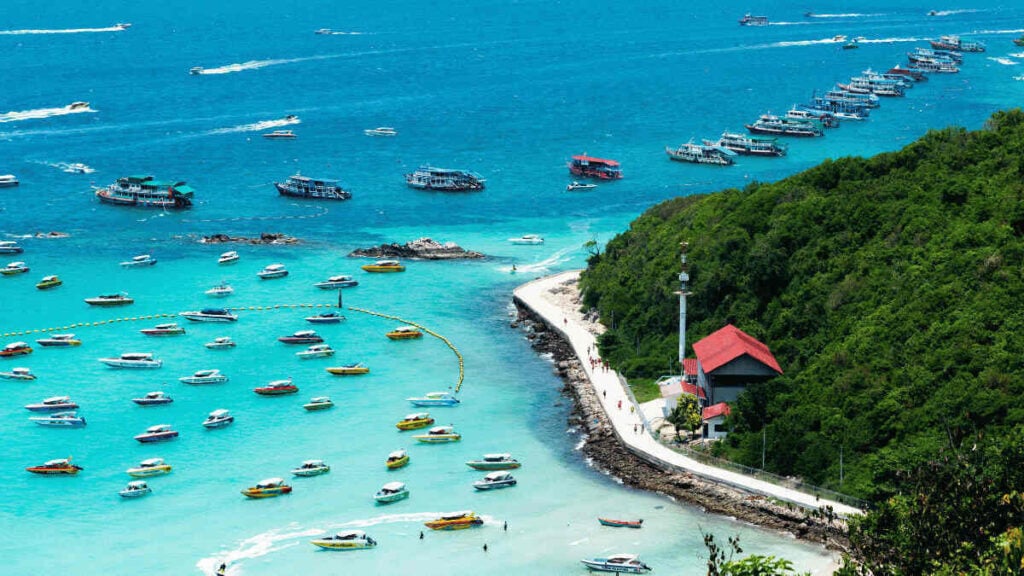
Thailand is an easy place for Australians to imagine working remotely. You can take morning calls from a Bangkok apartment, spend afternoons in a Chiang Mai coworking space, and still find time for beach breaks or quick trips across Southeast Asia. It sounds simple, and in many ways it is.
The real advantage comes from planning ahead. You need the right visa, a clear budget in Australian dollars, a base that fits your routine, and a setup that keeps your work consistent. Sort it early, including a reliable Thailand eSIM, and everything runs far more smoothly once you land.
Can Australians Work Remotely From Thailand?
Australian travellers can comfortably work remotely from Thailand under the right visa route, but the pathway needs to be checked before making long-stay plans. And the visa you’ll need is the Destination Thailand Visa, commonly known as DTV. This visa is designed for digital nomads, remote workers, freelancers, foreign talent, some activity-based visitors and eligible family members.
For Australians, the safest order is:
- Confirm the official visa route
- Check eligibility before booking a long stay
- Prepare proof of remote work or freelance activity
- Verify financial evidence requirements
- Check Australian and Thai tax residency implications
- Plan accommodation and working internet
- Organise mobile data before departure
- Avoid treating general travel blogs as immigration advice
Thailand Digital Nomad Quick Facts for Australians
| Planning point | Quick answer |
|---|---|
Main visa to check | Destination Thailand Visa, usually called the DTV |
Common search phrase | Thailand digital nomad visa or Thailand remote work visa |
DTV validity | 5 years, multiple entries |
Stay per entry | 180 days per entry |
Extension | One-time extension per entry for up to another 180 days through Thai Immigration |
Financial evidence | 500,000 THB to verify through the official application channel |
Best first base | Chiang Mai for lower costs, Bangkok for convenience |
Best serious work base | Bangkok |
Best beach base | Phuket, Koh Samui or Koh Phangan |
Best quieter long-stay base | Hua Hin |
Best work setup | Apartment Wi-Fi + coworking Wi-Fi + Thailand eSIM backup |
Main risks | Visa assumptions, tax residency, weak Wi-Fi, smoke season, 2FA lockouts |
Best pre-flight move | Prepare documents, check tax position and set up mobile data before leaving Australia |
What People Mean by a Thailand Digital Nomad Visa
Most people searching for a Thailand remote work visa want a legal way to live in Thailand while earning income online from outside Thailand. As mentioned earlier, the DTV is the route that most closely matches that search.
It can cover remote employees, freelancers, digital nomads and foreign talent, but it is not a free pass to take local Thai work. Remote work for an Australian employer or overseas clients is different from working for a Thai employer or taking local paid work in Thailand.
DTV Basics to Verify Before Planning
| Planning point | What to verify |
|---|---|
Visa name | Destination Thailand Visa |
Common abbreviation | DTV |
Common search term | Thailand digital nomad visa |
Visa validity | 5 years, multiple entries |
Stay per entry | 180 days |
Extension | One extension per entry, up to 180 days |
Financial evidence | 500,000 THB or accepted equivalent |
Work proof | Employment contract, certificate, company documents, freelance portfolio or client evidence |
Application channel | Thai e-Visa or relevant Thai Embassy/Consulate |
Processing time | Canberra guidance says 10 business days, but some cases may take 4 to 6 weeks |
Key risk | Submitting the wrong documents, wrong jurisdiction or unclear evidence |
Best Places in Thailand for Digital Nomads
The best Thailand base depends on your work hours, budget, climate tolerance, social needs and how much routine matters.
| Location | Best for | Watch-outs |
|---|---|---|
Chiang Mai | Lower costs, cafes, coworking, slower pace, first-time nomads | Smoke season, smaller city feel, no beach |
Bangkok | Serious work, meetings, healthcare, flights, transport, nightlife | Higher rent, traffic, heat, sensory overload |
Phuket | Beach lifestyle, gyms, resorts, higher-end stays | Higher costs, transport planning, tourist pricing |
Koh Samui | Island lifestyle with more infrastructure than smaller islands | Weather, ferries, rental location |
Koh Phangan | Wellness, community, beach lifestyle, nomad circles | Connectivity varies by area, peak-season pricing |
Hua Hin | Quieter coastal routine and longer-stay comfort | Less social energy than Bangkok, Phuket or Chiang Mai |
Best Thailand Base by Work Style
| Work style | Best base | Why |
|---|---|---|
Lots of video calls | Bangkok or Chiang Mai | Better coworking, stronger infrastructure and more backup options |
Low-cost trial month | Chiang Mai | Easier to keep costs controlled |
Beach plus work comfort | Phuket | Better infrastructure than many smaller islands |
Wellness and community | Koh Phangan | Strong social and wellness scene |
Quiet long-stay rhythm | Hua Hin | Less intense and easier to settle into |
Frequent regional flights | Bangkok | Best airport access |
Australian client hours | Bangkok, Chiang Mai or Phuket | Better late-day work options than smaller locations |
Content creator lifestyle | Phuket, Koh Samui or Koh Phangan | More visual travel/lifestyle settings |
Thailand Cost of Living for Australian Digital Nomads
Thailand can be affordable, but advice built around living on almost nothing does not reflect how most full-time Australians actually live or work.
You need to budget for more than rent and food. A proper remote-work setup includes accommodation, coworking, mobile data, transport, insurance, software, banking fees and an emergency buffer.
The ranges below are planning estimates in AUD per month for one person.
| City | Budget remote-worker style | Comfortable remote-worker style | Best for |
|---|---|---|---|
Chiang Mai | $1,600–$2,200 | $2,400–$3,200 | Lower-cost first base |
Bangkok | $2,000–$2,800 | $3,200–$4,500 | Convenience and infrastructure |
Phuket | $2,400–$3,500 | $4,000–$6,000+ | Beach lifestyle |
Koh Samui | $2,300–$3,300 | $3,800–$5,500+ | Island lifestyle with comfort |
Koh Phangan | $2,200–$3,300 | $3,800–$5,500+ | Wellness and nomad community |
Hua Hin | $1,900–$2,700 | $3,000–$4,200 | Quieter long-stay routine |
Budget categories to plan
| Category | What to include |
|---|---|
Rent | Hotel first week, serviced apartment, Airbnb, condo or coliving |
Coworking | Day passes, monthly membership, meeting rooms |
Food | Street food, cafés, groceries, delivery, restaurants |
Transport | BTS/MRT in Bangkok, Grab, scooter rental, fuel, taxis |
Mobile data | Thailand eSIM or local SIM backup |
Insurance | Health, devices, cancellations, liability |
Work tools | VPN, cloud storage, software, laptop repairs |
Buffer | Visa delays, medical issues, flight changes, rental deposits |
Note: Do not compare Thailand only against Australian rent. Compare the full cost of working properly. A cheap room with bad internet, no desk and a noisy street can cost more than it saves.
Australian Remote-Worker Scenarios
Sydney consultant working AEST hours from Bangkok
Bangkok works well if you have regular client calls because you can work from a proper apartment, use coworking spaces when needed, and still have transport, food and services available after business hours.
The time difference is manageable, particularly if your clients are in NSW, Victoria or Queensland.
Melbourne freelancer testing three months in Chiang Mai
Chiang Mai suits a trial stay because costs are easier to control. A freelancer can book a flexible first month, test coworking spaces, then move into a better-value monthly rental once they know the area.
The main warning is smoke season. If the stay overlaps from February to April, have a backup city.
Perth business owner choosing Phuket
For Perth-based business owners, Thailand’s time zone can be convenient. Phuket may suit someone who wants a beach lifestyle without giving up gyms, restaurants, healthcare and decent accommodation.
The trade-off is cost. Phuket can quickly become expensive if you choose tourist-heavy areas.
Australian contractor relying on SMS 2FA
Banking, Gmail, Microsoft, MYOB, Xero, accounting software and client systems may still depend on device approvals or SMS.
Before leaving Australia, check every important login and decide whether your Australian SIM needs to stay active.
Coworking and Work-Friendly Areas
Remote work becomes easier when your base has a proper desk, air conditioning, good lighting, reliable Wi-Fi and quiet call space.
Popular coworking examples include:
| City | Coworking examples |
|---|---|
Chiang Mai | Punspace, Yellow Coworking, CAMP |
Bangkok | The Hive, Hubba, True Digital Park |
Phuket | HOMA, Grind Time, Regus-style business centres |
Koh Phangan | Beachub-style island coworking and local coliving spaces |
Koh Samui | Island coworking spaces, hotel work lounges and serviced offices |
What to check before joining a coworking space
Before signing up for a coworking space, look beyond the surface. Check the opening hours, Wi-Fi speed and reliability, call booth access, meeting room rules, backup power, air conditioning, location after dark, transport options, and how crowded it gets during peak work hours, as well as the monthly cost.
For Australian client work, ask whether the space stays usable during late-afternoon and evening call times.
Accommodation Strategy for First Week, First Month, Longer Stay
Do not sign a long lease based on the photos you see online.
First 7 nights
Book flexible accommodation with decent reviews and a clear check-in process. The goal is not to find the perfect place immediately. It is to land, get connected, inspect areas and avoid panic decisions.
First month
Choose a serviced apartment, Airbnb, hotel apartment, or coliving option while you test:
- Wi-Fi speed
- Desk comfort
- Noise levels
- Air conditioning
- Laundry access
- Gym distance
- Cafe and food options
- Transport
- Mobile reception
- Safety at night
Three months or longer
Once you know the area, look at monthly rentals. Before paying a deposit, ask:
- Is the internet private or shared?
- Can I run video calls reliably?
- Is there a proper desk and chair?
- What are electricity and water charges?
- Is there building work nearby?
- What happens if Wi-Fi goes down?
- Is the rental legal for the length of stay?
- Are cleaning and maintenance included?
Thailand Seasonality for Remote Workers
Thailand’s weather affects cost, comfort, air quality and productivity.
| Period | Planning notes |
|---|---|
November to February | Cooler, popular, often more expensive |
February to April | Chiang Mai smoke season risk; check air quality before committing |
April to May | Very hot in many areas |
May to October | Rainy season; lower prices in some areas, but storms can affect plans |
Island seasons | The Gulf and Andaman islands can have different weather patterns |
For Chiang Mai, do not ignore the smoky season. If you are sensitive to air quality, consider Bangkok, Hua Hin, Phuket, Samui or leaving northern Thailand during the worst weeks.
Internet and Mobile Data Setup with TravelKon Travel eSIM
Thailand is easy to travel in, but remote work fails quickly when connectivity is treated as an afterthought. The simplest approach is to rely on a travel eSIM as your primary connection, providing consistent mobile data coverage everywhere. Wi-Fi in apartments, hotels, and coworking spaces can support you, but a travel eSIM keeps your work uninterrupted.
Our Thailand travel eSIM plan can help with:
- Airport arrival maps
- Grab or taxi booking
- Hotel check-in messages
- Banking alerts
- Two-factor authentication
- WhatsApp, Messenger, Line and email
- Hotspot backup
- Coworking location checks
- Video-call contingency
- Flight changes and travel documents
If you are new to eSIMs or want a clearer sense of how they work before your trip, take a look at our guide on how international eSIMs work. It walks you through the basics and points out the common mistakes travellers make with travel eSIMs, so you can avoid problems before they start.
TravelKon Connectivity Tips Before You Fly
Before leaving Australia:
- Check phone eSIM compatibility
- Install the traveleSIM on a stable Wi-Fi if the instructions allow it
- Save the QR code and setup details offline
- Label the eSIM clearly
- Check activation timing
- know whether roaming settings need to be enabled
- Keep your Australian SIM active if needed for calls or SMS
- Test hotspot settings if you can connect your laptop
- Save TravelKon support details somewhere accessible
Thailand vs Australia Time Zones
Thailand is usually easier for Australian remote workers than Europe or the Americas because the time difference is smaller.
| Australian location | Typical working impact |
|---|---|
Sydney / Melbourne / Canberra / Hobart | Thailand is usually a few hours behind, so afternoon and evening calls may be common |
Brisbane | Similar to east-coast planning, but without daylight saving changes |
Adelaide / Darwin | Time difference is usually manageable |
Perth | Thailand can be very convenient for same-day work overlap |
If most of your clients are in NSW or Victoria, expect some later workdays. If your clients are in WA, Thailand can feel much easier.
Tax and Residency
Tax is not something you figure out later. For digital nomads, it shapes how long you can stay, how you structure your income, and whether your setup actually works long term.
Australia may still treat you as an Australian tax resident depending on your facts and circumstances. Thailand tax residency can also become relevant if you reside in Thailand for more than 180 days in a tax year.
Before assuming anything, get tax advice if you plan to:
- Stay close to or above 180 days
- Keep Australian clients
- Run an Australian company
- Invoice from Australia
- Pay yourself wages or dividends
- Claim expenses while overseas
- Rent out an Australian property
- Move money into Thailand regularly
A visa decision and a tax residency decision are not the same thing.
Common Planning Mistakes
Treating the DTV as an automatic approval
A visa route existing does not mean every applicant qualifies. Documents, purpose category, financial evidence, location and timing still matter.
Assuming tourist entry is fine for remote work
Short tourist stays and remote-work planning are not the same thing. Check the correct route before building a long-stay plan.
Ignoring tax residency
A long stay can create tax questions in both Australia and Thailand.
Relying only on cafe Wi-Fi
Cafe Wi-Fi is not a business continuity plan. Keep eSIM mobile data available for hotspot backup, maps, banking and urgent calls.
Leaving eSIM setup until the airport
Airport Wi-Fi can be unstable, login-gated or too slow when your QR code needs to load.
Forgetting two-factor authentication
Australian banking, email, accounting and client systems may still rely on SMS, app prompts or device approvals.
Choosing a base from TikTok
A place can look perfect and still be bad for work. Test noise, Wi-Fi, workspace, transport and mobile coverage before committing.
Pre-Departure Checklist for Australians
| Category | Check |
|---|---|
Visa route | Confirm whether DTV or another route fits |
Official source | Check Thai e-Visa and the correct Thai mission |
Passport | Confirm validity and blank pages |
Work proof | Prepare employment, contract, client or portfolio evidence |
Financial evidence | Prepare current proof matching official requirements |
Tax | Check Australian and Thai residency implications |
Employer approval | Confirm remote-work permission and security rules |
Insurance | Check health, devices, liability and work equipment cover |
Accommodation | Confirm Wi-Fi, cancellation terms and workspace suitability |
Connectivity | Install or prepare your travel eSIM before departure |
Banking | Check cards, fees, 2FA and backup access |
Devices | Update phone, laptop, authenticator apps, VPN and cloud backups |
Arrival | Save offline maps, e-Visa confirmation, address and support contacts |
Why This Matters for Australian Travellers
Long stays overseas are becoming the norm rather than the exception. More Australians are combining work with travel, and Thailand keeps coming up as an easy fit. The cost of living stretches further, the time zone lines up well with Australia, and the infrastructure for both tourism and remote work is already in place.
For Australians planning to work remotely from Thailand, the smartest move is to get organised before you leave. Lock in your visa route, gather the right documents, understand your tax position, secure accommodation, and set up reliable mobile data. Handle it early, and you arrive ready to settle in, not scramble.
FAQs
What is the Thailand digital nomad visa called?
The route commonly called the Thailand digital nomad visa is usually the Destination Thailand Visa, or DTV.
Can Australians apply for the DTV?
Australians may be able to apply if they meet the current DTV requirements and use the correct application channel.
How long can digital nomads stay in Thailand on the DTV?
Official DTV material lists 180 days per entry, with a 5-year multiple-entry validity and a possible one-time extension per entry.
Is the DTV the same as a work permit?
No. A remote-work visa route is not the same as permission to work for a Thai employer or take local Thai work.
What documents are usually needed?
Common planning documents include passport, photo, current-location evidence, financial evidence, work or freelance proof, portfolio, contracts and family documents where relevant.
How much financial evidence is needed?
Official DTV material lists financial evidence of 500,000 THB or accepted equivalent. Always check the application portal for current formats and requirements.
How long does processing take?
Canberra guidance says e-Visa processing is generally 10 business days, but some applications may take 4 to 6 weeks.
Can I work remotely from Thailand for an Australian employer?
It may fit the DTV workcation concept, but employer approval, visa terms, tax treatment, insurance, data security and local restrictions all need checking first.
Will staying in Thailand affect Australian tax residency?
Possibly. Australian tax residency depends on your circumstances, not just being overseas.
When could Thai tax residency become relevant?
Thailand tax residency can become relevant when you reside in Thailand for periods adding up to more than 180 days in a tax year.
Do I need a Thai phone number?
Not always, but some local services may be easier with one. For arrival, maps, rideshare, email, banking and messaging, a travel eSIM may be enough for many travellers.
Can a Thailand eSIM be used for hotspot?
Hotspot may work depending on the phone, plan, network and device settings. Check plan details before relying on it for laptop work.
Should the eSIM be installed before departure?
Yes, where plan instructions allow it. Installing or preparing your eSIM before departure reduces airport arrival problems.
How much should an Australian budget per month in Thailand?
A practical remote-worker budget is usually around AUD $1,600–$3,500 per month, depending on city and lifestyle. Comfortable stays in Bangkok, Phuket, Koh Samui or Koh Phangan can be higher.
Takeaways
For Australians who want to work remotely from Thailand, the DTV may be the visa route to check, but eligibility, documents, tax, work limits, processing time and official guidance need to be confirmed before departure.
Once the visa pathway is clear, plan the practical side properly. Carefully choose where you will live, how much it will cost, where you will work, how you will access banking, what happens if Wi-Fi fails, and how you will stay connected from the moment you land. Last but not least, set up your travel eSIM before leaving Australia.