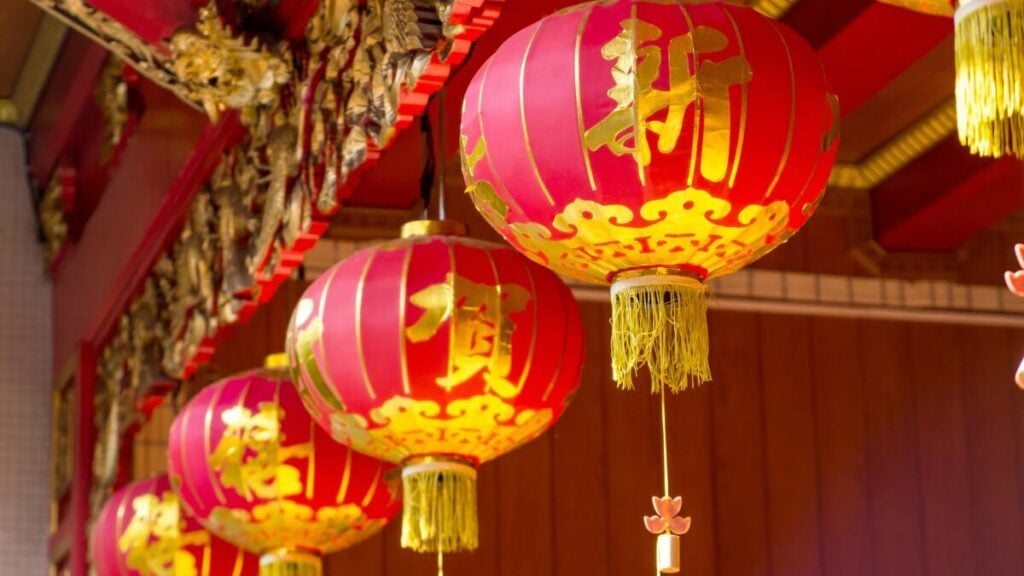
Chinese New Year transforms China into a celebration of family, tradition and good fortune. Streets glow with red lanterns, flower markets draw festive crowds, and temple fairs bring centuries-old customs to life. For Australians planning a visit, the celebrations offer plenty to experience, but travelling during China’s busiest holiday season requires preparation. From securing train tickets to navigating temporary closures and checking visa requirements, a little planning goes a long way. Here’s what to expect when celebrating Chinese New Year in China in 2027.
When Is Chinese New Year 2027, and How Long Is the Holiday?
Chinese New Year 2027 falls on Saturday 6 February, marking the beginning of the Year of the Fire Goat. China’s official Spring Festival holiday runs for nine consecutive days, from Friday 5 February to Saturday 13 February, while traditional celebrations conclude with the Lantern Festival on Saturday 20 February.
| Date | What Happens |
| Sunday 31 January | Make-up working day |
| Friday 5 February | Chinese New Year’s Eve and start of the holiday |
| Saturday 6 February | Chinese New Year, Year of the Fire Goat begins |
| Wednesday 10 February | Fifth lunar day, when some businesses traditionally reopen |
| Saturday 13 February | Final day of the official holiday |
| Sunday 14 February | Make-up working day |
| Saturday 20 February | Lantern Festival |
Four days, from 5 to 8 February, are statutory holidays. The remaining days of the nine-day break are arranged through weekends and adjusted working days, a system known as tiáoxiū (调休).
Sunday 31 January and Sunday 14 February are designated working days, although individual businesses may operate differently.
If you’re planning a longer trip, checking other China public holidays can help you schedule sightseeing and intercity travel around additional national celebrations.
Chinese New Year Dates From 2026 to 2030
Chinese New Year follows the traditional lunisolar calendar, meaning the date changes each year.
| Year | Chinese New Year | Zodiac Animal |
| 2026 | Tuesday 17 February | Horse |
| 2027 | Saturday 6 February | Goat |
| 2028 | Wednesday 26 January | Monkey |
| 2029 | Tuesday 13 February | Rooster |
| 2030 | Sunday 3 February | Dog |
Celebrations extend beyond mainland China, although public holidays and local customs differ. Knowing which countries celebrate Lunar New Year can help you compare destinations if you’re considering a multi-country Asian holiday.
What Does the Year of the Fire Goat Mean?
The Chinese zodiac follows a repeating 12-year animal cycle combined with five traditional elements. In 2027, the Goat is associated with Fire, giving the year its full designation, Fire Goat (丁未).
The animal is sometimes translated as Sheep or Ram because the Chinese character yáng (羊) can refer to both sheep and goats.
In traditional Chinese astrology, people born in Goat years enter their běnmìng nián, the year corresponding to their birth animal. Some believe this period brings challenges and wear red clothing, bracelets or accessories for protection.
For travellers, zodiac symbolism appears on lanterns, red envelopes, shopping centre displays and festive decorations. The traditions change with each zodiac year, as illustrated by how we covered the 2025 Year of the Snake and its association with the Wood element.
Which Chinese New Year Traditions Will You See?
Several customs shape the celebrations:
- Reunion dinner: Families gather on New Year’s Eve for a meal featuring dishes associated with prosperity and togetherness.
- Red envelopes: Known as hóngbāo (红包), these contain money and are traditionally given to children and younger relatives.
- Spring Festival Gala: Families watch the annual television programme featuring music, comedy and performances.
- Spring couplets: Red decorations bearing auspicious phrases appear around doorways.
- Fireworks: Firecrackers and fireworks feature in traditional celebrations where local regulations permit them.
Visitors can experience many of these traditions at markets, temples, public performances and festive shopping districts.
How Busy Is China During the Spring Festival Travel Rush?
China’s annual Spring Festival travel rush, known as Chūnyùn (春运), typically lasts around 40 days as people travel between their workplaces and family homes.
According to China’s Ministry of Transport, the 2026 travel season recorded approximately 9.41 billion cross-regional passenger trips, including more than 2.8 billion during the nine-day holiday. These figures count journeys rather than individual travellers.
The enormous volume illustrates why railway tickets, flights and accommodation can become difficult to secure around the celebrations.
When Should You Book Trains?
China Railway’s 12306 booking system generally releases ordinary train tickets 15 days before departure, counting the travel date.
If this rule remains unchanged, important booking dates include:
| Travel Date | Expected Ticket Release |
| Friday 5 February | Friday 22 January |
| Saturday 6 February | Saturday 23 January |
| Saturday 13 February | Saturday 30 January |
| Sunday 14 February | Sunday 31 January |
Popular routes connecting Beijing, Shanghai, Guangzhou and other major cities can sell out rapidly during peak periods.
Book international flights and accommodation early, then set reminders for railway ticket releases. Consider alternative departure times or routes if your preferred service becomes unavailable.
At major railway stations, allow approximately 45–60 minutes for security, passport checks and finding your platform, with additional time during particularly busy periods.
Which Days Are Busiest?
The days immediately before New Year’s Eve and the final days of the holiday typically experience substantial travel demand.
For greater flexibility, consider staying in one city over the busiest dates rather than attempting several long-distance journeys.
Travelling against the main passenger flow may help, although availability varies by route. Avoid assuming that departures from major cities will be easy to secure simply because the holiday has begun.
What Is Open During Chinese New Year 2027?
Opening hours vary considerably between cities, neighbourhoods and businesses.
Many family-run restaurants, smaller shops and traditional markets close around New Year’s Eve. Some reopen after several days, while others remain closed for much of the official holiday.
Larger shopping centres, international hotels, chain restaurants and major tourist attractions generally continue operating, although hours may change.
Temple fairs are a popular exception to the closures. Beijing’s Ditan and Longtan temple fairs, for example, operated from 17 to 23 February during the 2026 celebrations, offering performances, traditional food and festive activities.
For attractions requiring timed entry, reserve tickets early and check whether bookings require your passport details. Confirm restaurant availability and hotel check-in arrangements before travelling.
Where Should You Celebrate Chinese New Year in China?
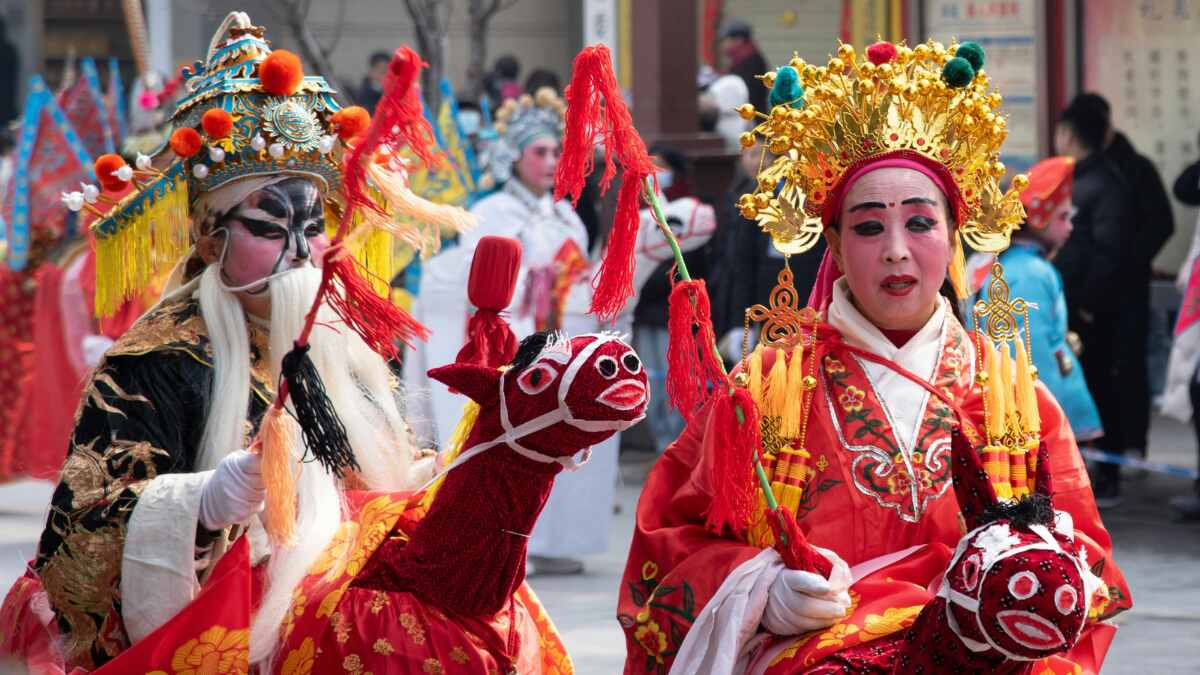
Beijing: Traditional Temple Fairs
Beijing is a strong choice for traditional celebrations, including temple fairs, folk performances and festive food stalls. February temperatures are often near or below freezing, so pack warm layers.
Guangzhou: Flower Markets
Guangzhou’s flower markets are known for kumquat trees, orchids and peach blossoms. The days before New Year’s Eve are particularly lively, making the city appealing to visitors seeking milder winter weather.
Harbin: Ice and Snow Attractions
Harbin offers elaborate illuminated ice sculptures and winter activities. Harbin Ice-Snow World’s operating season depends on weather conditions, so confirm opening dates before booking.
Fireworks regulations differ between cities and districts. Some central urban areas prohibit private fireworks, so check local announcements rather than assuming a midnight display will take place.
When Is the Lantern Festival in 2027?
The Lantern Festival, known as Yuánxiāo Jié (元宵节), falls on Saturday 20 February 2027, the 15th day of the first lunar month.
It traditionally marks the end of the Chinese New Year celebrations, although it is not a national public holiday.
Visitors can expect illuminated lantern displays, traditional performances and lantern riddles in selected parks, temples and historic districts.
Another tradition is eating sweet glutinous rice balls, known as tangyuan or yuanxiao, which symbolise family unity.
Some lantern displays begin before Chinese New Year and continue until the festival. Popular venues can become crowded after sunset, so check admission arrangements, keep your phone charged and agree on a meeting point if travelling with others.
What Should Australians Arrange Before Travelling to China?
Check Visa Requirements Before Booking
China currently allows Australian ordinary passport holders to visit visa-free for up to 30 days for eligible purposes, including tourism. However, the Chinese Embassy in Australia confirms that the current arrangement runs until 31 December 2026. An extension covering February 2027 has not yet been officially confirmed.
If the exemption expires, Australians may need a tourist visa. Alternatively, China’s 240-hour visa-free transit rules may allow eligible travellers to spend up to ten days in permitted areas while travelling onwards to a third country or region.
For example, Sydney–Shanghai–Seoul may qualify, while Sydney–Shanghai–Sydney generally would not. Check the latest requirements through Smartraveller and Chinese immigration authorities before making non-refundable bookings.
Prepare Mobile Payments and Navigation
Alipay and WeChat Pay are widely used across mainland China, including at restaurants, markets and transport services.
Set up your preferred payment app before departure and link an eligible bank card. Keep your Australian SIM available for verification texts where your provider supports international SMS roaming.
Google Maps and some other international services are restricted or unreliable in mainland China. Consider Amap or Apple Maps, and save your accommodation address in Chinese characters.
Arrange Mobile Data Before Departure
Reliable mobile data helps with railway bookings, navigation, ride-hailing, translation and digital payments during the celebrations.
When comparing China eSIM plans for Spring Festival travel, check network coverage, data allowances, validity periods and hotspot support to find an option suited to your itinerary.
Our travel eSIMs can be installed over Wi-Fi before departure, although activation instructions and validity conditions vary by plan. Most travel eSIMs are data-only, so retaining your Australian SIM can be useful for receiving bank verification messages.
Also check whether your chosen eSIM supports access to international apps and websites restricted on mainland Chinese networks.
FAQs
When Is Chinese New Year 2027?
Chinese New Year falls on Saturday 6 February 2027. Mainland China’s official public holiday runs from Friday 5 February to Saturday 13 February.
What Animal Is Chinese New Year 2027?
2027 is the Year of the Fire Goat, also called the Fire Sheep or Fire Ram.
Is 2027 a Good Year for People Born in the Year of the Goat?
In traditional Chinese astrology, a person’s zodiac birth year is sometimes associated with challenges or bad luck. Some people wear red accessories for protection, although these are cultural beliefs rather than predictions.
When Does Chinese New Year 2027 End?
The traditional celebrations conclude with the Lantern Festival on Saturday 20 February 2027. The official public holiday ends earlier, on 13 February.
Is Chinese New Year a Good Time to Visit China?
Yes, if you want to experience traditional celebrations, temple fairs and festive markets. However, expect crowded transport, higher demand for accommodation and temporary closures of smaller businesses. Booking early and allowing flexibility in your itinerary can make the experience easier to manage.